
Best of ASCO Philadelphia: Non-Colorectal GI Cancer Updates from ASCO 2026
Faculty: Daniel A. King, MD, PhD, Northwell Health
Conference: Best of ASCO Philadelphia
The Bottom Line
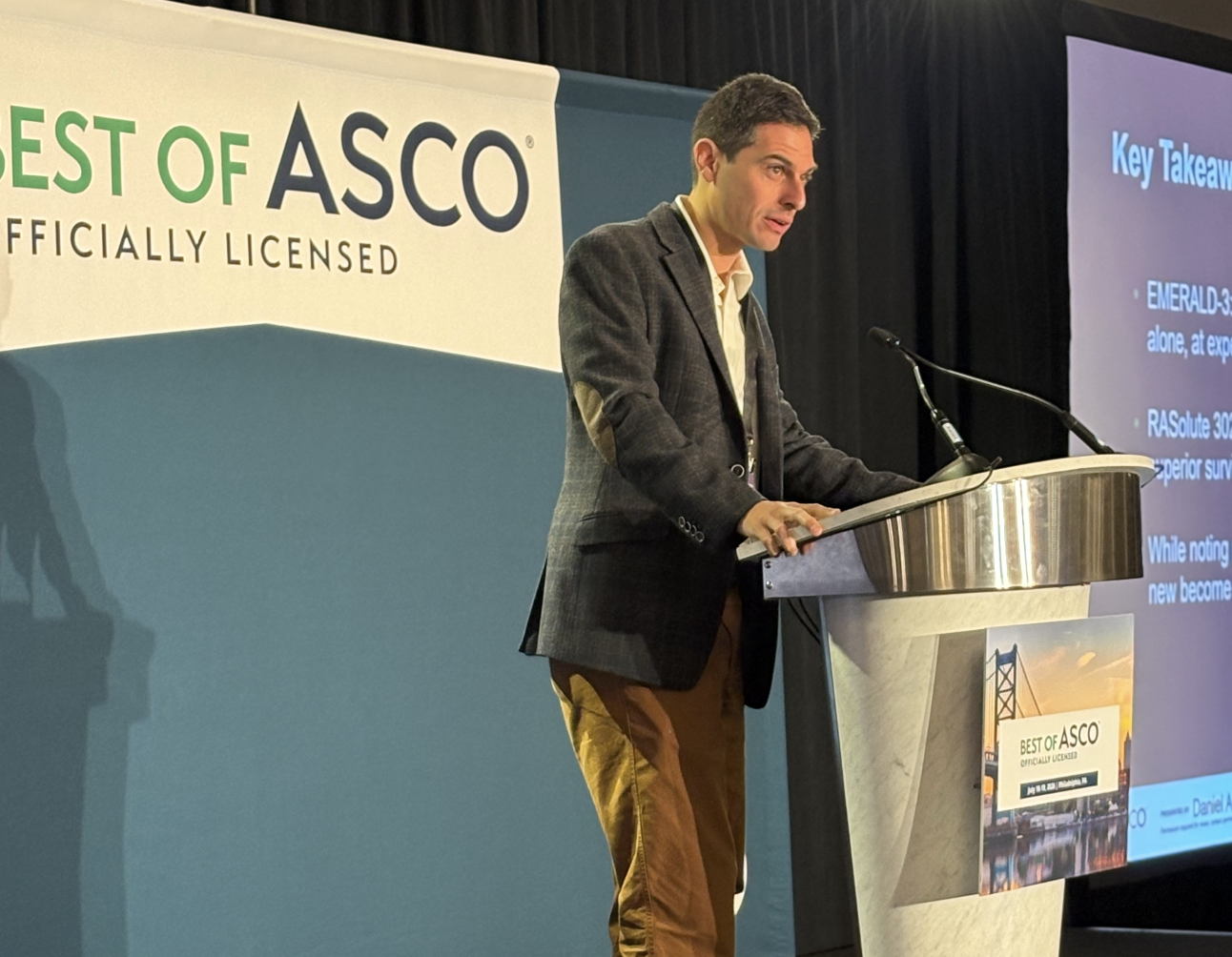
At the 2026 Best of ASCO Philadelphia conference presented by Total Health, Dr Daniel King focused his review on two key studies with potentially important implications for non-colorectal gastrointestinal malignancies: EMERALD-3 in unresectable, embolization-eligible hepatocellular carcinoma (HCC) and RASolute 302 in previously treated metastatic pancreatic ductal adenocarcinoma (mPDAC). His overarching message was that both studies demonstrated meaningful efficacy gains, but their clinical impact depends heavily on context. In HCC, he noted that adding systemic therapy to transarterial chemoembolization (TACE) improved progression-free survival (PFS) but substantially increased toxicity, leaving open the question of whether the magnitude of benefit is sufficient to justify treatment intensification. In mPDAC, by contrast, he highlighted daraxonrasib as a treatment which may substantially alter second-line management if approved, with striking improvements in overall survival (OS), PFS, and response rate over investigator’s-choice chemotherapy. Dr King was enthusiastic about the RASolute 302 findings, calling daraxonrasib “a breakthrough,” while emphasizing that it is not curative and introduces unfamiliar toxicities, especially rash and stomatitis, that will require dedicated education and proactive management.
EMERALD-3: Better Disease Control, But More Toxicity
EMERALD-3 evaluated whether adding immunotherapy, with or without lenvatinib, to TACE could improve outcomes in patients with unresectable but embolization-eligible HCC. Dr King first emphasized the importance of the study population, noting that patients had preserved liver function, no extrahepatic disease, ECOG performance status 0 or 1, and no major portal vein invasion. In other words, these were patients for whom TACE remained a reasonable locoregional treatment strategy rather than patients requiring immediate systemic therapy. The trial randomized 760 patients to one of three arms: STRIDE plus lenvatinib plus TACE, STRIDE plus TACE, or TACE alone. The STRIDE regimen consisted of a single dose of tremelimumab followed by durvalumab maintenance. The primary comparison was STRIDE plus lenvatinib plus TACE versus TACE alone for PFS by blinded independent central review.
Dr King noted the primary endpoint in the trial that was met; median PFS was 13.0 months with STRIDE plus lenvatinib plus TACE versus 9.8 months with TACE alone (hazard ratio [HR] = 0.70; 95% CI, 0.57–0.86; P=.0007), and PFS rates at 12, 18, and 24 months consistently favored the triplet. The STRIDE plus TACE arm also showed a PFS advantage over TACE alone, with median PFS of 12.9 versus 8.1 months (HR = 0.71), although Dr King noted that this comparison was not formally tested in the same way as the primary endpoint. Overall response rates also favored the experimental arms, at approximately 39% to 41% compared with 27% for TACE alone. OS data were still immature; for STRIDE plus lenvatinib plus TACE versus TACE alone, median OS was 39.5 versus 34.7 months (HR = 0.84; P=.1814) at approximately 40% maturity. The STRIDE plus TACE arm showed a more favorable numerical OS signal versus TACE alone, but again these data were not mature enough to establish a definitive survival benefit.
Generalizability Matters in EMERALD-3
Dr King repeatedly cautioned that clinicians should pay attention to the patients that were enrolled - a large proportion of patients came from Asia, and viral hepatitis accounted for much of the underlying liver disease. He specifically noted that this may limit a straightforward extrapolation of the results to US practices, where nonviral etiologies are more common. He also pointed to an exploratory comparison of STRIDE plus lenvatinib plus TACE versus STRIDE plus TACE. There was no clear overall advantage to adding lenvatinib, although the subgroup without viral etiology showed a possible signal favoring lenvatinib. Dr King stressed not to overinterpret the findings in this regard, because of the smaller sample size and exploratory nature of the comparison.
The Key Question: Is the PFS Benefit Worth the Toxicity?
For Dr King, the most important practical question from EMERALD-3 was not whether PFS improved – as clearly it did - but rather, whether that benefit justified the added treatment burden. Grade 3 or 4 adverse events occurred in 71.4% of patients receiving STRIDE plus lenvatinib plus TACE and 64.0% receiving STRIDE plus TACE, compared with 28.6% with TACE alone. Serious adverse events were also substantially more frequent with the systemic-therapy combinations, at 64.1% with STRIDE plus lenvatinib plus TACE and 50.9% with STRIDE plus TACE versus 23.4% with TACE alone. He also noted immune-mediated adverse events which were also common in the trial, affecting 56.4% of patients in the triplet arm and 46.9% in the STRIDE plus TACE arm. Notably, in the triplet arm, 15.3% of patients experienced grade 3 or 4 immune-mediated events, and 5 treatment-related immune-mediated deaths were reported. Dr King summarized the tradeoff plainly: EMERALD-3 showed superior PFS, but “at the expense of added toxicity.” His conclusion was that longer follow-up, particularly for OS, will be important in determining whether this becomes a preferred standard or simply another option for appropriately selected patients.
RASolute 302: A Potentially Practice-Changing Advance in mPDAC
The second half of Dr King’s presentation centered on RASolute 302, which he described as one of the most important pancreatic cancer presentations at ASCO and a plenary-level result. He noted that historically, second-line treatment of mPDAC has relied on cytotoxic chemotherapy – depending on what a patient received first line - options include gemcitabine-based therapy, modified FOLFIRINOX, FOLFOX, or nanoliposomal irinotecan plus 5-FU/leucovorin. Dr King emphasized that even in 2026, targeted therapy remained relatively uncommon in mPDAC outside of selected molecular subgroups. That is what he believes made RASolute 302 so notable. While more than 90% of pancreatic cancers are driven by oncogenic RAS signaling, effectively targeting common pancreatic RAS mutations has been difficult. Daraxonrasib is an oral, multi-selective RAS(ON) inhibitor that binds cyclophilin A and creates a complex capable of engaging active RAS and blocking downstream signaling. Dr King described this as essentially a “molecular glue” strategy that allows the drug complex to engage an otherwise difficult, relatively flat RAS surface.
RASolute 302 Design and Efficacy
The phase III study randomized 500 patients with mPDAC who had received one prior fluoropyrimidine- or gemcitabine-based regimen in the metastatic setting to oral daraxonrasib 300 mg once daily or investigator’s-choice chemotherapy. Chemotherapy options included gemcitabine/nab-paclitaxel, modified FOLFIRINOX, nanoliposomal irinotecan plus 5-FU/leucovorin, or FOLFOX. The dual primary endpoints were OS and PFS in the RAS G12 population and results for both endpoints were strongly positive. In the RAS G12 population, median OS was 13.2 months with daraxonrasib versus 6.6 months with chemotherapy (HR = 0.40; 95% CI, 0.30–0.54; P=5.9×10⁻¹⁰). Dr King noted that the magnitude of this result was extraordinary for pancreatic cancer, and the ASCO audience reportedly gave the presentation a standing ovation. The treatment benefit also extended to the overall study population, where median OS was 13.2 versus 6.7 months (HR = 0.40; 95% CI, 0.30–0.53), and PFS was also substantially improved: in the overall population, median PFS was 7.2 versus 3.6 months (HR = 0.49), while in the RAS G12 population it was 7.3 versus 3.5 months (HR = 0.45). In addition, subjective responses were nearly tripled. In the overall population, confirmed ORR was 31.6% with daraxonrasib versus 11.2% with chemotherapy. In the RAS G12 population, ORR was 33.2% versus 11.8%.
Quality of Life Also Favored Daraxonrasib
Importantly, Dr King noted that the efficacy advantage was not achieved at the expense of worsening patient-reported outcomes. Daraxonrasib significantly delayed deterioration in pain and global health status/quality of life. Median time to deterioration in pain was 9.2 months with daraxonrasib versus 3.8 months with chemotherapy (HR = 0.51), while time to deterioration in global health status/quality of life was 5.7 versus 2.6 months (HR = 0.60). For Dr King, the data reinforced that the survival advantage translated into meaningful patient benefit rather than simply a radiographic improvement.
New Toxicities Require New Management Skills
Dr King also made note of the safety profile, however, which was different from conventional chemotherapy adverse events, and which will likely require adaptation for clinicians and patients. Grade ≥3 treatment-related adverse events occurred in 43.6% of patients receiving daraxonrasib compared with 57.5% receiving chemotherapy. Treatment discontinuation due to treatment-related adverse events was also much lower with daraxonrasib, at 1.2% versus 11.2%. Despite this, daraxonrasib introduced toxicities that GI oncologists may be less accustomed to managing. Rash occurred in approximately 85% of patients overall, with grade ≥3 rash in 14%. Stomatitis occurred in 53%, with grade ≥3 events in 12%. Diarrhea, nausea, and vomiting were also common. As such, he stressed that proactive supportive care, including dermatologic management, will be important: “Manageable but notable safety toxicities are going to need to be carefully considered as this drug becomes widely adopted.” He also noted that dedicated education around rash and mucositis management would be needed if the drug enters routine use.
How Broadly Does the Result Apply?
Although the overall study population in RASolute 302 favored daraxonrasib, Dr King highlighted one important caveat - very few patients were truly RAS wild type. Approximately 80% of the population had RAS G12D/V mutations, with additional patients carrying other G12 mutations. Only a small minority fell into the combined category of G13, Q61, or no identified RAS mutation, and because those subgroups were small, he cautioned that efficacy in KRAS wild-type disease remains uncertain. He further emphasized that, at the time of his presentation, daraxonrasib was not yet FDA approved and was available only through an expanded-access mechanism. Thus, although the data strongly suggested a future second-line role, the exact approved population and label remained unknown.
Conclusions and Faculty Insights
As outlined by Dr King in his presentation, EMERALD-3 and RASolute 302 illustrate two very different kinds of therapeutic progress. In HCC, EMERALD-3 confirms that adding immunotherapy-based systemic treatment to TACE can extend PFS in embolization-eligible disease, although that improvement comes with substantially higher rates of grade 3 or 4 and serious adverse events. Dr King therefore views the study as clinically important but not automatically practice defining until more mature OS data clarify whether the additional toxicity produces a sufficiently meaningful long-term benefit. RASolute 302, by contrast, produced what Dr King viewed as a much more compelling efficacy signal. Daraxonrasib approximately doubled median OS, doubled PFS, nearly tripled response rates, and delayed deterioration in pain and quality of life compared with standard chemotherapy. Those results support the potential for a major change in second-line mPDAC management if an associated regulatory approval follows. At the same time, he was careful to temper enthusiasm: “Daraxonrasib is a breakthrough... It’s not a miracle... It’s not a cure.” As such, RASolute 302 may represent an important step toward finally targeting the dominant oncogenic driver in pancreatic cancer, while the next generation of more mutation-selective RAS inhibitors may ultimately improve efficacy further and reduce dermatologic and mucosal toxicity in this setting.
---
Speaker Disclosure Information: Dr King reported no relevant disclosures for this presentation.