
Best of ASCO Washington, DC: Colorectal Cancer Updates
Presenter: Timothy Cannon, MD, FASCO, Inova Schar Cancer Institute, Associate Professor, University of Virginia School of Medicine
Conference: Best of ASCO Washington DC
The Bottom Line
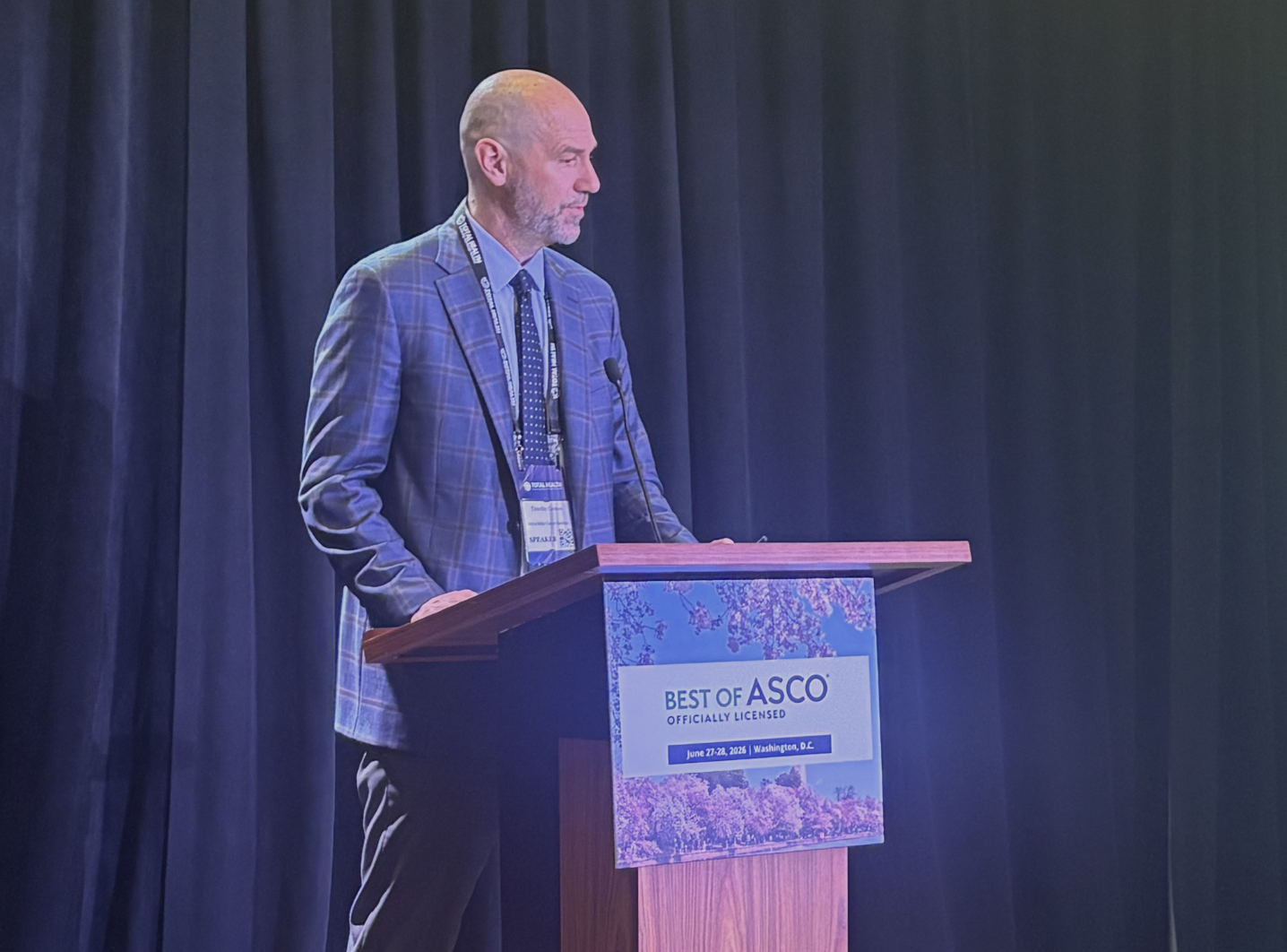
At ASCO 2026, several studies offered potentially practice-informing insights across the colorectal cancer (CRC) continuum. At the 2026 Best of ASCO Washington DC conference presented by Total Health, Dr Timothy Cannon focused on four areas with particular relevance to clinical practice: 1) The evolving role of circulating tumor DNA (ctDNA) in adjuvant decision-making, 2) Duration of immunotherapy after clinical complete response (cCR) in mismatch repair–deficient/microsatellite instability–high (dMMR/MSI-H) CRC, 3) First-line therapy for BRAF V600E–mutated metastatic CRC (mCRC), and 4) Structured exercise following adjuvant therapy in CRC. Across these topics, the theme was one of increasingly personalized treatment. Serial ctDNA testing may provide information beyond a single postoperative measurement, but much of the treatment-informing evidence remains observational. In dMMR/MSI-H CRC, continuing PD-1 inhibition after a confirmed cCR did not appear to improve survival in a nonrandomized cohort and increased immune-related toxicity. BREAKWATER Cohort 3 provided strong evidence supporting encorafenib plus cetuximab (EC) with FOLFIRI as a first-line option for BRAF V600E–mutant mCRC. Finally, the CHALLENGE data reinforced the value of structured exercise as a clinically meaningful component of survivorship care, and suggested that implementing such a program can also be economically attractive.
Background
Dr Cannon noted that CRC treatment is increasingly driven by molecular features and dynamic measures of disease. He described ctDNA as a particularly rapidly evolving area, noting a disconnect between cautious guideline language around the technology as compared to its increasingly frequent use in clinical practice. Dr Cannon noted that existing studies have established postoperative ctDNA as a powerful prognostic biomarker, in that patients who remain ctDNA negative generally experience favorable outcomes, while persistent ctDNA positivity is associated with a very high risk of radiographic recurrence. In addition, clearance of ctDNA during adjuvant therapy is likewise associated with substantially improved outcomes. However, whether ctDNA is sufficiently validated as a predictive biomarker to determine who should receive chemotherapy, when therapy should begin, and/or how long it should continue remains less certain. Summarizing the current evidence, he noted: “There is no doubt that it [ctDNA] is a very powerful prognostic biomarker.”
In this regard, he chose to review data from ASCO 2026 which addressed three clinically important questions arising after a ctDNA result:
1) What should clinicians do when an initially negative patient converts to positive?
Dr Cannon reviewed findings from a preplanned analysis of the prospective observational CIRCULATE-Japan GALAXY study, which evaluated patients with resected stage I-IV CRC who were ctDNA negative approximately 4 weeks after surgery and underwent repeat testing at approximately 12 weeks. Among 1,915 patients who were initially ctDNA negative, he noted that 1,859 remained negative and 56 converted to ctDNA positive. Of the 56 converters, only 13 received adjuvant chemotherapy and 43 underwent observation, underscoring the small sample size and exploratory nature of the comparison.
Patients who remained ctDNA negative at both early postoperative time points experienced favorable outcomes regardless of adjuvant chemotherapy. In contrast, among the 56 patients who converted from negative to positive, 24-month DFS was 38.5% with adjuvant chemotherapy versus 10.0% with observation. The median DFS was 12.9 versus 2.2 months, respectively. Although these numbers suggest that early molecular recurrence may identify a population that can benefit from chemotherapy, Dr Cannon stressed the limitations: treatment was not randomized, the converter population was extremely small, and many patients - particularly those with stage III disease - had already started chemotherapy before the second ctDNA assessment.
2) Can ctDNA dynamics inform adjuvant treatment duration?
Dr Cannon also reviewed a separate GALAXY analysis which examined whether ctDNA dynamics during adjuvant chemotherapy could inform treatment duration. Among 1,028 patients, 78.7% remained ctDNA negative, 14.7% achieved ctDNA clearance, 2.7% had decreasing but still detectable ctDNA, 2.8% had rising ctDNA, and 1.1% developed newly detectable ctDNA. [1] For treatment duration, longer adjuvant chemotherapy did not demonstrate a DFS advantage among patients with sustained ctDNA negativity, ctDNA clearance, or rising ctDNA. However, among just 28 patients whose ctDNA decreased but remained detectable, longer therapy was associated with improved DFS (median 5.9 vs 1.7 months; HR 3.64; P=.012). [1] Dr. Cannon viewed these findings as potentially supportive rather than definitive: “I don't think it would have been wrong to do it differently or not give chemotherapy at all or not extend beyond three months.”For eligible patients with molecular residual disease, he emphasized that enrollment in an MRD-directed clinical trial remains an especially attractive option.
3) Should a positive postoperative result influence chemotherapy decisions in stage II disease?
A third ctDNA study which Dr Cannon highlighted reviewed prospective data addressing ctDNA-positive stage II colon cancer. Although the per-protocol analysis suggested a clinically meaningful benefit from chemotherapy, he emphasized that the study enrolled relatively few ctDNA-positive patients, closed early, and did not meet its predefined intent-to-treat endpoint. The stage II data reinforced ctDNA's prognostic value and provided a signal that postoperative ctDNA-positive patients may benefit from chemotherapy. In the per-protocol comparison presented by Dr Cannon, approximately 77% of chemotherapy-treated patients remained free of disease progression versus 38% in the observational cohort. However, inclusion of patients assigned to treatment who never initiated chemotherapy weakened the difference, and the intent-to-treat analysis was not statistically significant. Thus, a positive ctDNA result may strengthen the rationale for discussing adjuvant chemotherapy with a stage II patient, but the evidence does not yet establish ctDNA-directed therapy as a definitive standard.
Immunotherapy After Clinical Complete Response
On the topic of immunotherapy, Dr Cannon noted findings from a multicenter observational study from China which evaluated 129 patients with dMMR/MSI-H CRC who achieved a cCR after PD-1 inhibition and were managed nonoperatively. Patients either discontinued PD-1 therapy following cCR (n=66) or received at least 2 additional cycles (n=63). Median exposure before cCR was 8 cycles in both groups, and median follow-up was 3.2 years. Only 14 patients had metastatic disease at diagnosis, making extrapolation to the broader metastatic population inappropriate. [2]
Results from the trial showed that outcomes were excellent regardless of whether PD-1 therapy continued after cCR. Three-year DFS was 96.4% with observation and 98.4% with maintenance, with no statistically significant difference observed (P=.55). Three-year OS was also 100% versus 98.4%, respectively (P=.34). Only 2 local regrowth events occurred, both in the observation group; both patients were successfully salvaged and remained alive at reporting. [2] Overall immune-related adverse event (irAE) rates were broadly similar across total treatment exposure, but additional treatment after cCR increased the subsequent toxicity burden. The ASCO abstract reported grade 3 irAEs in 11.1% of maintenance patients versus 3.0% with observation. [2] The presentation additionally highlighted new or worsening irAEs after cCR, including some potentially persistent endocrine toxicities.
The findings suggest that continued immunotherapy following a confirmed cCR may not provide additional survival benefit for appropriately selected patients managed with close surveillance. Dr Cannon cautioned, however, that the observational design, very small number of oncologic events, heterogeneous treatment regimens, and predominance of nonmetastatic disease limit the strength and generalizability of the results.
Results from BREAKWATER Cohort 3
Dr Cannon also highlighted findings from Cohort 3 of the BREAKWATER trial, which randomized 147 previously untreated patients with BRAF V600E–mutant mCRC to EC + FOLFIRI or FOLFIRI ± bevacizumab. The study was particularly relevant for patients previously exposed to oxaliplatin in the adjuvant setting, including those with residual neuropathy. [3] Dr Cannon emphasized that these findings specifically concern BRAF V600E disease and should not automatically be extrapolated to non-V600 BRAF alterations.
Results from BREAKWATER Cohort 3 demonstrated substantial benefit from combining BRAF/EGFR inhibition with FOLFIRI. Confirmed objective response rate was 64.4% with EC + FOLFIRI versus 39.2% with control. Median PFS was 15.2 versus 8.3 months (HR 0.44; one-sided P=.0002), representing a 56% reduction in the rate of progression or death. Median OS was not reached with EC + FOLFIRI versus 20.3 months with control (HR 0.56). [3] In terms of safety, Dr Cannon noted that grade 3/4 treatment-emergent adverse events occurred in 70.4% of patients receiving EC + FOLFIRI and 80.9% receiving control. Treatment-related grade 3/4 events were similar between groups (62.0% vs 64.7%), and the overall safety profile was consistent with the known toxicities of the individual regimen components.
Dr Cannon noted that the results from BREAKWATER Cohort 3 support FOLFIRI as a chemotherapy backbone for EC in first-line BRAF V600E–mutant mCRC and are particularly useful when oxaliplatin is undesirable because of previous exposure or neuropathy. He further characterized the evolution of BRAF-directed treatment in this setting as a major therapeutic milestone: “BREAKWATER… has been a huge improvement.”
CHALLENGE: Structured Exercise After Adjuvant Therapy
Lastly, Dr Cannon reviewed findings from the phase 3 CHALLENGE trial, which had previously demonstrated that a 3-year structured exercise program following adjuvant chemotherapy improved both disease-free survival (DFS) and overall survival (OS) among patients with stage III or high-risk stage II colon cancer. From ASCO 2026, he highlighted an additional analysis which examined the economic implications of implementing this intervention using prospectively collected resource-utilization data. [4]
Previously reported data from CHALLENGE had demonstrated that structured exercise after adjuvant chemotherapy improved both DFS (HR=0.72) and OS (HR=0.63), and Dr Cannon highlighted the clinical relevance in particularly tangible terms, with approximately 1 recurrent or new cancer prevented for every 16 patients participating in a structured exercise program, and approximately 1 death prevented for every 14 patients. The ASCO 2026 economic analysis further strengthened the argument for implementation, in that, despite the upfront expense of providing a supervised, structured program, lower subsequent costs associated with recurrence and anticancer therapy could offset the intervention cost. Thus, in the prespecified base-case analysis, structured exercise was ultimately less costly and more effective than health education alone. [4] Dr Cannon emphasized that these results have changed survivorship counseling: “Exercise should now be discussed at every sort of long-term visit with your colorectal cancer patients.”
Conclusions and Faculty Insights
The ASCO 2026 CRC abstracts highlighted by Dr Cannon illustrate a broader transition from treating patients according to static clinicopathologic characteristics toward adapting care according to molecular subtype, dynamic response, and survivorship interventions.
· For ctDNA, the prognostic evidence is compelling, but its predictive role remains under development. Serial postoperative testing may identify patients whose molecular status changes after an initially negative result, while on-treatment ctDNA dynamics may eventually help guide adjuvant duration. Dr Cannon cautions, however, that the relevant subgroups in the current analyses are small, and prospective randomized evidence is needed before ctDNA alone can routinely dictate escalation or de-escalation in CRC.
· For those dMMR/MSI-H CRC patients achieving cCR, stopping PD-1 therapy rather than continuing maintenance appears to be a reasonable option for carefully selected patients who undergo rigorous surveillance. Dr Cannon believes current data are hypothesis-generating rather than definitive, particularly for those with metastatic disease.
· For patients with BRAF V600E–mutant mCRC, data from BREAKWATER Cohort 3 provided much firmer practice-changing evidence. EC + FOLFIRI produced substantial improvements in response and PFS, with encouraging OS, establishing another fluoropyrimidine-based chemotherapy option with the EC backbone and emphasizing the importance of obtaining molecular testing early enough to inform first-line therapy.
· Lastly, exercise is moving from general lifestyle advice toward evidence-based CRC survivorship care. Earlier results from CHALLENGE demonstrated improvements in DFS and OS, while the ASCO 2026 economic analysis suggests that providing a structured program can ultimately reduce rather than increase healthcare expenditures.
Taken together, these studies reinforce a practical message for the oncology team: Precision CRC care extends beyond choosing a targeted drug - it increasingly encompasses molecular monitoring, thoughtful decisions about when treatment can stop, early biomarker testing to select optimal systemic therapy, and evidence-based survivorship interventions.
Speaker Disclosure Information: Dr Cannon reported no relevant disclosures for this presentation.
References
Yamamoto, H., et al. (2026). Informing optimal duration of adjuvant chemotherapy (ACT) in resected stage I-IV colorectal cancer (CRC) based on early circulating tumor DNA (ctDNA) dynamics. Journal of Clinical Oncology, 44(16_suppl), 3501.
Gao, X., et al. (2026). Observation versus maintenance PD-1 inhibitor therapy after clinical complete response in dMMR/MSI-H colorectal cancer managed with non-operative management: A multicentre cohort study. Journal of Clinical Oncology, 44(16_suppl), 3502.
Kopetz, S., et al. (2026). BREAKWATER: Progression-free and overall survival analyses of first-line encorafenib + cetuximab + FOLFIRI in BRAF V600E-mutant metastatic colorectal cancer. Journal of Clinical Oncology, 44(17_suppl), LBA3503.
Chan, K. K. W., et al. (2026). Structured exercise program following adjuvant chemotherapy for colon cancer: A cost-utility analysis of the CHALLENGE trial. Journal of Clinical Oncology, 44(16_suppl), 3507.