
Cancer Updates GI and Breast Nashville: A Focus on Colorectal Cancer and Early-Onset Trends
Presenter:
Meredith Pelster, MD, MSCI, Sarah Cannon Research Institute
Conference:
Cancer Updates: GI and Breast, Nashville, TN
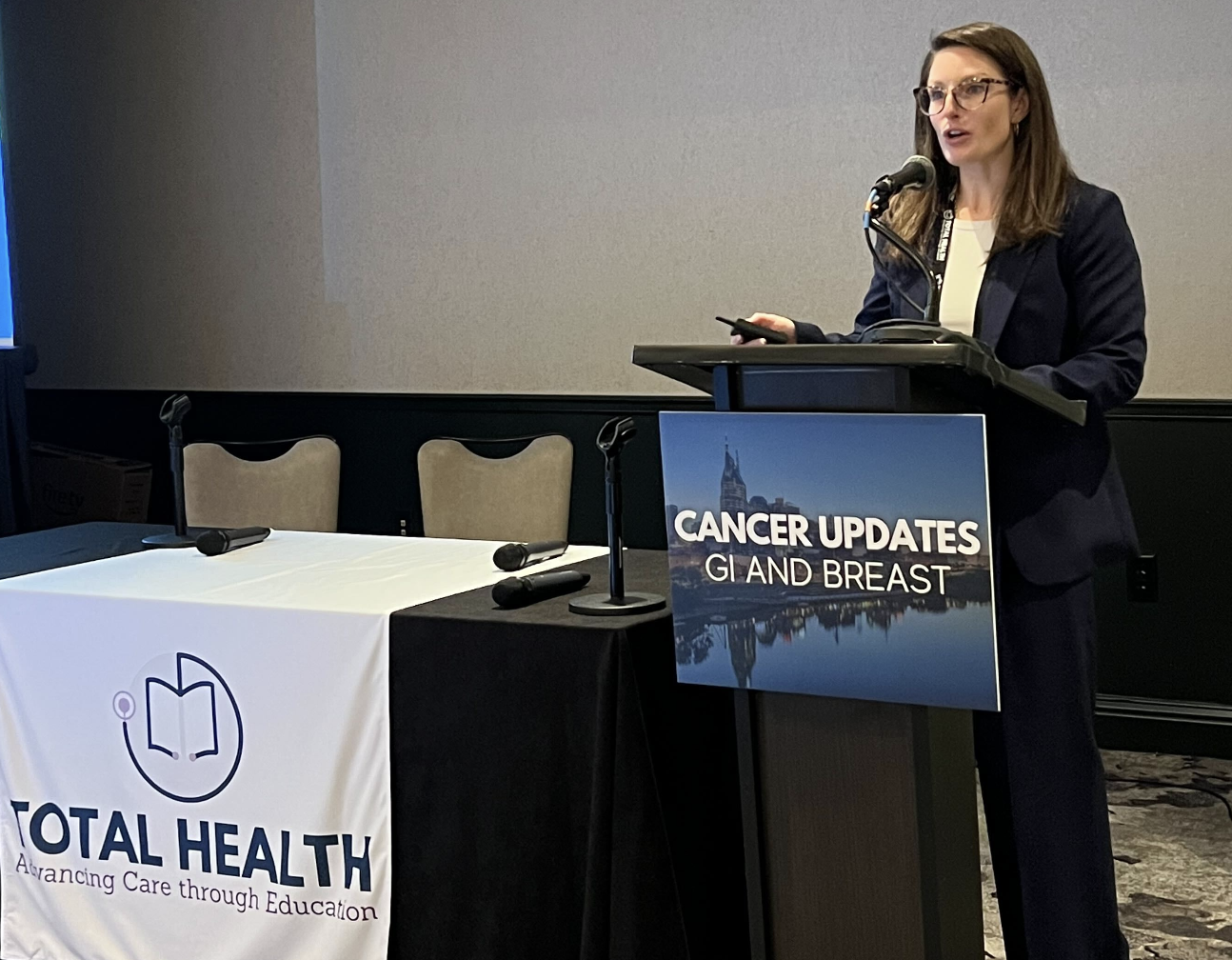
At the 2025 Cancer Updates GI and Breast Conference in Nashville, Tennessee presented by Total Health, Dr Meredith Pelster from Sarah Cannon Research Institute presented updates in colorectal cancer (CRC), with a focus on its changing epidemiology, advancements in screening methodologies, and evolving treatment strategies. She framed her discussion around three core areas: CRC epidemiology and risk factors, current screening approaches, and treatment decision-making, particularly for patients with early-stage disease.
Colorectal Cancer Epidemiology: A Disease in Transition
Dr Pelster noted that CRC remains one of the most common malignancies in the United States, ranking third in incidence for both men and women. While overall incidence and mortality rates have declined due to improved screening and early detection, a disturbing trend has emerged—a rising incidence of early-onset colorectal cancer (EOCRC), particularly in individuals under the age of 50.
Recent estimates indicate that in 2025, more than 150,000 new cases of CRC will be diagnosed, leading to over 50,000 deaths. Despite advancements in treatment, colorectal cancer remains the third leading cause of cancer-related deaths among men and the fourth leading cause among women.
While patients diagnosed with localized CRC have a strong five-year survival rate of approximately 91%, survival drops significantly for those diagnosed with regional (73%) or metastatic disease (15%). For metastatic CRC patients, even with aggressive treatment, median survival is around three years. This underscores the urgent need for improved early detection and prevention strategies.
The Alarming Rise of Early-Onset Colorectal Cancer (EOCRC)
One of the most striking shifts in CRC epidemiology is the rise in cases among younger individuals. Since 1994, Dr Pelster noted the incidence of EOCRC has increased by 51%, with nearly one in ten new colorectal cancer cases now occurring in patients under 50. Even more concerning, she noted that EOCRC patients are often diagnosed at more advanced stages and with more aggressive tumor characteristics. Some key statistics illustrating the urgency of this problem are listed in BOX 1.
BOX 1. Early Onset CRC: Some Key Statistics
Young-onset CRC cases are increasing at a rate of 1.5% per year.
Patients under 50 now represent more than 10% of all new CRC diagnoses.
More than 70% of EOCRC cases are diagnosed at stage III or IV, leading to worse outcomes.
Dr Pelster noted that one of the biggest challenges contributing to delayed diagnoses in younger patients is a lack of symptom recognition—both by patients and their primary care physicians (PCPs). Many young patients dismiss symptoms like rectal bleeding, changes in bowel habits, or unexplained weight loss, assuming they are due to benign causes such as hemorrhoids or dietary issues. Additionally, some PCPs may be hesitant to order a colonoscopy in younger patients, given that CRC has traditionally been viewed as a disease of aging.
Dr Pelster cited research showing that 41% of young-onset CRC patients wait more than six months before seeking medical attention for symptoms. Additionally, 67% see two or more physicians before receiving a diagnosis, with some consulting more than four doctors before appropriate testing is done. These delays significantly impact survival, as early-stage detection is key to improving long-term outcomes.
What’s Driving the EOCRC Surge?
Dr Pelster noted that, while the underlying causes of EOCRC remain unclear, research suggests a combination of genetic, environmental, and lifestyle factors to be involved. She noted that approximately 30% of EOCRC cases, for example, are linked to hereditary cancer syndromes such as Lynch syndrome or familial adenomatous polyposis (FAP), whereas the majority (50% or more) appear to be sporadic in nature. Dr Pelster noted some modifiable risk factors which are thought to contribute to the increasing incidence of EOCRC, and these are summarized in BOX 2.
BOX 2. Modifiable Risk Factors for EOCRC
Dietary Changes: Increased consumption of processed foods, red meat, and sugar-sweetened beverages has been linked to CRC.
Microbiome Disruptions: Widespread use of antibiotics, cesarean deliveries, reduced breastfeeding rates, and excessive food additives may alter gut bacteria and impact immune function.
Obesity and Sedentary Lifestyle: Higher body mass index (BMI) and lack of physical activity have been strongly associated with increased CRC risk.
Environmental Exposures: Some studies suggest that pesticides, industrial pollutants, and modern agricultural practices could contribute to carcinogenesis.
A particularly compelling hypothesis highlighted by Dr Pelster was the "birth cohort effect," which suggests that individuals born after the 1970s may face a higher lifetime risk of colorectal cancer due to the significant changes in diet and environmental exposures that occurred during this period and in their early development. Dr Pelster noted that additional research is needed to clarify the exact mechanisms driving this trend, but she emphasized the importance of raising awareness among both physicians and the public alike to encourage earlier screening and greater recognition of potential CRC symptoms.
Colorectal Cancer Screening: Expanding Access and Options
In response to rising EOCRC rates, Dr Pelster emphasized the evolution of screening recommendations. Specifically, the current guidelines now recommend initiating CRC screening at age 45 for average-risk individuals—a significant shift from the previous threshold of 50 years. Whether screening should begin even earlier for high-risk individuals, however, remains an open question. Some of the currently available CRC screening options for individuals are summarized in BOX 3.
BOX 3. Current CRC Screening Methodologies
Colonoscopy (Gold Standard): Detects and removes precancerous polyps but requires bowel preparation and sedation.
Fecal Immunochemical Test (FIT): Non-invasive stool test that detects occult blood but must be repeated annually.
Multitarget Stool DNA Test (Cologuard): Higher sensitivity than FIT, detects both blood and DNA mutations linked to CRC, but false positives can occur, leading to unnecessary colonoscopies.
CT Colonography: Imaging-based approach, less commonly used due to lower detection rates for small polyps.
While colonoscopy remains the most effective screening tool, Dr Pelster emphasized that "any test is better than no test” and advised PCPs to tailor screening recommendations based on patient preferences, risk factors, and access to care. For example, patients who are unwilling or unable to undergo colonoscopy should be encouraged to complete stool-based tests rather than forgoing screening entirely.
Treatment Strategies: Risk-Based Decision Making
For patients diagnosed with CRC, Dr Pelster noted that treatment decisions depend on tumor stage, risk factors, and results of molecular profiling tests. She discussed the importance of microsatellite instability (MSI) and mismatch repair deficiency (dMMR) testing, which is now especially important to guide treatment choices. For patients with MSI-High (MSI-H) or dMMR tumors, Dr Pelster noted this is associated with better prognosis in early-stage CRC, and these tumors are highly responsive to immunotherapy. As such, this is now the standard of care for metastatic disease and is currently being explored in even earlier-stage settings. For those with MSI-Stable (MSS) tumors, Dr Pelster noted these patients will typically require both chemotherapy and surgery. For patients with stage II disease, Dr Pelster noted that chemotherapy is not always necessary, although for stage III CRC, adjuvant chemotherapy is generally recommended to reduce recurrence risk. Lastly, she noted that, for rectal cancer, treatment is more complex and may involve a combination of chemotherapy, radiation, and surgery.
Conclusion: Strengthening Collaboration Between PCPs and Oncologists
Dr Pelster concluded by emphasizing the critical role of PCPs in CRC prevention, early detection, and survivorship care. As colorectal cancer trends continue to evolve, so too must screening strategies and awareness efforts. She urged primary care providers to maintain a low threshold for ordering colonoscopy in younger patients whose symptoms may be concerning, and to engage younger patients in discussions about lifestyle modifications that may reduce their CRC risk. With ongoing research into early-onset CRC and personalized treatment approaches, the future of colorectal cancer management continues to evolve. The key to improving outcomes, as Dr Pelster emphasized, lies in early detection, timely intervention, and seamless collaboration between our primary care and oncology teams.
Speaker Disclosure Information: Dr Pelster reported no relevant disclosures for this presentation