
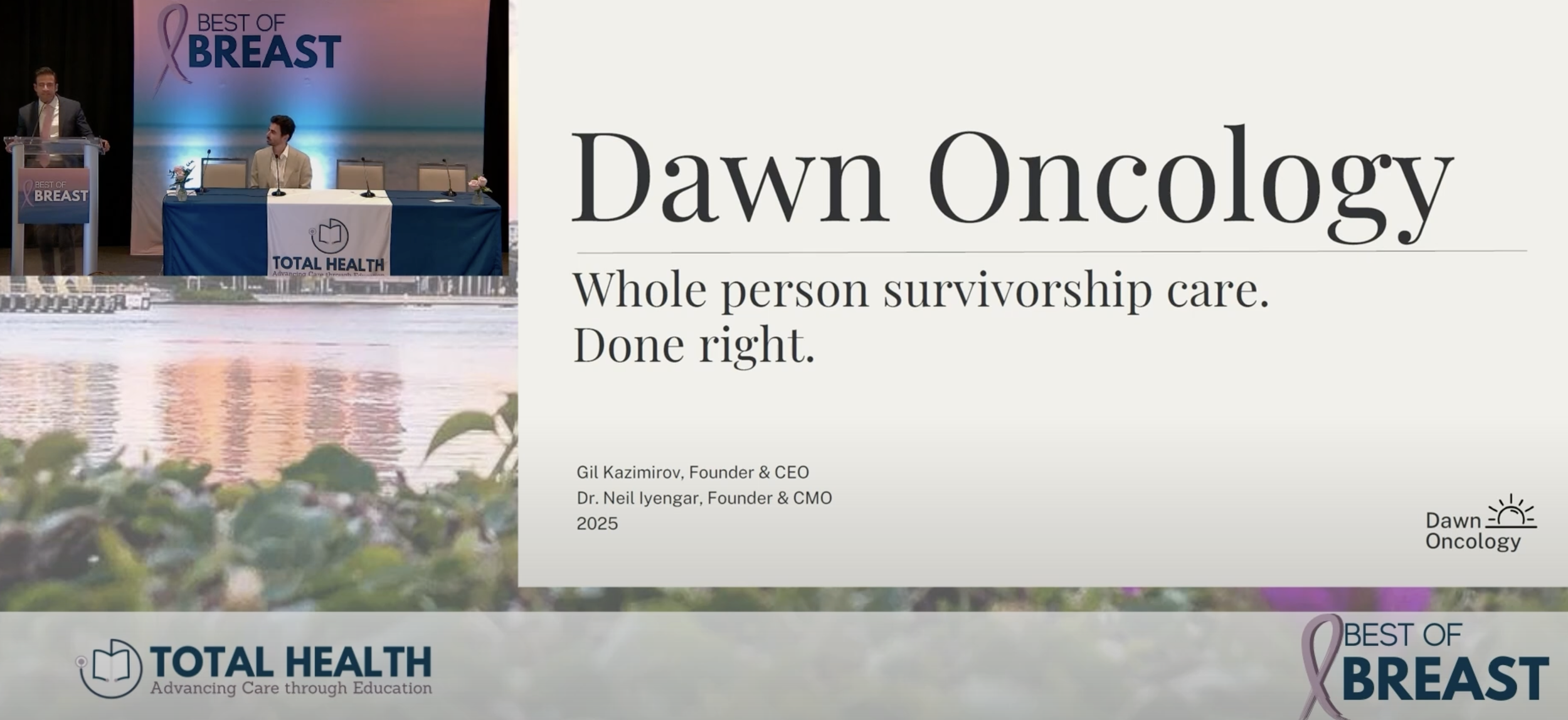
2025 Best of Breast: Dawn Oncology – A Virtual Platform for Whole Person Survivorship Care
Presenters:
Dr Neil Iyengar, MD, Dawn Oncology; Gil Kazimirov, Dawn Oncology
Conference:
2025 Best of Breast, Miami, FL
Quick Summary
Dawn Oncology is a novel virtual care model designed to provide comprehensive, patient-centered survivorship care starting from diagnosis. The model integrates lifestyle counseling, symptom management, and psychosocial support into oncology practices—without adding significant burden to clinicians. The platform also aims to close the gap between American Society for Clinical Oncology (ASCO)-endorsed ‘whole person’ care guidelines and the realities of limited implementation, owing to the constraints of reimbursement and workflow integration.
Background
At the 2025 Best of Breast Conference presented by Total Health, Dr Neil Iyengar and healthcare technology leader Gil Kazimirov described Dawn Oncology as a response to the “implementation gap” in survivorship care. They highlighted the fact that, despite broad clinician consensus on the importance of incorporating exercise, nutrition, and mental health into cancer care, evidence suggests that less than 50% of oncologists report being able to provide these services. “Every single oncologist we've spoken to said, ‘I wish I could deliver whole person survivorship care... but it's just unrealistic,’” noted Kazimirov, referencing their extensive interviews with stakeholders. They further noted that the current challenges are compounded by the increasing number of cancer survivors—which is estimated to rise to over 20 million in the United States by the year 2030. Despite this profound need for survivorship support, they noted that current systems are often fragmented, unaffordable, and/or inaccessible, especially for rural and community practices.
“We have an informed healthcare consumer now—patients are looking for comprehensive care before they even call your clinic.”
While not designed as a clinical trial, they noted that the Dawn Oncology model draws on experience from prior programs such as Memorial Sloan Kettering’s Healthy Living Program, founded by Dr Iyengar. This predecessor initiative enrolled ~1,400 patients and captured several key patient-reported outcomes (PROs) across multiple domains, including sleep, mood, exercise, and sexual health. The Dawn Oncology initiative builds on that structure, offering a virtual care team composed of an APP (advanced practice provider) trained in lifestyle and survivorship care, behavioral health managers supervised by psychiatrists, registered dietitians and physical activity experts (available as needed) and a care coordinator integrated into the oncology electronic health records (EHR) system. All care in this model is risk-stratified using a validated screening tool and tailored to each patient’s evolving needs from diagnosis through long-term survivorship.
Key Findings
Some of the key problems identified in survivorship plans include the fact that 81% of cancer survivors report unmet physical needs after treatment, while 86% report unmet emotional needs. In addition, up to 50% of patients are lost to follow-up after five years—especially in community settings. Lastly, they noted that existing survivorship models (e.g., survivorship care plans) are generally static, underutilized, and poorly reimbursed. “We’re giving patients a piece of paper when they need a coordinated team,” Iyengar emphasized.
“This is not another paper checklist—it’s a team approach that evolves with your patient.”
The Dawn Oncology Model differs in that it offers a dynamic digital care plan that updates as the patient’s condition evolves, virtual onboarding at the time of diagnosis, or post-treatment (i.e., a flexible entry point), and stratified care designed to address key issues such as sleep, nutrition and supplements, mental health, physical activity, sexual health and intimacy, as well as pain and symptom management. In this regard, Dr Iyengar noted “Handing someone a pamphlet and saying, 'go exercise' is like saying 'go take some pills'—it’s meaningless without context.”
Early data from the precursor program indicate some of the top patient needs at baseline, including supplement safety, sleep, exercise, and mental health. In addition, PROs have shown significant improvement in physical function, anxiety, depression, and fatigue after just 6 months of engagement in the program. The presenters noted that findings have thus far been highlighted at key oncology meetings including the San Antonio Breast Cancer Symposium (SABCS) and ASCO, with a manuscript currently pending publication.
The presenters reviewed some of the barriers to delivering quality survivorship care in the current healthcare environment, such as provider burnout, and financial toxicity which the Dawn Oncology program is designed to address. With regard to financial toxicity, the presenters noted the aim is to have the majority of the services covered by insurance, although the co-pays for the patient will vary depending on the insurance type. They further noted that the model is designed for financial sustainability, turning survivorship care from a cost center into a reimbursable service line.
Conclusions and Faculty Insights
The presenters concluded by emphasizing that Dawn Oncology was framed as a “plug-and-play” solution to the widely recognized, but under-implemented, need for holistic survivorship care. “It’s not about creating a new clinic, it’s about embedding this into your workflow,” said Kazimirov. “…We integrate directly with your EHR.”
Some of the key benefits for stakeholders identified included:
Patients: Benefit from receipt of coordinated, multidisciplinary support, addressing both symptoms and long-term risks.
Oncologists: Benefit from being able to focus on high-acuity cases, while offloading lifestyle and supportive care issues, and without sacrificing quality.
Practices: Benefit by improving MIPS metrics, retention of patients, and potential revenue—all while offering comprehensive care.
In conclusion, Dr Iyengar noted “The real win is that patients don’t fall through the cracks... We’re maintaining continuity of care, preventing long-term complications, and closing the survivorship gaps.”
“One of our biggest learnings is that many of these needs are pre-existing at diagnosis. We’re not creating new problems; we’re just finally addressing them.”
For more information about the Dawn Oncology program, please contact the presenters directly at: gil@dawnoncology.com or neil@dawnoncology.com
You can also see the full Dawn Oncology presentation from the 2025 Best of Breast program on our YouTube channel here, beginning at the 01:05:05 mark.
Speaker Disclosure Information: The speakers disclosed no relevant financial relationships for this presentation.