
Best of Breast 2025: Integrative Medicine for Anxiety and Depression in Breast Cancer
Presenter:
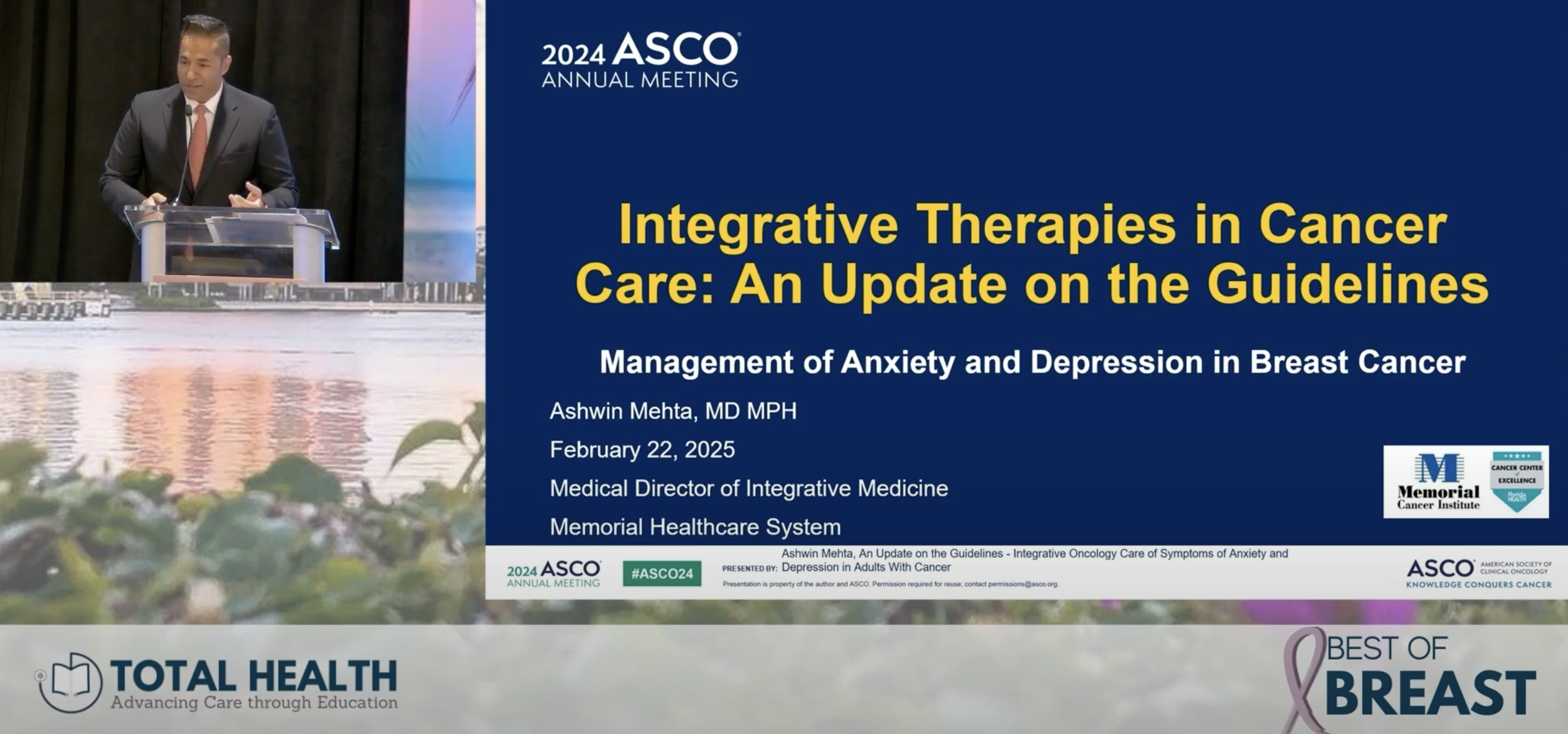
Ashwin Mehta, MD, MPH, Memorial Healthcare System
Conference:
2025 Best of Breast, Miami, FL
Quick Summary
Mindfulness-based interventions (MBIs) are now strongly recommended for managing symptoms of anxiety and depression in patients with breast cancer, both during and after treatment. Interventions such as yoga, music therapy, relaxation techniques, and reflexology also show benefits, although evidence varies. Integrative therapies can offer a non-pharmacologic, evidence-based pathway to improving patients’ quality of life and adherence to their treatment.
Background
At the 2025 Best of Breast conference hosted by Total Health, Dr Ashwin Mehta, an Integrative Medicine physician specializing in cancer care and survivorship, opened his session with a personal reflection on the concept of “psycho-emotional residue”—the emotional and physiological burden that we carry from one environment into another. He contextualized this in the clinical setting, noting how residual stress and burnout affect both patients and providers alike. Drawing from his own personal practice and patient examples, he emphasized the importance of intentional transitions and decompression strategies as the foundation of ‘whole person’ care.
Dr Mehta’s presentation was centered around the 2023 ASCO-SIO Clinical Practice Guidelines for the integrative treatment of anxiety and depression in adults with cancer. These guidelines were developed by a multidisciplinary panel based on a systematic literature review spanning 5,144 publications. After filtering, only 30 meta-analyses and 80 randomized controlled trials (RCTs) were deemed eligible for analysis, and Dr Mehta noted this is reflective of the immense opportunity to expand the evidence base on this topic.
Key Findings
For patients experiencing anxiety during their treatment, Dr Mehta noted high quality evidence for Mindfulness-Based Interventions (MBIs) with a strong recommendation for these interventions in the guidelines. “If there’s one theme we should all take away, it is that mind-body medicine interventions really are supported by high-quality evidence.” Dr Mehta said. Dr Mehta noted moderate recommendations in the guidelines for interventions with intermediate-quality evidence, including yoga, hypnosis (for procedural anxiety), and relaxation therapies, such as progressive muscle relaxation and breathwork. Lastly, there was low-quality evidence for other therapies like music therapy and reflexology resulting in weak recommendation for these interventions.
For patients with symptoms of anxiety in the post-treatment/survivorship setting, Dr Mehta noted that MBIs again received the strongest recommendation in the guidelines, whereas yoga, acupuncture, Tai Chi/Qigong, and reflexology were all endorsed with moderate to weak recommendations, depending on the quality of evidence. Of note, Dr Mehta emphasized that the most high-quality studies were conducted in patients with breast cancer, which highlights a current research gap for other tumor types.
For patients experiencing depression during and after treatment, MBIs again received strong recommendations with high-quality evidence for these interventions, whereas yoga, music therapy, and relaxation therapies showed moderate benefit. In addition, reflexology offered some promise in this area, but quality of evidence was low. Lastly, Dr Mehta noted that expressive writing, often recommended in mental health settings, was not supported for reducing depression symptoms in cancer patients.
Dr Mehta added that, while MBIs are generally safe, he urged clinicians to set realistic expectations for these types of interventions: “There’s this misconception that the goal of meditation techniques is for one to completely silence one’s mind… but we’re not ‘Etch-A-Sketch’ toys.” He commented. In addition, Dr Mehta noted that some patients may experience initial agitation or emotional discomfort, particularly when exploring deeper psychological issues during their practice. Despite this, however, he noted that passive observation of emotions can also be considered a therapeutic goal, not necessarily a complication of treatment.
Conclusions and Faculty Insights
Dr Mehta emphasized strategies for practical implementation of these recommendations with patients. The key domains for patients, he noted are “food, mood, move, and snooze”. He also emphasized the importance of recognizing disparities in access to integrative medicine, for example, financial toxicity, geographic barriers, and a lack of trained facilitators at some centers. Overall, he urged clinicians to “not let the perfect be the enemy of the good” when recommending exercise or mind-body practices for patients.
In the Q&A portion of his presentation Dr Mehta also emphasized sexual health concerns as concern for women with hormone-sensitive breast cancer: “One of the most important things we can do in clinical practice is to ask—‘How are you doing with intimacy?’” The goals of his integrative practice, he noted, is to promote this dialogue between patients and partners, reinforcing the importance of addressing survivorship-related quality-of-life issues head-on.
You can see the full presentation by Dr Mehta from the 2025 Best of Breast program on our YouTube channel here, beginning at the 29:00 mark.
Speaker Disclosure
Dr. Ashwin Mehta declared no financial relationships relevant to the presentation.