
Presenter: Kathleen Mahoney, MD, Dana-Farber Cancer Institute, Beth Israel Deaconess Medical Center, Harvard Medical School
Conference: Best of ASCO Boston
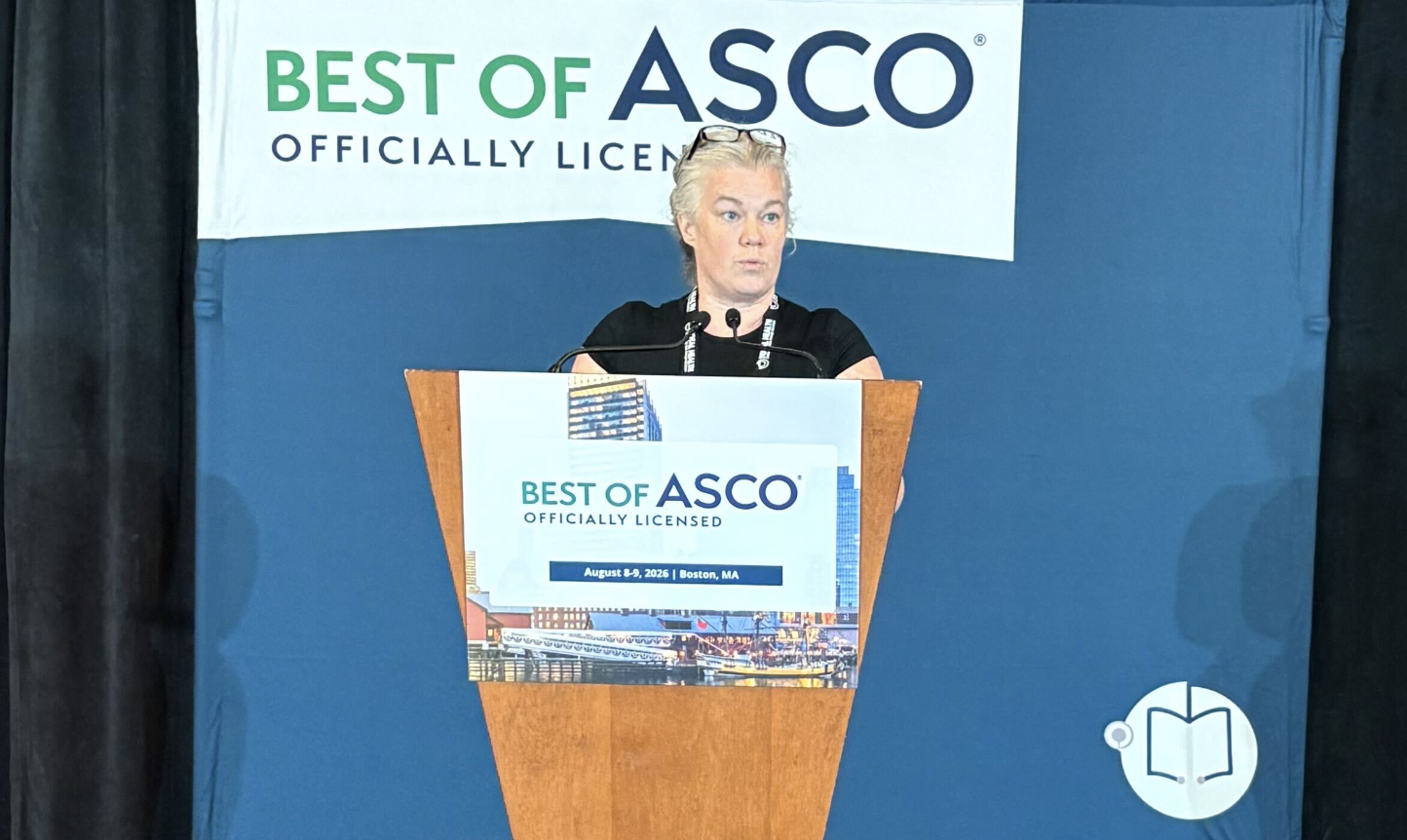
Prostate Cancer Updates from ASCO 2026: Balancing Treatment Intensification With Patient Selection
At the Best of ASCO Boston conference presented by Total Health, Dr Kathleen Mahoney used her presentation to review several of the most clinically relevant prostate cancer studies presented at the 2026 ASCO Annual Meeting. Her discussion focused on three key studies with potential implications for practice: PROTEUS, evaluating perioperative apalutamide plus androgen deprivation therapy (ADT) in high-risk localized or locally advanced prostate cancer; PR21/PLUDO, examining sequencing of 177Lu-PSMA-617 and docetaxel in metastatic castration-resistant prostate cancer (mCRPC); and TALAPRO-3, evaluating talazoparib plus enzalutamide in homologous recombination repair (HRR) gene–altered metastatic castration-sensitive prostate cancer (mCSPC). She also highlighted emerging efforts to refine treatment selection using biomarkers and to incorporate toxicity and quality-of-life considerations into therapeutic decision-making.
PROTEUS: Does Perioperative Intensification Establish a New Standard?
Dr Mahoney began with the phase 3 PROTEUS trial which addressed an important unmet need in patients with high-risk localized or locally advanced prostate cancer undergoing radical prostatectomy. Despite curative-intent surgery, she noted that more than half of patients with high-risk disease may eventually relapse. PROTEUS therefore investigated whether intensifying perioperative hormonal therapy could improve both pathologic response and longer-term outcomes. The trial randomized 2,109 patients to receive apalutamide plus ADT or placebo plus ADT. The treatment was administered for 6 cycles before radical prostatectomy and for another 6 cycles after surgery, representing approximately 1 year of perioperative systemic therapy. The dual primary endpoints were pathologic complete response/minimal residual disease (pCR/MRD) at prostatectomy and metastasis-free survival (MFS), with metastases assessed using conventional imaging, PSMA-PET imaging, histopathology, or death.
PROTEUS met both primary endpoints. At prostatectomy, pCR/MRD occurred in 8.9% of patients receiving apalutamide plus ADT compared with 1.0% receiving placebo plus ADT (odds ratio [OR] = 10.17; 95% CI, 5.27–19.64; P<.0001). Residual cancer burden results supported the pathologic findings, with favorable residual cancer burden observed in 30.6% versus 11.7% of patients, respectively. MFS incorporating both conventional imaging and PSMA-PET was also significantly improved. Apalutamide plus ADT reduced the risk of metastasis or death by 20% compared with placebo plus ADT (HR = 0.80; 95% CI, 0.67–0.96; P=.02). Other secondary outcomes also favored treatment intensification. Event-free survival improved from a median of 38.4 to 57.1 months (HR = 0.71), and the risk of distant metastasis was reduced by 32% (HR = 0.68). Median time to first subsequent therapy also increased from 41.5 months with placebo plus ADT to 74.2 months with apalutamide plus ADT. Dr Mahoney emphasized an important caveat, however, in that MFS assessed using conventional imaging alone was not significantly improved (HR = 0.84; 95% CI, 0.67–1.07; P=.15). As such, the earlier detection of metastases by PSMA-PET, as well as subsequent treatment triggered by those findings, may thus have affected the analysis. Nevertheless, Dr Mahoney viewed the conventional-imaging result as clinically important when interpreting whether the regimen should immediately become routine practice.
Treatment burden also deserves consideration in the setting of prostate cancer, and Dr Mahoney noted that rash was substantially more common with apalutamide plus ADT, occurring in 33.0% of patients compared with 15.3% in the control arm, with grade ≥3 rash in 5.9% versus 0.3%. Testosterone recovery was also prolonged; among patients whose testosterone recovered to ≥200 ng/dL, median time from the end of treatment to recovery was 8.1 months with apalutamide plus ADT versus 6.6 months with placebo plus ADT. Thus, although the investigators concluded that PROTEUS establishes a new standard of care, Dr Mahoney offered a more cautious interpretation. Her key takeaway was that the trial did not demonstrate a statistically significant improvement in MFS by conventional imaging despite 12 months of hormonal treatment and a prolonged period before testosterone recovery. In this regard, she awaits additional analyses, including biomarker, surgical, and pathology correlates and a substudy comparing the strategy directly with radical prostatectomy, that may help clarify which patients derive sufficient benefit to justify the perioperative intensification.
PR21/PLUDO: Does Treatment Sequence Matter in mCRPC?
Dr Mahoney then reviewed findings from the Canadian Cancer Trials Group PR21/PLUDO study, which addressed a different practical challenge: how to sequence 177Lu-PSMA-617 and docetaxel in patients with mCRPC progressing after an androgen receptor pathway inhibitor (ARPI). The study enrolled chemotherapy-naive patients with PSMA-PET–positive disease and randomized them to 177Lu-PSMA-617 or docetaxel, with crossover to the alternate treatment following radiographic progression.
The original analysis had demonstrated no significant difference in radiographic progression-free survival (rPFS) between initial 177Lu-PSMA-617 and docetaxel (HR = 1.01; 90% CI, 0.77–1.31). An apparent OS advantage for patients randomized to docetaxel first was difficult to interpret because crossover between treatment groups was imbalanced. The planned crossover analysis presented at ASCO was therefore particularly important for understanding whether treatment sequence itself affected outcomes. Among patients who received both therapies, there were no significant differences in rPFS or OS between 177Lu-PSMA-617 followed by docetaxel and docetaxel followed by 177Lu-PSMA-617. Interestingly, Dr Mahoney noted that PSA declines of at least 50% during crossover therapy occurred in 69% of patients receiving docetaxel after 177Lu-PSMA-617 compared with 40% receiving 177Lu-PSMA-617 after docetaxel (P=.004).
Quality-of-life and toxicity findings did not suggest that poorer tolerability of 177Lu-PSMA-617 explained the original imbalance in crossover. At first radiographic progression, mean FACT-P scores were 114 with 177Lu-PSMA-617 and 103 with docetaxel. For Dr Mahoney, the clinical message from the results was not that one sequence had emerged as superior. Rather, she believes that both 177Lu-PSMA-617 and docetaxel remain viable options after ARPI progression, and the crossover data provide reassurance that patients who receive both treatments can achieve comparable outcomes regardless of sequence.
TALAPRO-3: Moving PARP Inhibition Earlier in HRR-Altered Disease
In the final portion of her presentation, Dr Mahoney noted findings from TALAPRO-3 which tested whether PARP inhibition should move earlier in the prostate cancer treatment continuum. The phase 3 trial randomized 599 patients with HRR gene–altered mCSPC to talazoparib plus enzalutamide or placebo plus enzalutamide. Eligible HRR alterations included ATM, ATR, BRCA1, BRCA2, CDK12, CHEK2, FANCA, MLH1, MRE11A, NBN, PALB2, and RAD51C.
The study met its primary endpoint, in that talazoparib plus enzalutamide produced a 52% reduction in the risk of radiographic progression or death compared with enzalutamide alone (HR = 0.481; 95% CI, 0.357–0.647; P<.0001). Median rPFS was not reached with the combination and was 45.8 months with placebo plus enzalutamide. The interim OS analysis favored talazoparib plus enzalutamide numerically but the difference was not statistically significant (HR = 0.767; 95% CI, 0.564–1.044; P=.0905). Dr Mahoney therefore characterized the result as an OS trend rather than an established survival benefit. Importantly, she noted that the magnitude of rPFS benefit differed according to molecular subgroup. Among patients with BRCA1/2alterations, for example, the HR was 0.368, corresponding to a 63% reduction in the risk of progression or death. In patients with non-BRCA1/2 HRR alterations, the HR was 0.567. These findings reinforced one of Dr Mahoney’s broader messages from the meeting: not all HRR alterations should necessarily be considered biologically or clinically equivalent.
Efficacy endpoints in this trial must also be weighed against the substantial additional toxicity. Anemia was particularly prominent with talazoparib plus enzalutamide, occurring in 71% of patients, with grade 3/4 anemia in 51%. Neutropenia, decreased neutrophil counts, fatigue, and other hematologic toxicities were also increased. Events of special interest included 3 cases of myelodysplastic syndrome and 2 cases of acute myeloid leukemia in the combination arm, compared with 1 case of myelodysplastic syndrome and no cases of acute myeloid leukemia in the control arm. Venous embolic and thrombotic events occurred in 7 versus 5 patients, respectively. As such, Dr Mahoney interpreted TALAPRO-3 as supporting consideration of talazoparib plus enzalutamide for selected patients with HRR-altered mCSPC rather than viewing the results as justification for indiscriminate treatment of every patient with an HRR alteration. The strength of the efficacy signal, molecular subtype, immature OS findings, and increased toxicity of the regimen, she believes, will all need to enter that discussion.
Toward More Individualized Prostate Cancer Treatment
Collectively, the studies from ASCO 2026 as highlighted by Dr Mahoney demonstrate how prostate cancer management is moving beyond a simple question of whether treatment intensification improves an efficacy endpoint. The emerging challenge is identifying which patients require additional therapy, when that therapy should be delivered, and whether the magnitude of benefit justifies its toxicity and treatment burden.
PROTEUS demonstrates substantial improvements in pathologic response and several disease-control endpoints with perioperative apalutamide plus ADT, but Dr Mahoney emphasized the absence of statistically significant improvement in conventional-imaging MFS and the prolonged hormonal exposure involved. PLUDO suggests that both docetaxel and 177Lu-PSMA-617 can remain effective components of the mCRPC treatment sequence without establishing a clearly superior order. Lastly, TALAPRO-3 demonstrates a large rPFS benefit from upfront talazoparib plus enzalutamide in HRR-altered mCSPC, while simultaneously underscoring the importance of molecular heterogeneity and toxicity in selecting patients for treatment.
The additional biomarker studies highlighted in the presentation, including analyses of BRCA2 variant type and location, reinforce this direction. As Dr Mahoney’s review suggests, the next phase of prostate cancer treatment may depend less on applying increasingly intensive therapy broadly and more on using molecular, clinical, and patient-centered information to determine who truly needs intensification and who can safely avoid it.
Speaker Disclosure Information: Dr Mahoney reported no relevant disclosures for this presentation.