
Best of ASCO Denver 2026: Multiple Myeloma
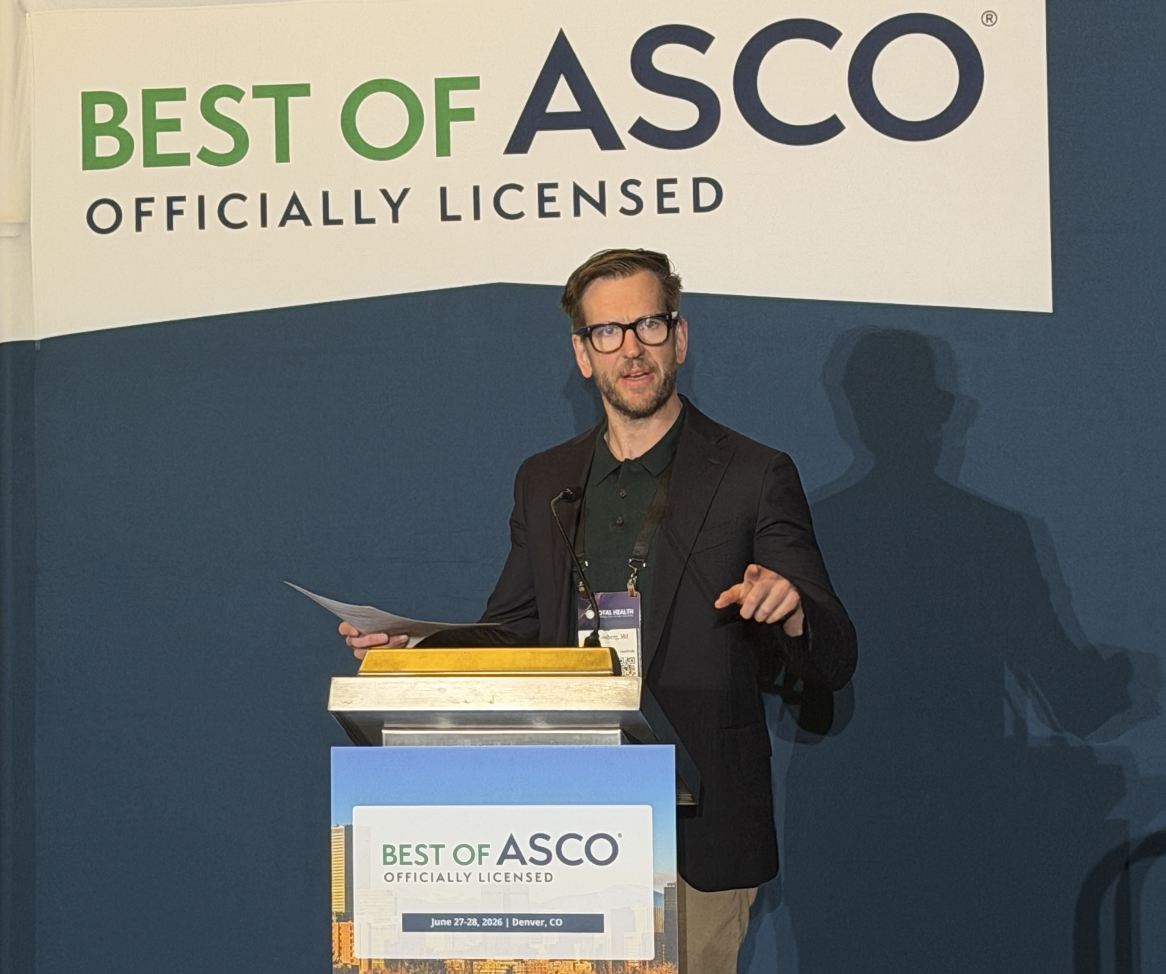
Peter Forsberg, MD
Colorado Blood Cancer Institute | Sarah Cannon Research Institute
Key Takeaways
Mezigdomide, a next-generation cereblon E3 ligase modulator (CELMoD), significantly improved progression-free survival (PFS) and depth of response compared with carfilzomib/dexamethasone alone in patients with relapsed/refractory multiple myeloma (RRMM), establishing a promising new therapeutic class following lenalidomide exposure.
The phase III MajesTEC-9 trial demonstrated that teclistamab monotherapy substantially improved PFS, overall survival (OS), and minimal residual disease (MRD)-negative complete response rates compared with standard triplet therapy in earlier-line RRMM, supporting movement of BCMA-directed bispecific antibodies into earlier treatment settings.
The OPTec/OPTal study showed that outpatient administration of teclistamab or talquetamab using prophylactic tocilizumab markedly reduced cytokine release syndrome (CRS), suggesting that community-based delivery of bispecific antibodies may become increasingly feasible with appropriate monitoring protocols.
Early results from LINKER-AL2 demonstrated impressive hematologic and organ responses with linvoseltamab in relapsed/refractory AL amyloidosis, highlighting expansion of BCMA-targeted therapies beyond multiple myeloma.
First-in-human data from InMyCAR suggest that in vivo CAR-T generation may represent the next evolution of cellular therapy by eliminating individualized manufacturing while maintaining encouraging efficacy and a manageable safety profile.
Presentation Summary
Multiple myeloma continues to undergo one of the most rapid therapeutic evolutions in oncology. While proteasome inhibitors, immunomodulatory drugs (IMiDs), and anti-CD38 monoclonal antibodies remain foundational components of treatment, the field has increasingly shifted toward immune-based strategies that redirect T cells, deepen responses, and potentially simplify treatment delivery. At the 2026 Best of ASCO Denver conference presented by Total Health, Dr Peter Forsberg organized his presentation around this evolution, highlighting advances that extend beyond the development of new agents to include improved sequencing of therapies, earlier integration of immune-based approaches, and innovations that may ultimately transform how advanced therapies are delivered in routine practice.
Rather than focusing on a single therapeutic platform, Dr Forsberg’s presentation illustrated several complementary trends shaping the future of myeloma management, including next-generation cereblon modulators, earlier use of bispecific antibodies, outpatient administration strategies, emerging applications of BCMA-directed therapy in plasma cell disorders beyond myeloma, and novel approaches to in vivo CAR-T-cell generation.
Can CELMoDs redefine treatment after lenalidomide?
One of the most practice-relevant presentations Dr Forsberg discussed was the phase III SUCCESSOR-2 trial evaluating mezigdomide combined with carfilzomib and dexamethasone (MeziKd) versus carfilzomib/dexamethasone (Kd) in patients with relapsed/refractory multiple myeloma previously exposed to both lenalidomide and anti-CD38 monoclonal antibodies. He began by introducing CELMoDs (cereblon E3 ligase modulators) as the next generation of cereblon-directed therapies. Unlike first-generation IMiDs, CELMoDs bind cereblon more effectively, resulting in enhanced degradation of the transcription factors Ikaros and Aiolos while simultaneously improving immune activation and overcoming resistance that commonly develops following prolonged IMiD exposure. These mechanistic differences have positioned mezigdomide as one of the leading agents in this emerging drug class.
The SUCCESSOR-2 population was reflective of contemporary clinical practice, with nearly all patients previously exposed to lenalidomide and anti-CD38 therapy, a median of two prior lines of treatment, and approximately 40% exhibiting triple-class refractory disease. The efficacy results were striking, with median PFS improving from 8.3 months to 18.0 months (hazard ratio [HR] = 0.48; P<0.0001). Overall response rate (ORR) also increased from 53.4% to 80.2%, and complete responses nearly tripled (26.7% vs 8.9%). The benefits were observed consistently across predefined subgroups, including patients with high-risk cytogenetics and those with extramedullary disease. In addition, a favorable trend in overall survival (OS) was already emerging despite relatively early follow-up.
Dr Forsberg noted that treatment-related toxicity was overall consistent with the expected mechanism of action. Grade 3/4 neutropenia represented the predominant adverse event, although discontinuation due to neutropenia was uncommon and generally manageable with dose modification and granulocyte colony-stimulating factor (G-CSF). He further noted the relatively low incidence of severe hypertension compared with standard Kd, potentially reflecting the lower carfilzomib dose incorporated into the combination regimen.
Collectively, Dr Forsberg believes these findings position mezigdomide as a promising option for patients progressing after lenalidomide-based therapy while at the same time introducing an entirely new therapeutic class that may extend the utility of cereblon-directed treatment well beyond conventional IMiDs.
Should bispecific antibodies move earlier in relapse?
Dr Forsberg also reviewed findings from the phase III MajesTEC-9 study, which addressed one of the most important questions currently facing myeloma management - whether BCMA-directed bispecific antibodies should move into earlier lines of therapy. The trial randomized patients with one to three prior lines of therapy to receive either teclistamab monotherapy or investigator's choice of pomalidomide/bortezomib/dexamethasone or carfilzomib/dexamethasone. Importantly, he noted that participants had not previously received BCMA-directed therapy but represented a highly refractory population, with approximately three-quarters demonstrating dual refractoriness to lenalidomide and anti-CD38 antibodies.
Teclistamab demonstrated substantial improvements across multiple clinically meaningful endpoints in the trial, with a 71% reduction in the risk of progression or death (HR = 0.29), and an estimated 18-month PFS of 69.8% versus 26.9%. Additional findings showed a significant improvement in OS (HR = 0.60), an ORR of 84.5% compared with 54.2%, a nearly fourfold higher complete response rate, and markedly higher MRD-negative complete response rates among evaluable patients.
While the efficacy findings were compelling, Dr Forsberg reminded attendees that successful implementation of bispecific antibodies also depends on proactive toxicity management. Cytokine release syndrome (CRS) remained predominantly low grade, although infections, including grade 3/4 infections, continue to represent one of the principal limitations of prolonged BCMA-directed therapy. In this regard, he emphasized the importance of antimicrobial prophylaxis, immunoglobulin replacement, and careful monitoring as essential components of routine clinical care. Overall, the findings reinforce growing evidence that bispecific antibodies may ultimately move substantially earlier in the treatment paradigm rather than being reserved for heavily pretreated patients.
Can bispecific antibodies be safely delivered in community practice?
Although bispecific antibodies have demonstrated remarkable efficacy, Dr Forsberg noted that logistical barriers associated with step-up dosing and hospitalization remain important obstacles to a broader adoption of these therapies. In this regard, he highlighted the phase II OPTec/OPTal study as an important example of how treatment delivery may ultimately evolve. This community-based study evaluated outpatient administration of teclistamab or talquetamab following prophylactic tocilizumab. Patients underwent structured outpatient monitoring that included daily clinical assessments, home monitoring of temperature and oxygen saturation, neurological evaluations, and caregiver support during the step-up dosing period.
Early safety findings in the trial were encouraging, with CRS occurring in only a small proportion of patients receiving teclistamab and the incidence remaining entirely grade 1. In addition, no cases of ICANS were reported, and no grade 3 or higher CRS events occurred. Observed ORR also remained favorable despite outpatient administration.
Perhaps more important than the efficacy data, Dr Forsberg thought the study provides a practical framework for expanding access to bispecific antibodies beyond tertiary referral centers. He believes that, as experience with these therapies increases, standardized outpatient protocols incorporating prophylactic cytokine blockade and structured monitoring could substantially broaden patient access while reducing healthcare utilization.
Can BCMA-directed therapy improve outcomes in AL amyloidosis?
Dr Forsberg next highlighted the phase I portion of LINKER-AL2, evaluating the BCMA-directed bispecific antibody linvoseltamab in relapsed or refractory systemic AL amyloidosis. Although biologically related to multiple myeloma, AL amyloidosis remains an area of substantial unmet need, particularly after relapse where no approved standard therapy exists. Results from this trial showed, among the first 20 treated patients, all achieved at least a very good partial response, with ninety percent achieving complete hematologic responses. Additional findings showed that involved free light chains normalized rapidly, often within two weeks, with renal responses occurring in 73% of evaluable patients, and cardiac responses observed in 50%. There we no dose-limiting toxicities identified in the trial. Although the dataset remains small and follow-up remains relatively short, Dr Forsberg believes the results thus far suggest that BCMA-directed immune therapy may ultimately become an important strategy beyond conventional multiple myeloma, potentially offering meaningful clinical benefit in plasma cell disorders characterized by limited therapeutic options.
Is in vivo CAR-T the next frontier?
In the final portion of his presentation, Dr Forsberg highlighted one of the meeting's most forward-looking concepts: in vivo CAR-T-cell generation. Unlike currently approved CAR-T therapies, which require individualized cell collection, manufacturing, and lymphodepleting chemotherapy, the investigational KLN-1010 platform utilizes lentiviral vectors to generate anti-BCMA CAR-T cells directly within the patient following intravenous administration. This strategy has the potential to dramatically simplify treatment logistics while at the same time preserving many of the therapeutic advantages associated with cellular therapy.
Early findings from the first-in-human InMyCAR study were encouraging, with ORR reaching 100% among treated patients, and deep MRD-negative bone marrow responses observed. In addition, CAR-T-cell persistence appeared durable without conventional lymphodepletion, and CRS remained overall low grade and manageable. Only one grade 3 ICANS event was reported which resolved rapidly, and no immune effector cell-associated enterocolitis syndrome was observed. As such, while highly preliminary, Dr Forsberg noted these findings illustrate how cellular therapy is continuing to evolve, potentially making CAR-T treatment more scalable, more accessible, and less resource intensive than current autologous manufacturing approaches.
Clinical Perspective
Dr Forsberg's presentation illustrated several important shifts that collectively define the next phase of multiple myeloma treatment. First, the field continues to expand beyond traditional IMiDs through development of next-generation cereblon modulators such as mezigdomide, offering effective options for patients who have exhausted lenalidomide-based therapy. Second, BCMA-directed bispecific antibodies are rapidly transitioning from late-line salvage therapy toward earlier disease settings, supported by increasingly robust efficacy and survival data. Finally, investigators are devoting increasing attention to optimizing treatment delivery, whether through outpatient bispecific administration protocols or next-generation cellular therapies designed to eliminate the logistical complexity of conventional CAR-T manufacturing.
Taken together, the findings from this year’s ASCO suggest that future advances in multiple myeloma may depend as much on refining the delivery, sequencing, and accessibility of immune-based therapies as on discovering entirely new therapeutic targets. As these approaches mature, clinicians may soon have a broader range of highly active immunotherapies that can be delivered earlier in the disease course and, increasingly, within community oncology practice.
Speaker Disclosure Information: Peter Forsberg, MD reported the following disclosures for this presentation: Advisory/Consulting: Johnson & Johnson, Bristol Myers Squibb, GSK, Sanofi, Kite, Pfizer, BeOne; Research Support: Johnson & Johnson, Kite, AbbVie; Speaker's Bureau: Sanofi, Pfizer.