
Best of ASCO Denver 2026: Lymphoma Updates
Tycel Phillips, MD
Associate Professor of Medicine, City of Hope National Medical Center
Key Takeaways
The phase III frontMIND trial demonstrated a progression-free survival benefit with tafasitamab, lenalidomide, and R-CHOP in newly diagnosed diffuse large B-cell lymphoma (DLBCL), adding another potentially effective frontline option but also increasing the complexity of regimen selection.
Pola-R-CHP may remain an attractive frontline option for many patients with non-germinal-center DLBCL because of its simpler schedule and lower toxicity burden, whereas frontMIND may be more relevant for selected younger patients with high-risk germinal-center disease who can tolerate lenalidomide.
In older or anthracycline-ineligible patients, epcoritamab plus R-mini-CVP produced encouraging early efficacy with manageable cytokine release syndrome (CRS), although confirmation in larger multicenter studies is needed.
The phase III SUNMO study showed that mosunetuzumab plus polatuzumab improved outcomes compared with R-GemOx in relapsed/refractory DLBCL and may be particularly relevant for patients who cannot access CAR T-cell therapy.
In mantle cell lymphoma (MCL), fixed duration glofitamab produced durable responses after covalent BTK inhibitor exposure, especially among patients who achieved complete response and undetectable minimal residual disease.
The PRMT5 inhibitor AZD3470 showed promising single-agent activity in heavily pretreated classical Hodgkin lymphoma, where treatment options remain limited after checkpoint inhibitor and brentuximab exposure.
Novel approaches in peripheral T-cell lymphoma and extranodal NK/T-cell lymphoma remain promising but appear highly subtype dependent and require additional validation.
Presentation Summary
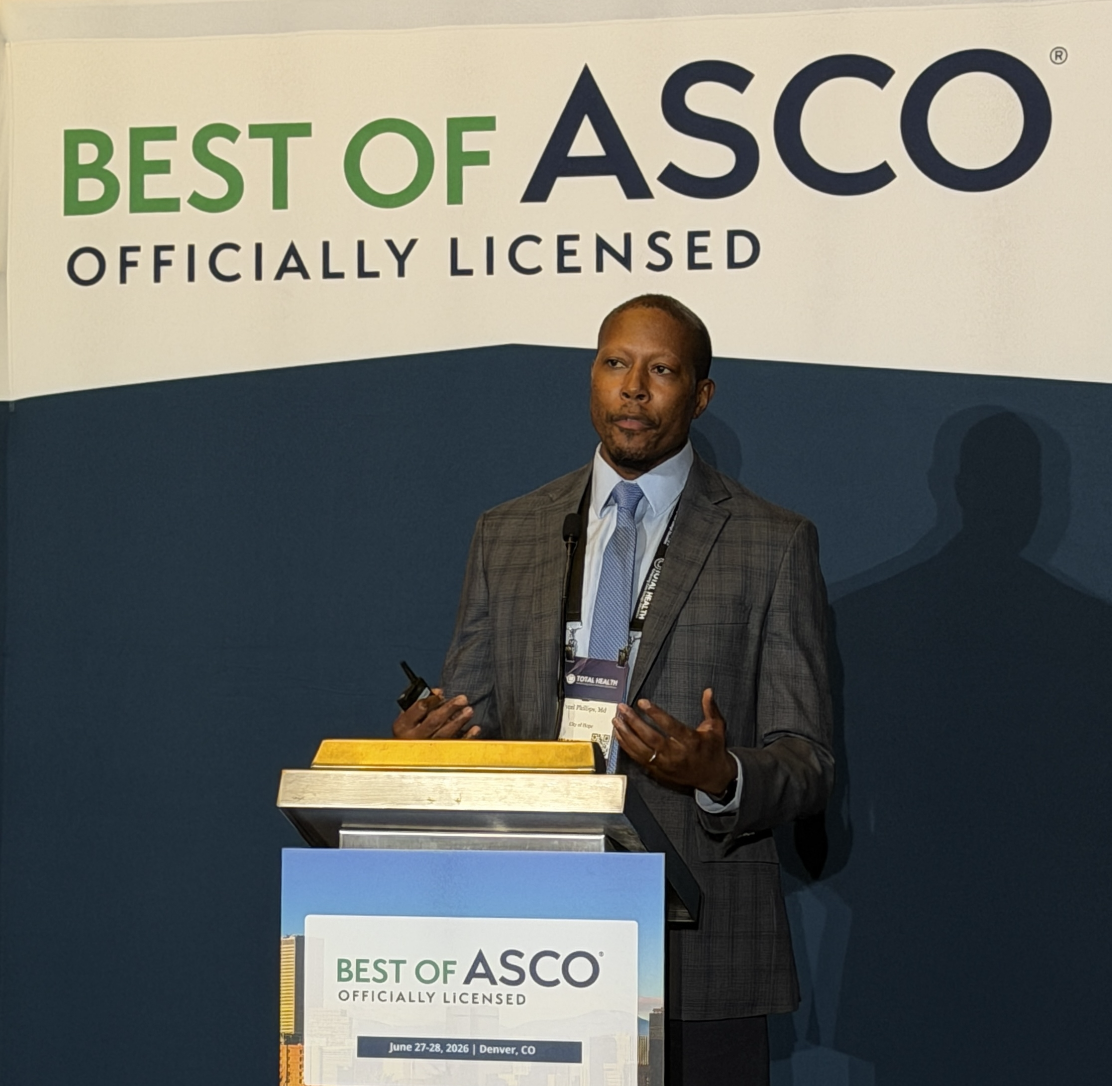
At the 2026 Best of ASCO Denver conference presented by Total Health, Dr Tycel Phillips framed his ASCO lymphoma updates around a growing clinical challenge: the field is moving from a small number of broadly applied standards toward an increasingly crowded landscape of active regimens. In diffuse large B-cell lymphoma (DLBCL), mantle cell lymphoma (MCL), Hodgkin lymphoma, and T-cell lymphomas, clinicians now face not only questions of efficacy, but also of toxicity, convenience, financial burden, sequencing, and access.
This shift is particularly evident in DLBCL. For many years, R-CHOP remained the dominant frontline regimen despite multiple unsuccessful attempts to improve upon it. More recently, pola-R-CHP established a progression-free survival advantage, and the positive frontMIND trial now introduces another potential frontline option. Dr Phillips emphasized that the emergence of multiple active regimens is welcome, but it also requires more individualized decision-making based on disease biology and patient-specific factors.
How should frontMIND fit into frontline DLBCL?
The phase III frontMIND trial evaluated tafasitamab plus lenalidomide and R-CHOP compared with placebo plus R-CHOP in patients with newly diagnosed, higher-risk DLBCL. Dr Phillips noted that the study met its primary endpoint, demonstrating a progression-free survival (PFS) benefit with the tafasitamab/lenalidomide-containing regimen. Event-free survival (EFS) also improved, and the benefit appeared to extend across both germinal-center and non-germinal-center subtypes. An early overall survival (OS) analysis also showed a favorable trend but had not yet demonstrated a statistically significant benefit.
Dr Phillips placed these findings in the context of pola-R-CHP and conventional R-CHOP, noting that the frontMIND regimen introduces some practical tradeoffs. First, tafasitamab requires additional infusion visits. Second, lenalidomide adds myelosuppression, rash, gastrointestinal toxicity, and dose-modification burden. Third, the combination is likely to be more expensive and less convenient than pola-R-CHP. For patients with non-germinal-center DLBCL, he suggested that pola-R-CHP may remain more attractive because its efficacy is supported in this subgroup and its toxicity profile is broadly similar to R-CHOP. In contrast, frontMIND may be especially relevant for selected younger patients with high-risk germinal-center disease who have an International Prognostic Index score above 2 and are likely to tolerate lenalidomide. The key clinical message was not that frontMIND should replace all existing frontline therapy, but rather that it adds another effective option requiring thoughtful patient selection.
Can bispecific antibodies improve treatment for older or unfit patients?
Older patients with DLBCL frequently experience worse outcomes because they cannot tolerate full-dose anthracycline-based therapy or complete planned treatment. Dr Phillips highlighted this as a major unmet need, particularly for patients older than 80 years or those with cardiac dysfunction.
He highlighted a single-institution phase II study evaluating epcoritamab plus R-mini-CVP, omitting anthracycline therapy in patients considered unfit or ineligible for standard treatment. Epcoritamab was introduced with step-up dosing beginning in cycle 2, and patients achieving complete response could stop after six cycles, while those with partial response could continue epcoritamab through cycle 12. Early results from the trial were encouraging, with high response rates and favorable PFS in a small patient population. Cytokine release syndrome (CRS) was observed, but most events were grade 1, and only one case of immune effector cell-associated neurotoxicity syndrome was reported which resolved. Overall, Dr Phillips considered the regimen promising because it appeared more tolerable than some bispecific antibody combinations incorporating mini-CHOP. He cautioned, however, that the data are preliminary and derived from a single institution. A larger multicenter study will be needed to confirm safety and efficacy across a more diverse population.
What should be offered when second-line CAR T-cell therapy is not feasible?
Dr Phillips noted that CAR T-cell therapy has transformed the second-line management of early relapsed or refractory DLBCL, but access remains limited. In this regard, he used the example of a patient living more than 100 miles from a CAR T-cell center without reliable caregiver support to illustrate that clinical eligibility does not always translate into practical access.
The phase III SUNMO trial compared mosunetuzumab plus polatuzumab vedotin with R-GemOx in patients with relapsed/refractory large B-cell lymphoma, including those treated in the second-line setting. The combination significantly improved PFS and response rates compared with R-GemOx. A benefit was also observed among patients with primary refractory or early relapsed disease, although outcomes remained less favorable than in the broader study population.
The regimen also offers practical advantages: 1) It can be delivered in the outpatient setting, 2) CRS occurred in approximately one-third of patients and was predominantly grade 1, 3) Hospitalization requirements may be less burdensome than with some other bispecific antibody regimens, and 4) The combination may be particularly useful for older or frail patients who cannot undergo CAR T-cell therapy. Dr Phillips cautioned that prior polatuzumab exposure complicates sequencing. Patients previously treated with pola-R-CHP may not derive the same benefit from retreatment with a polatuzumab-containing regimen. Available crossover data suggest that responses after prior polatuzumab exposure may be driven primarily by mosunetuzumab rather than restored sensitivity to polatuzumab. Accordingly, mosunetuzumab plus polatuzumab may be best suited to patients who did not receive polatuzumab frontline, whereas single-agent bispecific antibodies or non-polatuzumab-containing combinations may be preferable after pola-R-CHP.
Can glofitamab provide durable control after covalent BTK inhibitor failure in mantle cell lymphoma?
Patients with MCL who progress after a covalent Bruton’s tyrosine kinase (BTK) inhibitor have historically had poor outcomes. Available options in this setting include brexucabtagene autoleucel, lisocabtagene maraleucel, pirtobrutinib, and sonrotoclax, although, as Dr Phillips noted, each of these has its limitations.
He reviewed updated data for fixed duration glofitamab in relapsed/refractory MCL. Treatment included obinutuzumab pretreatment followed by step-up dosing of glofitamab through cycle 12. Response rates were high, including among patients previously exposed or refractory to covalent BTK inhibitors. Most importantly, patients who achieved complete response at the end of treatment experienced durable benefit, with evidence of a plateau in PFS. Undetectable minimal residual disease at cycle 3 also appeared to identify patients more likely to experience prolonged remission. Dr Phillips emphasized that CAR T-cell therapy remains the most active approved strategy for many patients after BTK inhibitor failure. However, glofitamab may become an important alternative for those who decline cellular therapy, are medically unsuitable, or lack access to a CAR T-cell center. CRS remains the principal implementation challenge, and higher-dose obinutuzumab pretreatment appears to reduce risk, but community adoption will require careful step-up dosing, monitoring, and management protocols.
What options remain after checkpoint inhibitor and brentuximab exposure in Hodgkin lymphoma?
Dr Phillips noted the treatment landscape for classical Hodgkin lymphoma has improved substantially, particularly with incorporation of checkpoint inhibitors and brentuximab vedotin into earlier lines of therapy. This progress has created a new challenge, however, as patients who relapse after both classes have few effective options.
In this regard, Dr Phillips highlighted early-phase data for AZD3470, an MTA-cooperative PRMT5 inhibitor. PRMT5 is involved in epigenetic regulation and appears to be a biologically relevant target in Hodgkin lymphoma, where MTAP loss is common. In this phase I study, AZD3470 demonstrated dose-dependent activity, with the highest response rates at 600 mg once daily. At that dose, the overall response rate (ORR) was approximately 63%, with a complete response rate of 44%. Responses appeared durable in some patients, and the safety profile was favorable, with relatively few grade 3 or higher adverse events.
Dr Phillips viewed the results as especially important because several other promising agents in relapsed Hodgkin lymphoma have been discontinued or withdrawn from development. For a generally young patient population, he notes that the absence of effective later-line options is particularly concerning. As such, although further clinical study will be required, AZD3470 represents a potentially meaningful new treatment strategy.
Are subtype-specific strategies improving outcomes in T-cell lymphomas?
The final portion of Dr Phillip’s presentation focused on peripheral T-cell lymphoma and extranodal NK/T-cell lymphoma, two rare and heterogeneous diseases with limited treatment options.
Linperlisib plus CHOP in peripheral T-cell lymphoma
Dr Phillips cited a phase Ib/II study evaluating linperlisib, a PI3K-delta inhibitor, in combination with CHOP in newly diagnosed peripheral T-cell lymphoma, with maintenance linperlisib permitted for responding patients. The regimen demonstrated encouraging activity, but efficacy appeared strongly dependent on histologic subtype, with highest response rates observed in angioimmunoblastic T-cell lymphoma, whereas activity was less consistent in peripheral T-cell lymphoma not otherwise specified and anaplastic large-cell lymphoma. Dr Phillips noted that the safety profile included expected PI3K inhibitor toxicities such as cytopenias, rash, and transaminase elevation. Longer follow-up will be important to assess risks such as colitis and infection, which have limited broader use of this drug class in B-cell malignancies.
EBV-specific cytotoxic T-cell consolidation in extranodal NK/T-cell lymphoma
He also cited a randomized study evaluating EBV-specific cytotoxic T-cell consolidation after frontline therapy in EBV-positive extranodal NK/T-cell lymphoma. The investigational strategy improved disease-free survival and overall survival compared with control treatment, with no major new safety concerns. Only one relapse was observed in the cytotoxic T-cell arm, and no deaths occurred in that group during the reported follow-up.
Although the findings are clinically meaningful, Dr Phillips noted that immediate relevance in routine US practice may be limited because extranodal NK/T-cell lymphoma is uncommon and occurs more frequently in Asia, the Caribbean, and selected ethnic populations.
Clinical Perspective
Dr Phillips’ presentation illustrated how rapidly expanding treatment options are changing the nature of lymphoma decision-making.
In frontline DLBCL, the question is no longer whether R-CHOP can be improved, but which of several active regimens is most appropriate for a given patient. Cell of origin, disease risk, age, tolerance for lenalidomide, infusion burden, cost, and convenience may all influence whether a patient receives R-CHOP, pola-R-CHP, or a future tafasitamab/lenalidomide-based regimen.
In relapsed disease, bispecific antibodies are increasingly filling gaps created by limited access to CAR T-cell therapy. This has important equity implications. Geographic distance, caregiver requirements, insurance barriers, referral patterns, and institutional resources may prevent otherwise eligible patients from receiving cellular therapy. Outpatient bispecific regimens may broaden access, but they should complement rather than automatically replace referral for potentially curative approaches.
Across MCL, Hodgkin lymphoma, and T-cell lymphomas, the importance of subtype and treatment history continues to increase. Glofitamab may offer durable benefit after covalent BTK inhibitor exposure, AZD3470 may address an emerging post-checkpoint inhibitor treatment gap, and novel T-cell lymphoma strategies may be most effective in biologically defined subsets.
Overall, the 2026 data suggest that progress in lymphoma will depend not only on identifying active therapies, but also on selecting the right regimen for the right patient while balancing efficacy, toxicity, access, and long-term treatment sequencing.
Speaker Disclosure Information: Tycel Phillips, MD reported the following disclosures for this presentation: Research support: AbbVie, Bayer, Bristol Myers Squibb, Genentech, Incyte; Advisory board: AbbVie, ADC Therapeutics, AstraZeneca, Bayer, BeOne, Bristol Myers Squibb, Genmab, Genentech, Gilead, Eli Lilly, Epizyme, Incyte, Janssen, Johnson & Johnson, Kite, Merck, Miltenyi, Pfizer, Pharmacyclics, Regeneron, Seattle Genetics, Xencor; Strategic counsel: Genmab; Scientific board: Genentech.