
Best of ASCO Austin 2026: Melanoma Updates
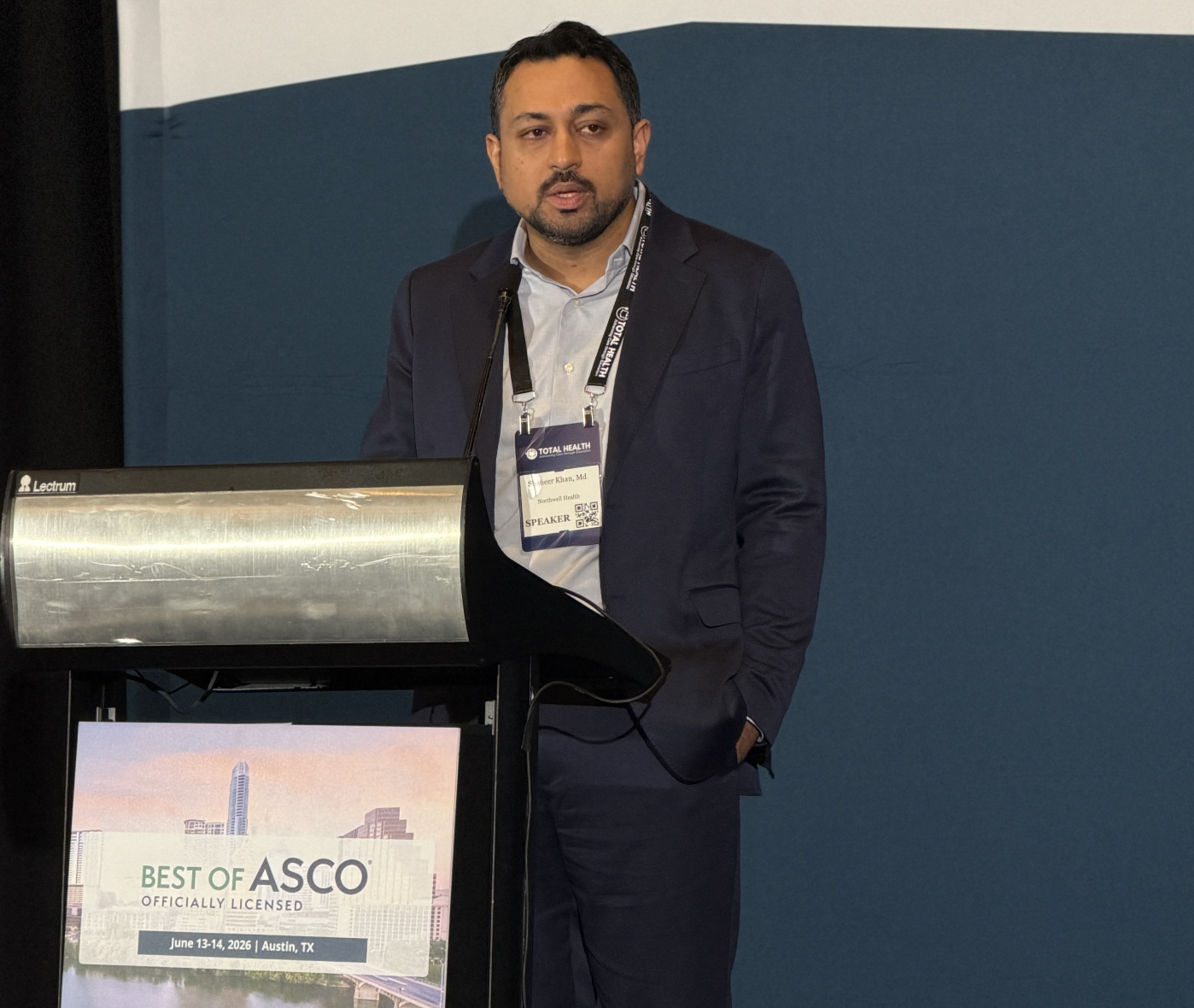
Shaheer Khan, DO, Northwell Health
Key Takeaways
Neoadjuvant immunotherapy continues to reshape the management of resectable melanoma, although careful patient selection remains essential to maximize benefit while minimizing unnecessary toxicity.
Five-year follow-up from KEYNOTE-942 demonstrated durable recurrence-free survival (RFS) with the personalized neoantigen vaccine intismeran plus pembrolizumab, supporting individualized adjuvant therapy as a promising future strategy.
Next-generation tumor-infiltrating lymphocyte (TIL) and T-cell receptor (TCR)-T cell therapies are improving the feasibility, safety, and accessibility of cellular therapy for patients with advanced melanoma.
Darovasertib plus crizotinib demonstrated the first meaningful progression-free survival (PFS) improvement for patients with metastatic uveal melanoma who are HLA-A*02:01-negative, addressing a major unmet clinical need.
Across every stage of disease, melanoma treatment continues to evolve toward more personalized care guided by pathologic response, molecular biomarkers, and individualized immunotherapy strategies.
Melanoma care is becoming increasingly personalized
At the 2026 Best of ASCO Austin conference, Dr Shaheer Khan opened his presentation by framing the major advances presented at this year’s ASCO Annual Meeting around four important clinical questions: 1) Can more patients be cured before surgery? 2) Can adjuvant therapy become more personalized? 3) Can cellular therapy become more practical? and 4) Is uveal melanoma (finaly) entering the era of biomarker-driven treatment? Rather than representing isolated advances, he noted that these studies collectively demonstrate a broader shift toward individualized treatment strategies across every stage of melanoma care.
“Can we cure more of these patients—and importantly, can we do it without causing undue toxicity or burden?”
Can we cure more patients before surgery?
In the first portion of Dr Khan’s presentation, he focused on the continued evolution of neoadjuvant immunotherapy, highlighting how the treatment landscape has rapidly changed over the past several years. While initial studies established the role of adjuvant anti–PD-1 therapy in reducing recurrence following complete resection of stage III and resectable stage IV melanoma, more recently the SWOG S1801 trial demonstrated superior event-free survival (EFS) with neoadjuvant pembrolizumab compared with adjuvant therapy alone. In addition, the NADINA trial further strengthened the neoadjuvant paradigm by showing that patients achieving a major pathologic response could safely omit postoperative immunotherapy without compromising outcomes. Dr Khan then highlighted two studies presented at ASCO 2026 that sought to build upon these successes.
NeoReNi II explores neoadjuvant therapy in high-risk stage II disease
Dr Khan first reviewed the NeoReNi II study which evaluated eight weeks of neoadjuvant nivolumab plus relatlimab in patients with high-risk stage II melanoma before definitive surgery. Investigators reported major pathologic responses in approximately two-thirds of treated patients, including complete pathologic responses in 60%. Importantly, he noted that patients achieving major responses were able to avoid prolonged adjuvant therapy, and none experienced recurrence during the early follow-up period. Although these findings demonstrate encouraging biological activity, Dr Khan cautioned that the trial enrolled only 20 patients and follow-up remains limited. He also emphasized that randomized studies will be needed before neoadjuvant therapy can be routinely recommended for stage II melanoma. Equally important, clinicians will need to assess whether therapy is truly improving outcomes or simply treating patients who may have already had favorable prognoses regardless of intervention.
NeoINR examines intensified neoadjuvant immunotherapy
The second neoadjuvant study which Dr Khan reviewed, NeoINR, investigated escalation to triplet immunotherapy using low-dose ipilimumab, nivolumab, and relatlimab in patients with resectable stage III or IV melanoma. He noted that the regimen produced exceptionally high pathologic response rates, with nearly three-quarters of patients achieving a major pathologic response. This enhanced efficacy, however, came at the cost of increased toxicity. Grade 3 or higher treatment-related adverse events occurred in approximately 45% of patients, including one treatment-related death due to myocarditis. Dr Khan emphasized that the central question is no longer whether neoadjuvant therapy works – as he noted, it clearly does - but the question becomes how much additional toxicity is justified in pursuit of incremental improvements in response rates. Dr Khan emphasized the need for further studies to better define which patients derive sufficient benefit to warrant the use of more intensive regimens.
Can we personalize adjuvant therapy?
A second major theme of Dr Khan’s presentation focused on individualized adjuvant treatment through personalized cancer vaccines. In this regard, he reviewed the five-year update from KEYNOTE-942, a study evaluating intismeran autogene (formerly referred to as mRNA-4157/V940), a personalized neoantigen vaccine developed from each patient's resected tumor. After sequencing tumor DNA, investigators identify patient-specific neoantigens, manufacture an individualized mRNA vaccine, and administer it in combination with pembrolizumab following surgery. Long-term follow-up demonstrated that the recurrence-free survival (RFS) advantage observed in the initial analysis has remained durable over five years. Dr Khan noted that separation between treatment arms persisted beyond completion of therapy, suggesting a durable immune memory. Although overall survival data as yet remain immature, the observed trend continues to favor the combination treatment. Dr Khan also noted the equally reassuring safety profile, with most additional adverse events consisting of transient injection-site reactions, fatigue, chills, and pyrexia rather than a substantial increases in serious immune-related toxicities. Dr Khan suggested these results represent an important step toward truly personalized immunotherapy, and, if the ongoing phase III trial confirms these findings, intismeran plus pembrolizumab could become the first individualized neoantigen vaccine to be incorporated into routine melanoma care. He also raised an important practical question that will likely shape future research – that is – how should personalized adjuvant vaccines be integrated with the increasingly common use of neoadjuvant immunotherapy? Determining the optimal sequencing of these strategies will become increasingly important as treatment paradigms continue to evolve.
Can cell therapy become practical for more patients?
Dr Khan then shifted focus to the setting of advanced melanoma, where cellular therapy has emerged as an important treatment option for patients with immunotherapy-refractory disease. He noted that, although FDA approval of cellular therapies like lifileucel represents a major advance, widespread implementation remains challenging. He reviewed the current TIL therapy which requires surgical tumor harvest, centralized manufacturing, lymphodepleting chemotherapy, and high-dose interleukin-2 (IL-2) treatment, making treatment difficult for patients with rapidly progressive disease or significant comorbidities.
OBX-115 simplifies next-generation TIL therapy
Dr Khan cited the phase I/II Agni-01 study which evaluated OBX-115, an engineered TIL product designed to express membrane-bound IL-15 which can be selectively activated using acetazolamide. He noted that this strategy eliminates the need for high-dose IL-2 following infusion, potentially reducing treatment-related toxicity. In heavily pretreated patients, OBX-115 produced an objective response rate of 67%, with tumor shrinkage observed in 80% of participants. Importantly, cytokine release syndrome was infrequent and generally low grade, no immune effector cell-associated neurotoxicity syndrome (ICANS) was reported, and no patients required intensive care support. The study also demonstrated that core needle biopsies could successfully generate TIL products, potentially expanding patient eligibility beyond those able to undergo surgical tumor harvest.
Anzu-cell expands the promise of TCR-T therapy
Dr Khan also reviewed early results from the phase I study of Anzu-cell, a PRAME-directed TCR-T cell therapy evaluated in patients with advanced cutaneous and uveal melanoma. He noted that responses were both rapid and substantial in the trial, with median time to response of only 1.4 months. High response rates were observed across both melanoma subtypes despite patients having heavily pretreated disease and substantial tumor burden. In addition, although the treatment was associated with expected cytopenias and cytokine release syndrome, the safety profile was overall predictable and manageable.
Taking the results of these studies together, Dr Khan believes that next-generation cellular therapies may not only improve efficacy but also, more importantly, broaden patient access by simplifying manufacturing, reducing toxicity, and expanding eligibility criteria.
Is uveal melanoma finally becoming a biomarker-driven disease?
In the final portion of his presentation, Dr Khan reviewed data relating to one of melanoma's greatest unmet needs: metastatic uveal melanoma. He noted that, unlike cutaneous melanoma, uveal melanoma possesses distinct molecular characteristics, demonstrates limited responsiveness to conventional immunotherapy, and exhibits a strong tendency to metastasize to the liver. Although tebentafusp has improved outcomes for HLA-A*02:01-positive patients, Dr Khan noted that effective systemic options remain extremely limited for patients lacking this HLA subtype.
In this regard, he noted findings from the phase II/III OptiMUM-02 study which evaluated darovasertib, a first-in-class protein kinase C (PKC) inhibitor, in combination with the MET inhibitor crizotinib among treatment-naïve HLA-A*02:01-negative patients with metastatic uveal melanoma. The combination demonstrated meaningful improvements in objective response rate and progression-free survival compared with investigator's choice therapy, representing the first targeted regimen to achieve this milestone in this patient population. Although treatment-related adverse events, including diarrhea, nausea, edema, rash, and hypotension were common, most events were manageable through supportive care and dose modification. Dr Khan emphasized that these findings are particularly important because they provide the first effective systemic option for patients who are not candidates for tebentafusp. Looking ahead, he suggested that future progress will depend on identifying optimal sequencing strategies between targeted therapy, immunotherapy, liver-directed approaches, and emerging cellular therapies.
Clinical Perspective
The melanoma studies presented at ASCO 2026, as reviewed by Dr Khan at Best of ASCO Austin, illustrate a field rapidly moving toward increasingly personalized treatment. Rather than applying uniform therapy across broad patient populations, clinicians are beginning to tailor management according to disease stage, pathologic response, molecular alterations, and individual tumor biology. Neoadjuvant immunotherapy continues to evolve with increasing emphasis on patient selection and treatment de-escalation for excellent responders. Personalized neoantigen vaccines may soon expand adjuvant treatment beyond conventional checkpoint inhibition, while next-generation cellular therapies promise to improve access for patients with advanced disease. Finally, advances in uveal melanoma demonstrate that even historically treatment-resistant subtypes are beginning to benefit from biomarker-driven therapeutic strategies. Together, these studies suggest that the future of melanoma care will be defined not only by more effective therapies, but by delivering the right treatment to the right patient at the right stage of disease.
Speaker Disclosure Information: Dr Khan reported no relevant disclosures for this presentation.