
Best of ASCO Austin 2026: Non-Small Cell Lung Cancer Updates
Laura Chow, MD, Texas Oncology
Key Takeaways
Advances presented at ASCO 2026 continue to move effective targeted therapies and antibody-drug conjugates (ADCs) from the metastatic setting into earlier-stage, potentially curative treatment of non-small cell lung cancer (NSCLC).
The EA5142 (ALCHEMIST) trial demonstrated no disease-free survival (DFS) benefit with adjuvant nivolumab following complete resection, supporting continuation of current perioperative immunotherapy standards.
LIBRETTO-432 demonstrated a substantial event-free survival (EFS) benefit with adjuvant selpercatinib in RET fusion-positive NSCLC and, following regulatory approval, is expected to establish a new standard of care.
WU-KONG28 showed that first-line sunvozertinib significantly improved progression-free survival (PFS) and response rates for EGFR exon 20 insertion-positive NSCLC, supporting earlier use of targeted therapy in this difficult-to-treat population.
Several promising ADC and bispecific antibody studies reported positive results in advanced NSCLC, although Dr Chow emphasizes that findings from China-only trials require confirmation in multinational populations before adoption into routine North American practice.
Precision oncology continues to reshape NSCLC treatment
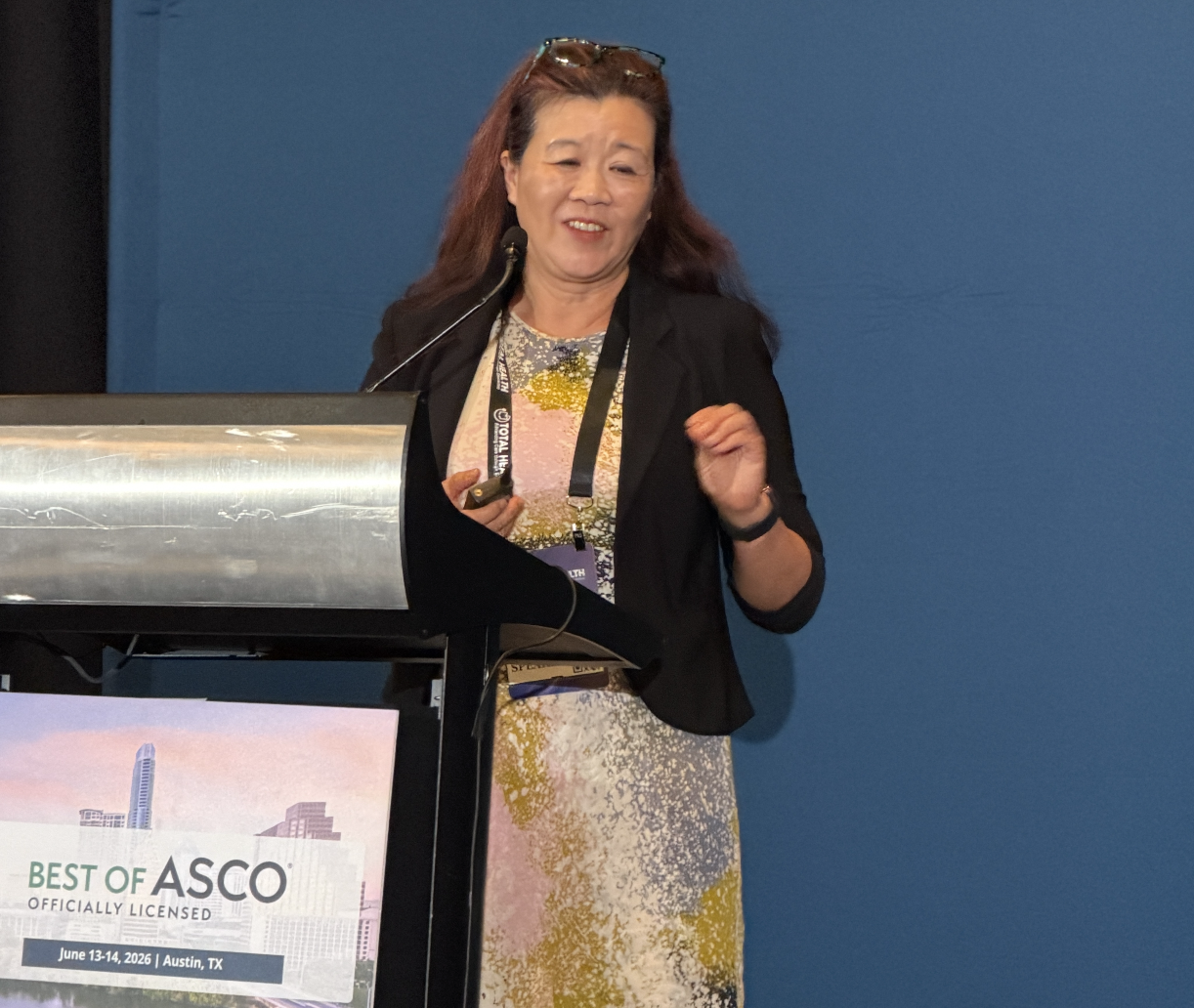
At Best of ASCO Austin 2026, Dr Laura Chow opened her presentation by highlighting two major themes that characterized the NSCLC data presented at this year’s ASCO Annual Meeting. First, she notes that use of targeted therapies continues to expand into additional molecularly defined patient populations. Second, Dr Chow cites an increasing evaluation of highly effective therapies previously developed for metastatic disease (e.g., targeted agents and ADCs) in patients with earlier-stage disease as curative intent therapy. She noted that these advances reflect years of drug development which are now translating into meaningful improvements across multiple stages of NSCLC.
EA5142: Adjuvant nivolumab does not improve disease-free survival
Dr Chow first reviewed EA5142, an arm of the ALCHEMIST trial platform evaluating adjuvant nivolumab versus observation following complete resection of early-stage NSCLC. Although immunotherapy has become firmly established in the perioperative setting through positive studies evaluating atezolizumab, pembrolizumab, and perioperative nivolumab, she noted that EA5142 failed to demonstrate an improvement in DFS in either the intention-to-treat population or among patients with high PD-L1 expression. Exploratory overall survival analyses similarly failed to demonstrate a benefit.
Dr Chow explained that interpretation of the study is complicated by its lengthy development timeline – originally conceived in 2013 and activated in 2016, the trial was conducted during a period in which the treatment landscape had changed dramatically. Indeed, multiple perioperative immunotherapy strategies became standard of care while the study was still accruing and maturing. She also noted that the observation arm performed substantially better than anticipated, resulting in a longer-than-expected DFS and making it more difficult to demonstrate incremental benefit from adjuvant nivolumab. Overall, she concluded that EA5142 does not alter current standards of care. Neoadjuvant and perioperative immunotherapy thus remain established approaches for eligible patients, while the independent contribution of adjuvant nivolumab remains uncertain and warrants further investigation, including planned analyses incorporating circulating tumor DNA (ctDNA).
LIBRETTO-432 expands targeted therapy into the curative setting
Among the most practice-changing studies Dr Chow discussed was LIBRETTO-432, which evaluated adjuvant selpercatinib in patients with completely resected stage IB-IIIA RET fusion-positive NSCLC. In this trial, patients received selpercatinib or placebo for up to three years following surgery, with EFS serving as the primary endpoint. The study demonstrated a striking improvement in EFS, with a hazard ratio of 0.17 favoring selpercatinib. Clinical benefit was consistent across predefined patient subgroups, and the safety profile remained consistent with previous experience. Although grade 3 adverse events were more frequent than with placebo, most treatment discontinuations resulted from lower-grade toxicities, and no unexpected safety signals emerged from the study. Dr Chow emphasized that these findings continue the trend established by the ADAURA and ALINA trials, in which highly effective targeted therapies have successfully transitioned from metastatic disease into the adjuvant setting. She predicted that adjuvant selpercatinib will likely become a new standard of care for patients with RET fusion-positive NSCLC following its anticipated regulatory approval. During the discussion, she also noted that expanding use of adjuvant targeted therapy reinforces the importance of comprehensive molecular profiling at the time of diagnosis for patients with early-stage disease.
WU-KONG28 supports first-line sunvozertinib for EGFR exon 20 insertion-positive disease
Dr Chow then reviewed the phase III WU-KONG28 study evaluating sunvozertinib as first-line treatment for patients with EGFR exon 20 insertion-positive NSCLC. She noted that historically, this molecular subgroup has been particularly difficult to treat because conventional EGFR tyrosine kinase inhibitors (TKIs) have limited activity. In WU-KONG28, sunvozertinib significantly improved PFS compared with platinum-based chemotherapy, while also nearly doubling the objective response rate and extending duration of response. Although overall survival data remain immature, Dr Chow noted secondary analyses which suggest a potential long-term benefit with earlier introduction of targeted therapy. Toxicities were manageable and consistent with prior experience, with gastrointestinal adverse events, rash, paronychia, and creatine phosphokinase elevations representing the most common treatment-related events. During the audience discussion, Dr Chow acknowledged an important limitation of the trial, in that the control arm did not include amivantamab plus chemotherapy, which has since become the current U.S. standard of care. Nevertheless, she noted that the oral administration, a favorable tolerability profile, and its expected central nervous system activity make sunvozertinib an attractive future frontline option once approved in this setting.
ADCs continue to expand treatment options in metastatic NSCLC
Several studies presented at ASCO highlighted the growing role of ADCs in advanced NSCLC. Dr Chow discussed OptiTROP-Lung05, which evaluated the TROP2-directed ADC sacituzumab tirumotecan (sac-TMT) combined with pembrolizumab versus pembrolizumab alone in patients with PD-L1-positive metastatic NSCLC. She noted that the combination significantly improved PFS, increased objective response rates, and produced deeper and more durable responses, although overall survival data remain immature. Toxicities were largely hematologic and consistent with the known safety profiles of the individual agents. Importantly, Dr. Chow urged caution when interpreting these findings. Because the trial enrolled patients exclusively in China, she emphasized that it remains uncertain whether similar efficacy will be observed in broader multinational populations including the U.S. She contrasted these encouraging results with the recently discontinued EVOKE-03 study, which failed to meet its primary PFS endpoint in a global population, illustrating that regional differences may influence treatment outcomes. She further highlighted ongoing global studies evaluating other TROP2-directed ADCs, including datopotamab deruxtecan, which may further define the role of ADCs in first-line NSCLC over the coming years.
HARMONi-6 evaluates dual VEGF/PD-1 inhibition in squamous NSCLC
Dr Chow concluded her ASCO 2026 review with HARMONi-6, a phase III trial evaluating ivonescimab, a bispecific antibody targeting both VEGF and PD-1, in combination with chemotherapy for first-line squamous NSCLC. The study demonstrated a statistically significant overall survival benefit with ivonescimab plus chemotherapy compared with immunotherapy plus chemotherapy, while maintaining a manageable safety profile. Dr Chow noted that despite historical concerns regarding hemorrhage associated with anti-VEGF therapy in squamous NSCLC, rates of severe bleeding remained relatively low. She emphasized, however, that patients with cavitary tumors, major vessel invasion, or prior hemoptysis (i.e., those at highest bleeding risk) were largely excluded from enrollment, limiting generalizability of the findings to routine practice. Once again she emphasized that HARMONi-6 was conducted exclusively in China and that ongoing multinational studies, including HARMONi-3, will be necessary to determine whether these findings can be broadly applied to global patient populations.
Additional notable ASCO 2026 updates
Although not reviewed in detail, Dr Chow also highlighted several additional studies that continue to advance the NSCLC treatment landscape, including:
Seven-year follow-up from the CROWN trial demonstrating durable progression-free survival with lorlatinib.
Promising activity from CHRYSALIS-2 evaluating lazertinib plus amivantamab in patients with uncommon EGFR mutations.
Encouraging results from TRITON investigating CTLA-4 inhibition for patients with STK11, KEAP1, and KRAS-mutated tumors that respond poorly to standard immunotherapy.
Emerging data from additional ADC programs that are expected to report out later this year.
Clinical Perspective
As outlined by Dr Chow in her presentation, results from ASCO 2026 reinforce the continued evolution of precision medicine across every stage of NSCLC. Molecularly targeted therapies are steadily moving into the curative setting, while ADCs and novel immunotherapy combinations continue to expand options for patients with advanced disease. At the same time, Dr Chow reminded clinicians that practice-changing results should be interpreted within the context of study design, evolving standards of care, and patient populations. As new therapies emerge, comprehensive molecular testing at diagnosis and thoughtful evaluation of the evidence will remain essential to optimizing individualized treatment decisions.
Speaker Disclosure Information: Dr Chow reported no relevant disclosures for this presentation.