
Best of ASCO Honolulu 2026: Update in Sarcomas and Rare Cancers
Shane Y. Morita, MD, MBA, PhD, FACS, FSSO
Medical Director of Surgical Oncology, The Queen's Medical Center
Key Takeaways
Management of sarcomas and other rare cancers is rapidly shifting from a histology-based approach to a precision medicine model driven by molecular profiling and biomarker selection.
The phase 3 SARC041 trial demonstrated a significant progression-free survival (PFS) benefit with abemaciclib in patients with advanced dedifferentiated liposarcoma, representing the first positive randomized study targeting CDK4 amplification in this disease.
T-cell receptor (TCR) therapy with afamitresgene autoleucel continues to demonstrate meaningful activity in selected patients with synovial sarcoma expressing MAGE-A4 and HLA-A*02, highlighting the expanding role of cellular therapies in sarcoma.
Combination KIT inhibition with bezuclastinib plus sunitinib significantly prolonged PFS in advanced gastrointestinal stromal tumors (GIST), supporting strategies designed to overcome acquired resistance.
The RINGSIDE study demonstrated improved PFS with the gamma-secretase inhibitor varegacestat in desmoid tumors, reinforcing the growing role of nonoperative management for these locally aggressive neoplasms.
Immunotherapy has become the preferred systemic treatment for metastatic Merkel cell carcinoma (MCC), while ongoing studies continue to explore its role in the neoadjuvant and adjuvant settings.
Presentation Summary
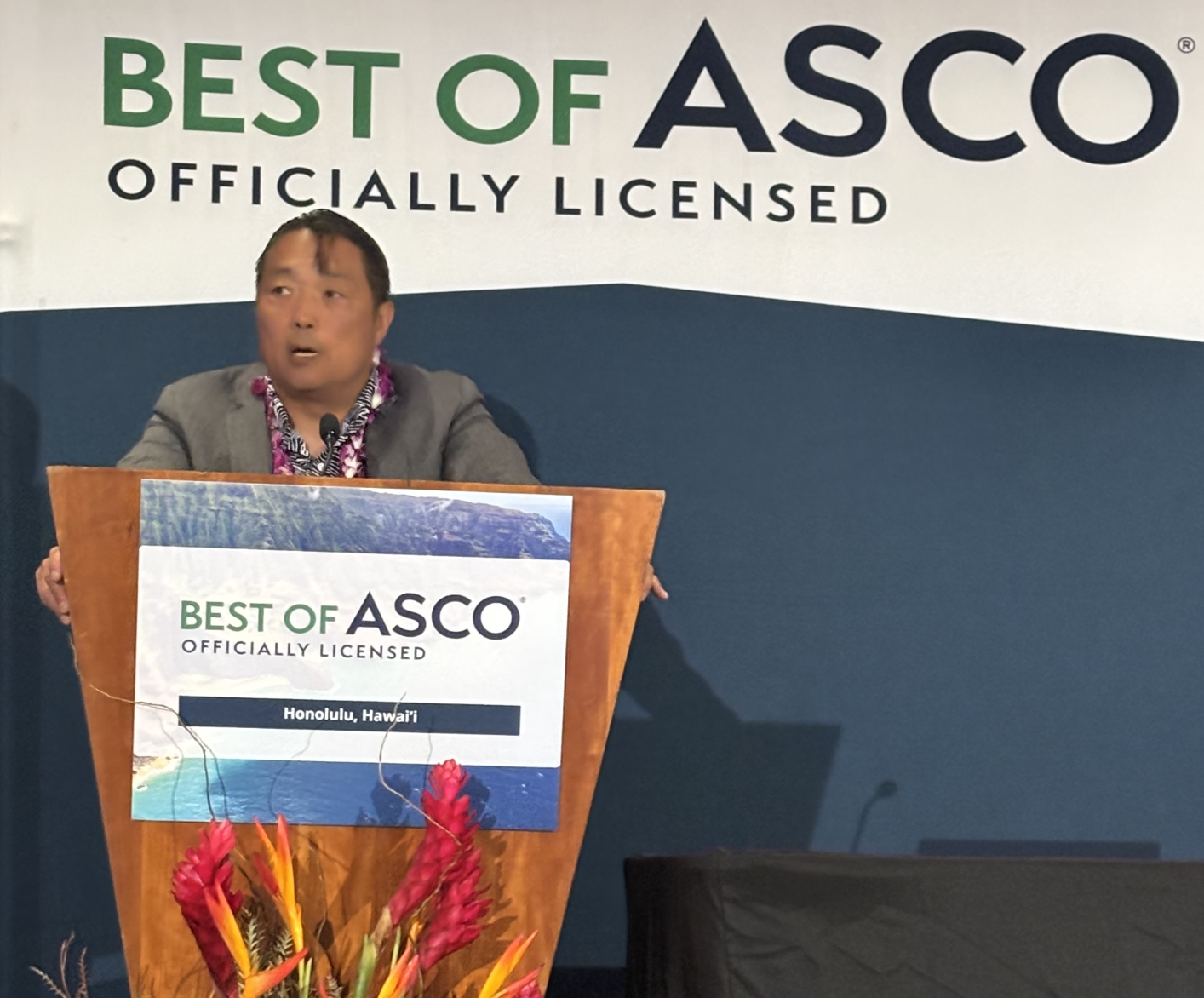
Although sarcomas and other rare cancers account for only a small percentage of adult malignancies, they encompass more than 100 biologically distinct diseases that increasingly require individualized treatment strategies. At the 2026 Best of ASCO Honolulu conference presented by Total Health, Dr Shane Morita emphasized that clinicians should "make the decision to go precision," describing precision oncology as a comprehensive approach that integrates tumor biology, molecular alterations, resistance mechanisms, and multidisciplinary care rather than relying solely on histologic diagnosis. Throughout his presentation, Dr Morita illustrated how recent advances in targeted therapy, cellular immunotherapy, and biomarker-directed treatment are reshaping management across several rare malignancies, while at the same time highlighting clinically meaningful findings presented at the 2026 ASCO Annual Meeting.
Precision oncology is reshaping the management of soft tissue sarcoma
Dr Morita began by reviewing the remarkable molecular diversity of sarcoma. While these tumors comprise only approximately 1% of adult malignancies, they include more than 100 histologic subtypes, each with distinct biologic behavior and therapeutic vulnerabilities. He emphasized that optimal management begins with an accurate diagnosis encompassing multidisciplinary evaluation, biopsy, and molecular characterization before treatment decisions can be made. Using a patient with a large dedifferentiated liposarcoma as an example, Dr. Morita illustrated how molecular testing identifies clinically actionable alterations such as MDM2 and CDK4 amplification which can now directly influence therapeutic options. Rather than viewing liposarcoma as a single disease entity, he noted that clinicians should strive to identify molecular drivers that may predict response to targeted treatment.
SARC041 establishes CDK4 inhibition as a new option for dedifferentiated liposarcoma
Among the most practice-changing data which Dr Morita highlighted was the phase 3 SARC041 trial evaluating abemaciclib in advanced dedifferentiated liposarcoma. Because CDK4 amplification is a hallmark of this disease, investigators in the trial sought to evaluate whether targeted inhibition could improve outcomes compared with placebo. Dr Morita highlighted that abemaciclib significantly improved median PFS to 9.7 months, representing the first positive randomized phase 3 study demonstrating meaningful clinical benefit in this molecularly defined sarcoma subtype. Patients receiving first-line therapy experienced particularly favorable outcomes, with median PFS extending beyond 16 months, underscoring the importance of introducing effective targeted therapies earlier in the disease course. He further described the study as a landmark achievement that validates biomarker-directed treatment in sarcoma and may ultimately influence management beyond the metastatic setting as additional studies evaluate neoadjuvant and adjuvant applications.
Cellular therapy expands options for synovial sarcoma
Dr Morita next reviewed the growing role of adoptive cellular therapy in synovial sarcoma, a setting in which conventional immune checkpoint inhibitors have demonstrated only modest activity. Unlike chimeric antigen receptor (CAR) T-cell therapies that recognize surface antigens, TCR therapies target intracellular proteins presented by human leukocyte antigen (HLA) molecules. Dr Morita discussed pooled analyses supporting the use of afamitresgene autoleucel, which targets tumors expressing MAGE-A4 in patients with the HLA-A*02 genotype. Although only approximately one-quarter of patients possess this necessary biomarker profile, he noted that eligible patients have demonstrated objective response rates exceeding 40% and median overall survival approaching 20 months. As such, Dr Morita viewed these findings as evidence that carefully selected patients with rare cancers can derive substantial benefit from highly personalized cellular immunotherapies.
Targeted combinations to address therapeutic resistance in GIST
Gastrointestinal stromal tumor (GIST) has long served as a model for molecularly targeted therapy, yet acquired resistance remains an inevitable challenge despite sequential tyrosine kinase inhibitor (TKI) therapy. Dr Morita reviewed the biologic complexity of KIT mutations, for example, emphasizing that multiple resistance mutations often emerge during treatment. Rather than targeting a single mutation, he notes that newer combination strategies seek to inhibit a broader spectrum of resistance mechanisms simultaneously.
PEAK demonstrates benefit with dual KIT inhibition
Dr Morita reviewed finding from the phase 3 PEAK trial which evaluated bezuclastinib plus sunitinib versus sunitinib alone in previously treated advanced GIST. He highlighted that the combination reduced the risk of progression or death by approximately 50% while maintaining an acceptable safety profile, and as such, this represents the first positive randomized study demonstrating that simultaneous inhibition of multiple KIT resistance pathways can meaningfully delay disease progression. He also briefly reviewed early data evaluating newer broad-spectrum KIT inhibitors that may eventually simplify treatment by targeting multiple resistance mutations with a single agent, although he cautioned that these therapies remain investigational pending phase 3 confirmation.
Desmoid tumors increasingly favor precision therapy over surgery
Although frequently grouped in with sarcomas, desmoid tumors differ fundamentally because they do not metastasize despite exhibiting locally aggressive behavior.
Dr Morita stressed that management philosophy has changed substantially over the past two decades. Active surveillance has become appropriate for many patients because spontaneous regression occurs in a meaningful proportion of cases, while surgery can result in considerable morbidity without improving long-term outcomes. Using a patient with extensive mesenteric disease as an example, he demonstrated how avoidance of surgery preserved organ function while allowing effective nonsurgical management. He remarked that, in selected patients, "the best thing to do...is not to operate," emphasizing the importance of individualized multidisciplinary decision-making.
RINGSIDE supports gamma-secretase inhibition
Dr Morita then discussed results from the phase 3 RINGSIDE trial evaluating the gamma-secretase inhibitor varegacestat. The study demonstrated improvements in PFS, objective response rate, tumor shrinkage, and patient-reported pain compared with placebo. Although nirogacestat remains the current standard therapy for refractory desmoid tumors, he noted that varegacestat may further expand available treatment options pending regulatory review. Collectively, he believes these studies illustrate the growing transition away from surgery as the default treatment toward biologically targeted systemic therapies that can preserve quality of life while maintaining adequate disease control.
Immunotherapy continues to redefine Merkel cell carcinoma management
Dr Morita concluded by reviewing advances in Merkel cell carcinoma (MCC), an uncommon but highly aggressive neuroendocrine skin cancer that is strongly associated with Merkel cell polyomavirus infection and ultraviolet exposure. He emphasized that immunotherapy has fundamentally altered treatment expectations in metastatic disease and is now being evaluated across earlier disease stages. Building upon previously reported neoadjuvant studies demonstrating high pathologic complete response rates with checkpoint blockade, Dr Morita reviewed several emerging ASCO 2026 studies evaluating perioperative immunotherapy.
The ADAM study, evaluating adjuvant avelumab did not demonstrate statistically significant improvements in survival endpoints, whereas emerging data from adjuvant pembrolizumab suggested encouraging improvements in distant metastasis-free survival, particularly among patients receiving radiotherapy before immunotherapy. He also highlighted early results combining tuvusertib with avelumab after checkpoint inhibitor resistance, illustrating ongoing efforts to restore immune responsiveness in advanced disease. Taken together, these studies reinforce that checkpoint inhibition has largely replaced cytotoxic chemotherapy for metastatic MCC while continuing to expand into earlier treatment settings.
Clinical Perspective
Rather than focusing on individual studies, Dr Morita's presentation emphasized the broader transformation occurring across rare cancers. Although sarcomas, desmoid tumors, GIST, and MCC differ substantially in their biology, each increasingly demonstrates that molecular characterization, as opposed to histology alone is helping to drive therapeutic decision-making. The studies Dr Morita highlighted from ASCO 2026 collectively reinforce several emerging themes: 1) Biomarker-directed therapies continue to improve outcomes in molecularly selected populations, 2) combination targeted therapies are beginning to overcome well-established mechanisms of acquired resistance 3) cellular immunotherapies are expanding treatment options for traditionally immunologically resistant tumors, and 4) multidisciplinary care remains essential for optimizing outcomes in these uncommon diseases.
Importantly, Dr Morita reminded attendees that precision medicine extends beyond identifying a genomic alteration. Successful management requires integrating molecular pathology, clinical judgment, patient selection, and multidisciplinary expertise to determine which treatment strategy offers the greatest benefit for each individual patient. As targeted therapies continue to evolve, he believes this precision medicine framework is likely to become increasingly central to the management of both rare and common malignancies.
Speaker Disclosure Information: Shane Y Morita, MD, MBA, PhD, FACS, FSSO reported no relevant financial disclosures for this presentation.