
Best of ASCO Puerto Rico 2026: Head and Neck Cancer Updates
Coral Olazagasti, MD
Assistant Professor of Medical Oncology, Sylvester Comprehensive Cancer Center, University of Miami
Key Takeaways
Perioperative immunotherapy has become the new standard of care for resectable locally advanced head and neck squamous cell carcinoma (HNSCC), building on the landmark KEYNOTE-689 trial and subsequent FDA approval of perioperative pembrolizumab.
PD-1/VEGF bispecific antibodies represent one of the most promising emerging therapeutic strategies in HNSCC. Early-phase data with ivonescimab demonstrated high pathologic complete response (pCR) and organ preservation rates, although randomized validation remains necessary.
Organ preservation is becoming a critical endpoint alongside survival, recognizing the profound impact that laryngectomy and treatment-related morbidity have on speech, swallowing, nutrition, and quality of life.
Amivantamab demonstrated encouraging activity in recurrent/metastatic HNSCC following progression on platinum-based chemotherapy and immunotherapy, addressing an area of substantial unmet clinical need.
While several ASCO 2026 studies generated considerable enthusiasm, most remain practice-informing rather than practice-changing until confirmed in randomized phase III trials.
Presentation Summary
Building on a new standard of care
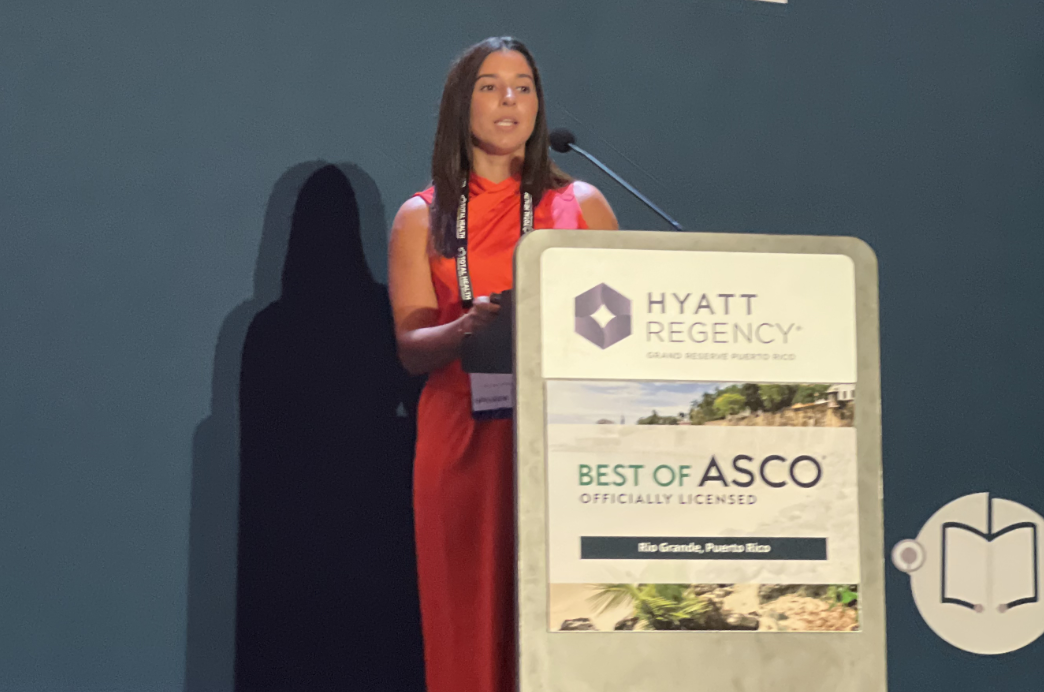
At the 2026 Best of ASCO Puerto Rico conference, Dr Coral Olazagasti opened her presentation by reminding the audience that head and neck cancer entered a new therapeutic era in 2025 with the presentation of the landmark KEYNOTE-689 trial and the subsequent FDA approval of perioperative pembrolizumab for resectable locally advanced HNSCC. The approval represented the first new FDA indication in head and neck cancer in six years and established perioperative immunotherapy as the new standard of care for eligible patients. Despite this progress, however, she emphasized that important clinical challenges remain. Recurrence rates continue to be substantial following curative-intent therapy, organ preservation remains difficult for many patients, and treatment options following progression on immune checkpoint inhibitors are limited. Against this backdrop, her selected presentations from ASCO 2026 sought to address three important clinical questions: 1) Can cure rates be improved? 2) Can more patients preserve organ function? and 3) Can outcomes be improved after immunotherapy failure?
“Most studies are practice informing today, but they cannot yet be called practice changing because we still need phase III confirmation.”
Before discussing the 2026 data, Dr Olazagasti briefly reviewed the KEYNOTE-689 trial, in which patients with resectable stage III-IV HNSCC received neoadjuvant pembrolizumab followed by surgery and adjuvant pembrolizumab with postoperative radiotherapy, compared with standard surgery and adjuvant therapy alone. The trial demonstrated significant improvements in event-free survival (EFS) and distant metastasis-free survival (DMFS), firmly establishing perioperative pembrolizumab as the preferred approach for eligible patients. She noted, however, that pathologic complete response (pCR) rates remained relatively low in this trial, highlighting opportunities for further therapeutic improvement.
Can we improve cure rates while preserving organ function?
Dr Olazagasti first focused on a phase II study evaluating the use of neoadjuvant ivonescimab, a bispecific antibody targeting both PD-1 and vascular endothelial growth factor (VEGF), combined with nab-paclitaxel and cisplatin for patients with resectable, HPV-negative locally advanced HNSCC. She explained that dual inhibition of PD-1 and VEGF offers a compelling biologic rationale for combination therapy, in that while PD-1 blockade restores T-cell activity, VEGF inhibition normalizes tumor vasculature, reduces immunosuppression within the tumor microenvironment, and facilitates immune-cell infiltration. AS such, these complementary mechanisms may generate stronger antitumor responses versus checkpoint inhibition alone. The phase II study enrolled patients with stage III-IVA, HPV-negative, resectable disease, with the primary endpoint of pCR, and secondary endpoints including objective response rate (ORR), major pathologic response, EFS, organ preservation, quality of life, and safety.
Results from the trial were striking. Investigators reported a 53% pCR rate, an ORR approaching 97%, and deep tumor shrinkage (>50%) occurring in more than 90% of patients. Dr Olazagasti noted that these findings compare favorably with historical experience using perioperative pembrolizumab alone, although she cautioned against drawing direct cross-trial comparisons. Importantly, treatment also achieved a 92.6% laryngeal preservation rate, suggesting that effective neoadjuvant therapy may allow many patients to avoid highly morbid surgical procedures while maintaining oncologic outcomes. Baseline PD-L1 combined positive score (CPS) correlated positively with pathologic response, suggesting that biomarker-driven patient selection may be one means to further optimize outcomes in future studies. Safety profile of the combination treatment was also encouraging. Most treatment-related adverse events were of low grade, with only isolated grade 3 toxicities observed during neoadjuvant therapy. Surgical complications remained consistent with expectations for major head and neck procedures, and investigators reported no unexpected safety signals attributable to incorporation of VEGF inhibition.
Why organ preservation matters
Rather than focusing exclusively on survival statistics, Dr Olazagasti chose to bring attention to the patient-centered importance of organ preservation.She reminded the audience that total laryngectomy is a procedure that profoundly alters patients' daily lives. "Patients tell me, 'The cure is worse than the disease…'" she said.Preserving the larynx, on the other hand, offers a chance preserve the ability to communicate, maintain oral nutrition, interact socially, and avoid permanent tracheostomy or feeding tube dependence. These outcomes, she stressed, frequently matter just as much to patients as traditional survival endpoints, with organ preservation supporting three fundamental aspects of quality of life: speech, swallowing, and social interaction.
Faculty Perspective:
Dr Olazagasti noted that preserving a patient's ability to communicate, enjoy meals, and maintain social relationships can have an enormous impact on emotional well-being and long-term quality of life. As treatment efficacy improves, she believes these patient-centered outcomes should increasingly be incorporated into clinical trial design alongside traditional efficacy endpoints. Despite the impressive efficacy reported with ivonescimab, she also cautioned that the study remains exploratory. The trial enrolled only 36 patients at a single institution and lacked a randomized comparator, making confirmation in larger multicenter phase III studies essential before routine adoption into clinical practice.
Can we improve outcomes after immunotherapy failure?
A second major study Dr Olazagasti reviewed addressed another important unmet need, specifically, treatment options for recurrent or metastatic HNSCC following progression on platinum-based chemotherapy and immune checkpoint inhibitors. In this regard, she reviewed the phase I/II OrigAMI-4 study evaluating the impact of amivantamab, a bispecific antibody targeting both EGFR and MET. She explained that resistance to EGFR inhibition frequently develops through activation of the MET signaling pathway, and simultaneous blockade of both receptors therefore represents a rational strategy for overcoming treatment resistance and improving tumor control.
Among 102 evaluable patients receiving amivantamab monotherapy, she noted the confirmed ORR reached 42%, including 15 complete responses. Tumor shrinkage also occurred in approximately 84% of treated patients, and responses proved durable, with the median duration of response not yet reached at the time of analysis. In addition, more than half of responders maintained benefit beyond six months, and nearly two-thirds remained in response at data cutoff. Median progression-free survival in the trial was 6.8 months, median overall survival reached 12.5 months, and 54% of patients remained alive at one year and Dr Olazagasti highlighted these as encouraging outcomes in a population with historically limited therapeutic options. She further noted that these results compare favorably with historical second-line therapies such as cetuximab or taxane-based chemotherapy, although she again cautioned against cross-trial comparisons. Responses also appeared consistent across multiple patient subgroups, with particularly encouraging activity observed in patients with oral cavity cancers and among individuals with a history of smoking.
Why these studies are not yet practice-changing
In the final portion of here presentation, Dr Olazagasti noted the importance of balancing enthusiasm for the results with the need for scientific rigor. While both ivonescimab and amivantamab generated encouraging efficacy signals, she reminded the audience that neither regimen should yet be considered a new standard of care. The ivonescimab trial was limited by its single-center design, relatively small sample size, and lack of randomization. Similarly, OrigAMI-4 remains an early-phase, single-arm study without a comparator arm. Consequently, randomized phase III trials will be essential to determine whether these promising early results translate into meaningful improvements over current standards. During the audience discussion, Dr Olazagasti also addressed an important question regarding the generalizability of data originating from China. She acknowledged that differences in patient demographics, genetics, comorbidities, and environmental exposures warrant careful interpretation, emphasizing that positive findings should ultimately be confirmed in multinational studies before widespread implementation in North American practices.
Clinical Perspective
ASCO 2026 highlighted a rapidly evolving future for head and neck oncology. Perioperative immunotherapy has already transformed the management of resectable locally advanced HNSCC, establishing a new therapeutic foundation upon which future advances can build. Early-phase studies evaluating bispecific antibodies suggest that dual-targeted approaches may further improve pathologic responses, increase opportunities for organ preservation, and expand treatment options following immunotherapy failure. Equally important, results from the meeting reflected a broader evolution in treatment priorities, recognizing that preserving speech, swallowing, nutrition, and social function is integral to high-quality cancer care. While many of these findings remain investigational, ongoing randomized phase III studies will determine whether these promising strategies ultimately redefine the standard of care for patients with HNSCC.
---
Speaker Disclosure Information: Dr Olazagasti reported the following disclosures for this presentation: Ad board participation: Abbvie, AstraZeneca, BMS, Bayer, Pfizer, MJH life sciences; Consulting: Total Health Conferencing, Lung Cancers Today, Friends of Cancer Research