
Best of ASCO Puerto Rico 2026: Non-Prostate Urogenital Cancer Updates
Lourdes Guerrios Rivera, MD, MSc
Urologist, Assistant Professor, University of Puerto Rico School of Medicine
Key Takeaways
Enfortumab vedotin plus pembrolizumab (EV+P) continues to redefine first-line treatment for patients with locally advanced or metastatic urothelial carcinoma, demonstrating sustained overall survival (OS) and progression-free survival (PFS) benefits over platinum-based chemotherapy after 3.5 years of follow-up.
Responses with EV+P continue to deepen over time. Approximately two-thirds of complete responses (CRs) evolved from an initial partial response (PR), highlighting the importance of maintaining therapy whenever clinically feasible.
Long-term treatment remained manageable, with no new safety signals emerging despite prolonged exposure. Dose interruptions and reductions were effective strategies for maintaining patients on therapy while managing adverse events.
The phase II RAD-IO study demonstrated encouraging early efficacy by combining durvalumab with chemoradiotherapy for muscle-invasive bladder cancer (MIBC), achieving an 80% 12-month disease-free survival (DFS) rate while preserving the bladder in nearly all evaluable patients.
Although RAD-IO results are promising, longer follow-up and randomized data remain necessary before this bladder-preservation strategy can be considered a new standard of care.
Presentation Summary
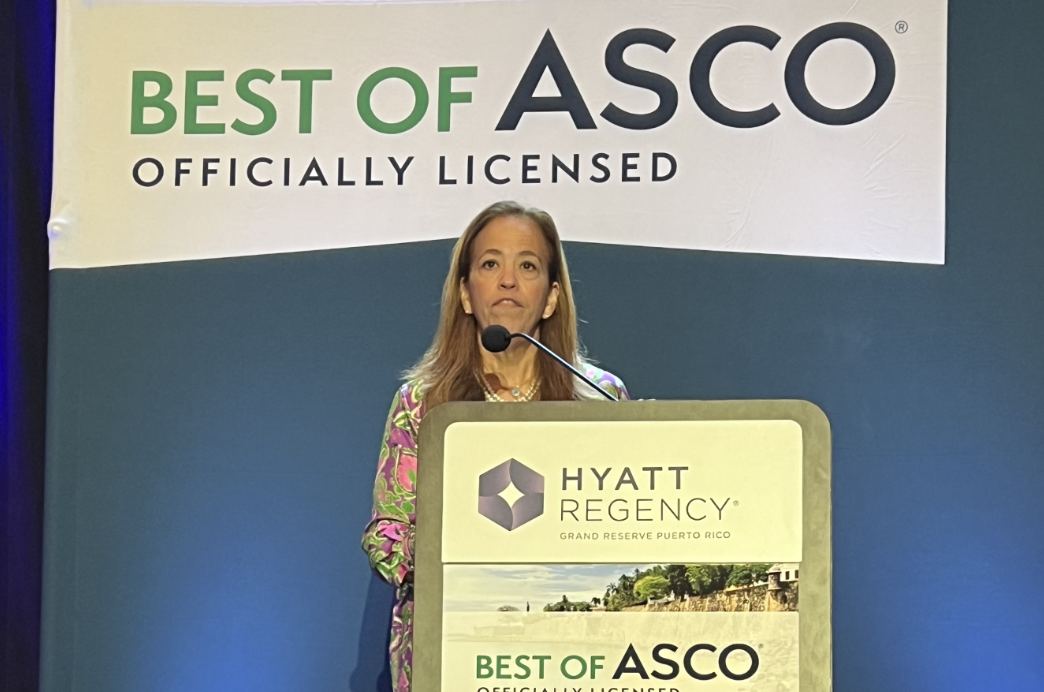
Bladder cancer management continues to evolve rapidly, with advances in treatment occurring for both metastatic and localized disease. At the Best of ASCO Puerto Rico conference, Dr Lourdes Guerrios Rivera reviewed two notable studies presented at the 2026 ASCO Annual Meeting. The first was the updated 3.5-year analysis of the phase III EV-302/KEYNOTE-A39 trial evaluating enfortumab vedotin plus pembrolizumab (EV+P) in previously untreated locally advanced or metastatic urothelial carcinoma. The second was the phase II RAD-IO study investigating the addition of durvalumab to bladder-preserving chemoradiotherapy for patients with muscle-invasive bladder cancer (MIBC). Taken together, these studies illustrate how systemic therapy and immunotherapy continue to reshape treatment paradigms across multiple stages of urothelial carcinoma.
EV-302 reinforces EV plus pembrolizumab as the first-line standard
For nearly two decades, platinum-based chemotherapy had been the standard first-line treatment for metastatic urothelial carcinoma. Indeed, although immune checkpoint inhibitors had improved outcomes in selected patients, no regimen had demonstrated a substantial overall survival (OS) advantage over platinum chemotherapy until EV-302. Dr Guerrios Rivera explained that enfortumab vedotin, a nectin-4-directed antibody-drug conjugate, combined with the PD-1 inhibitor pembrolizumab, had already established a new standard of care following publication of the original EV-302 results. The updated ASCO 2026 analysis addressed an important clinical question: would the impressive efficacy and manageable safety profile be maintained with substantially longer follow-up? She briefly reviewed the background of this randomized phase III trial which enrolled 886 patients with previously untreated locally advanced or metastatic urothelial carcinoma who were eligible for both platinum chemotherapy and immunotherapy. Patients were randomized 1:1 to receive EV+P until disease progression or standard gemcitabine plus cisplatin/carboplatin chemotherapy. Stratification factors in the trial included cisplatin eligibility, PD-L1 status, and the presence of liver metastases.
Dr Guerrios Rivera noted that with a median follow-up approaching 43 months, survival benefits remained striking. Median OS reached 33.6 months with EV+P compared with 15.9 months for chemotherapy (hazard ratio [HR] = 0.53). Most notably, an estimated 44% of patients receiving EV+P remained alive at 3.5 years, compared with only 24.6% of patients treated with chemotherapy. She described these findings as representing "the largest overall survival ever seen in metastatic urothelial carcinoma," emphasizing how unprecedented these results are in this disease. She also noted that these durable outcomes further strengthen confidence that EV+P should remain the preferred first-line regimen for eligible patients.
Deepening responses provide an important clinical message
One of the most clinically relevant aspects of the updated analysis involved the evolution of treatment responses over time. Rather than evaluating only initial objective response rates, investigators examined how responses matured during ongoing therapy. The objective response rate (ORR) reached nearly 68% with EV+P compared with 44% for chemotherapy, while complete responses occurred in approximately 30% versus 15% of patients, respectively. Importantly, nearly two-thirds of patients who ultimately achieved a complete response first experienced only a partial response before converting to a complete response during continued treatment. Median time to complete response among these patients was approximately 6.6 months after randomization, demonstrating that maximal benefit often requires continued therapy beyond the initial response assessment. Similarly, cumulative response analyses showed that complete responses continued to accumulate throughout treatment, suggesting that clinicians should avoid prematurely discontinuing therapy in patients demonstrating ongoing disease control. Dr Guerrios Rivera emphasized this practical point for clinicians, noting that patients who initially achieved a partial response but later converted to a complete response ultimately experienced survival outcomes comparable to those who achieved complete responses earlier. This observation provides reassurance when counseling patients whose responses continue to improve over time rather than immediately. "This is fantastic news for a patient… that even though at the beginning they haven’t responded… they are going to have a survival very similar to those who start a response earlier in the treatment" Dr Guerrios Rivera noted.
Subsequent therapy and long-term safety
Investigators in the trial also evaluated therapies received following study treatment. Among patients initially treated with EV+P, platinum-based chemotherapy represented the most common subsequent therapy and continued to demonstrate clinically meaningful activity, producing an ORR of approximately 21%; these findings suggest that effective treatment options remain available, even after progression on EV+P. Long-term safety in the trial also remained reassuring despite prolonged treatment exposure. While approximately one-quarter of patients had remained on treatment after two years, no new safety signals emerged, and rates of grade 3 or higher treatment-related adverse events remained similar among patients treated for longer durations compared with the overall study population. The most common adverse events remained consistent with the known toxicity profiles of enfortumab vedotin and pembrolizumab, including peripheral sensory neuropathy, dermatologic toxicities, endocrine immune-related adverse events, and hyperglycemia. Although cumulative neuropathy increased modestly with longer treatment, most new events were low grade. Notably, rather than discontinuing therapy, dose modifications frequently allowed patients to continue treatment successfully, and Dr Guerrios Rivera highlighted this as an important practical lesson, emphasizing that proactive management of adverse events can help preserve the long-term benefits associated with prolonged treatment. To illustrate how EV-302 has helped to change current clinical practice, she presented the case of a 67-year-old man with metastatic urothelial carcinoma who was ineligible for cisplatin because of chronic kidney disease. She noted that historically, treatment options would have included carboplatin plus gemcitabine or pembrolizumab monotherapy. Based on EV-302, however, EV+P now represents the preferred first-line option for this patient population. Reflecting on the overall EV-302 findings, Dr Guerrios Rivera remarked "I think it has been a complete game changer in bladder cancer management."
RAD-IO explores immunotherapy in bladder preservation
The second portion of Dr Guerrios Rivera’s presentation focused on localized muscle-invasive bladder cancer, where radical cystectomy has remained the historical standard for medically fit patients. Bladder-preserving chemoradiotherapy, however, has become an accepted alternative for selected individuals, particularly following the BC2001 trial which demonstrated improved outcomes with concurrent 5-fluorouracil and mitomycin C. Building upon the success of immune checkpoint inhibitors in advanced disease, she noted the RAD-IO trial, in which investigators evaluated whether adding durvalumab to established chemoradiotherapy could further improve outcomes while offering the option of preserving the bladder. She noted that the study initially began as a randomized safety and feasibility trial before transitioning to a single-arm phase II efficacy study because of pandemic-related enrollment challenges. Patients received radiotherapy with concurrent 5-fluorouracil and mitomycin C followed by maintenance durvalumab. The primary endpoint was disease-free survival at 12 months, using predefined thresholds to determine whether additional development of the regimen was warranted. Among 55 enrolled patients (54 evaluable for treatment), she noted that all completed planned radiotherapy, demonstrating excellent treatment feasibility. Most participants also completed chemotherapy, while 61% completed the planned durvalumab regimen. Toxicities leading to discontinuation were infrequent and generally manageable.
Dr Guerrios Rivera highlighted the primary endpoint which was met in the trial, with an 80% disease-free survival rate at 12 months, exceeding the predefined threshold for continued development. She further noted secondary outcomes which were similarly encouraging, including an approximately 84% progression-free survival rate, excellent overall survival at one year, and notably no cystectomies among evaluable patients during the first year of follow-up. Serious adverse events in the trial were uncommon, and investigators reported no dominant toxicity signal attributable to the addition of durvalumab. Most immune-related toxicities were also of low grade and consistent with the expected safety profile of checkpoint inhibition.
Clinical implications and future directions
Dr Guerrios Rivera emphasized that although RAD-IO demonstrates encouraging early efficacy, the findings should be interpreted cautiously. The study remains non-randomized, follow-up is relatively short, and important patient-centered outcomes, including long-term bladder function, quality of life, durability of disease control, and patient-reported outcomes, remain under investigation. She also highlighted several unanswered questions that will require future investigation, including optimal patient selection, surveillance strategies after bladder-preserving therapy, and how these local treatment approaches should be integrated with increasingly effective systemic therapies.
Overall, Dr Guerrios Rivera’s presentation highlighted two complementary themes shaping modern bladder cancer management. In metastatic disease, mature phase III evidence firmly establishes EV+P as the preferred first-line standard, delivering unprecedented long-term survival and durable responses, whereas in localized disease, early-phase studies such as RAD-IO suggest that integrating immunotherapy with bladder-preserving chemoradiotherapy may further improve outcomes while reducing the need for radical surgery, although confirmatory studies remain essential. She concluded that bladder cancer treatment is entering a period of rapid transformation, with expanding therapeutic options offering very meaningful improvements for patients across multiple disease stages.
Speaker Disclosure Information: Dr Guerrios Rivera reported no relevant disclosures for this presentation.
---
References
Gupta S, et al. Objective response and complete response analyses from EV-302/KEYNOTE-A39. Journal of Clinical Oncology. 2025;43(Suppl). ASCO Annual Meeting. Abstract 4502.
James ND, et al. Feasibility, safety and efficacy results from RAD-IO: A multi-stage trial of durvalumab with chemoradiotherapy with 5-fluorouracil and mitomycin C in patients with muscle-invasive bladder cancer. Presented at the 2026 ASCO Annual Meeting.
Powles T, et al. Enfortumab vedotin and pembrolizumab in untreated advanced urothelial cancer. New England Journal of Medicine. 2024; 390:875-888.
Powles T, et al. Three-and-a-half-year follow-up and response analyses from the phase III EV-302/KEYNOTE-A39 study. Presented at the 2026 ASCO Annual Meeting.