
Best of ASCO GI 2026: Monoclonals, Bispecifics, and ADCs in Gastroesophageal Junction (GEJ) Cancers
Presenter:
Daniel Lin, MD, MSc; Sidney Kimmel Comprehensive Cancer Center, Thomas Jefferson University Hospital
Conference:
Best of ASCO GI 2026
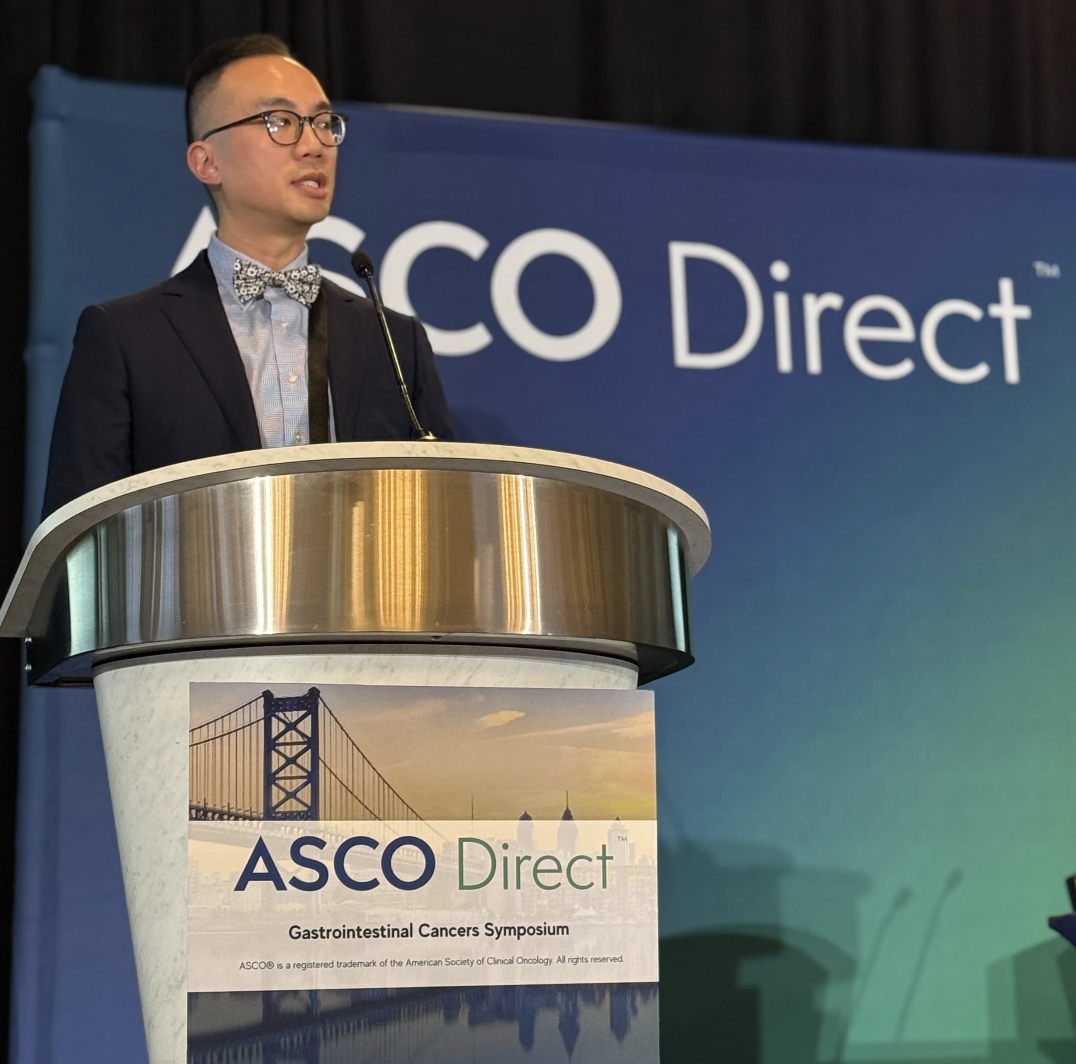
Therapeutic strategies for advanced gastroesophageal cancers continue to evolve rapidly, with growing interest in targeted monoclonal antibodies, antibody–drug conjugates (ADCs), and bispecific antibodies. At the 2026 Best of ASCO GI Cancers Symposium, Dr Daniel Lin from Sidney Kimmel Comprehensive Cancer Center and Thomas Jefferson University Hospital presented an overview of emerging approaches including those targeting Claudin 18.2 (CLDN18.2) and HER2, two actionable pathways that are reshaping the treatment landscape for advanced gastric and gastroesophageal junction (GEJ) adenocarcinomas. His presentation highlighted key clinical trial updates, including the ILUSTRO and HERIZON-GEA-01 studies, as well as next-generation therapeutic strategies currently under investigation. Dr Lin began by emphasizing that targeted therapy development in gastroesophageal cancers has accelerated significantly in recent years, particularly with improved biomarker identification. “The therapeutic landscape in advanced gastroesophageal cancers is expanding rapidly… from monoclonal antibodies to ADCs and bispecifics targeting both Claudin and HER2,” he noted.
Targeting Claudin18.2 in Advanced Gastroesophageal Cancer
Dr Lin highlighted Claudin18.2, a tight-junction protein that is highly expressed in gastric and GEJ adenocarcinoma which has emerged as an important therapeutic target. Dr Lin first reviewed the ILUSTRO phase 2 clinical study, which evaluated the use of frontline zolbetuximab plus mFOLFOX6 and nivolumab in patients with CLDN18.2-positive, HER2-negative, locally advanced or metastatic gastric or GEJ adenocarcinoma. He noted this combination builds upon prior evidence from the SPOTLIGHT and GLOW trials, which established zolbetuximab plus chemotherapy as a treatment option for CLDN18.2-positive disease. Importantly, the ILUSTRO study explored the addition of immune checkpoint (programmed death-1, PD-1) inhibition (i.e., nivolumab) based on preclinical evidence suggesting synergistic immune activation mechanisms. Dr Lin explained the biological rationale for combining zolbetuximab with PD-1 blockade: “There is good preclinical evidence for combining zolbetuximab with PD-1 inhibition, based on immune activation mechanisms such as ADCC, complement-dependent cytotoxicity, and increased CD8-positive T-cell infiltration.”
Patient Characteristics and Biomarker Landscape
The ILUSTRO study included previously untreated patients with unresectable or metastatic gastric or GEJ adenocarcinoma with CLDN18.2 expression. Dr Lin noted that high CLDN18.2 expression was common in the trial population, and programmed death ligand 1 (PD-L1) positivity was also frequently observed. Approximately 65% of patients were PD-L1–positive (defined as CPS ≥1), while the majority demonstrated high CLDN18.2 expression, highlighting the overlapping biomarker landscape in gastroesophageal cancers. He emphasized that this biomarker overlap could help guide combination strategies moving forward.
Efficacy Results
Dr Lin noted that the ILUSTRO data showed particularly strong outcomes among patients with high CLDN18.2 expression, with the most pronounced benefit observed in those whose tumors were also PD-L1 positive. Among these patients, the median progression-free survival (PFS) was 23.6 months, and the objective response rate (ORR) was 68.1%, and Dr Lin highlighted the potential clinical significance of these findings. “In Claudin-high patients, particularly those who were also PD-L1 positive, we saw the greatest benefit, with a median progression-free survival approaching two years.” He cautioned, however, that the results should be interpreted carefully given the study’s design. “This remains a single-arm phase 2 study, so confirmation of benefit is needed in a randomized trial in a broader patient population.”
Safety Profile
Dr Lin cited the safety profile of the triplet regimen as being generally manageable and consistent with prior experience with zolbetuximab. The most common toxicity remained nausea, which has been a known challenge with CLDN18.2-targeted therapy, although most events were less than grade 3, and treatment discontinuations were more often related to chemotherapy rather than the antibody therapy itself. Importantly, no unexpected safety signals were observed with the addition of nivolumab, and Dr Lin noted that proactive supportive care strategies may help improve tolerability and treatment adherence.
Ongoing Phase 3 Development
Dr Lin noted that the encouraging ILUSTRO results have led to the launch of LUCERNA, an ongoing randomized phase 3 trial evaluating zolbetuximab plus pembrolizumab and chemotherapy compared with pembrolizumab plus chemotherapy alone in CLDN18.2-positive disease. He added that this study will help determine whether the triplet strategy can meaningfully improve survival outcomes in a larger and more diverse patient population.
Next-Generation Claudin18.2 Therapeutics
Beyond monoclonal antibodies, Dr Lin also noted several next-generation approaches targeting CLDN18.2 which are currently in development. These include enhanced monoclonal antibodies with stronger immune activation properties, antibody–drug conjugates (ADCs), and bispecific antibodies. He highlighted ADC AZD0901 (sonesitatug vedotin) as an example of a promising investigational therapy. In a phase 1 study involving heavily pretreated patients, the ADC demonstrated encouraging activity even among tumors with lower levels of CLDN18.2 expression, suggesting that ADC strategies may expand the eligible patient population. Toxicities with this agent included nausea and vomiting, primarily during the first treatment cycle, as well as manageable hematologic effects. He cited a global phase 3 trial, CLARITY-Gastric 01, which is now underway to further evaluate this agent in patients with previously treated CLDN18.2-positive gastroesophageal cancer. Bispecific antibodies targeting CLDN18.2 and immune pathways such as CD3 or 4-1BB are also being explored and have shown promising early response rates in heavily pretreated populations.
HER2-Targeted Therapy: Moving Beyond Trastuzumab
Dr Lin then shifted focus to HER2-positive gastroesophageal cancers, where treatment strategies have evolved significantly since the landmark ToGA trial first established trastuzumab as a frontline therapy. More recently, the KEYNOTE-811 study demonstrated improved outcomes with pembrolizumab plus trastuzumab and chemotherapy, particularly among patients with PD-L1–positive tumors. He noted, however, that attempts to intensify HER2 targeting with additional antibodies - such as in the JACOB trial combining trastuzumab and pertuzumab - have not consistently improved survival outcomes. “Additional HER2 targeting has not always translated into greater benefit in gastroesophageal cancers,” Dr Lin noted.
HERIZON-GEA-01: Zanidatamab in the Frontline Setting
One promising strategy Dr Lin noted involves zanidatamab, a bispecific HER2 antibody that binds two distinct HER2 epitopes, leading to enhanced receptor clustering and immune activation. In this regard, Dr Lin cited the unique mechanism of action: “Zanidatamab simultaneously binds two HER2 epitopes, which leads to receptor clustering and stronger immune-mediated tumor killing through CDC and ADCC.” The HERIZON-GEA-01 trial evaluated zanidatamab combined with chemotherapy, with or without the PD-1 inhibitor tislelizumab, compared with trastuzumab plus chemotherapy.
Efficacy Results
Reviewing the efficacy findings from the trial, Dr Lin noted that both zanidatamab-containing arms demonstrated improvements in progression-free survival and response rates as compared with the control arm. Some of the key findings included a median PFS improvement from ~8 months to ~12 months, similar PFS and response rates across the zanidatamab arms, and a longer duration of response with the addition of PD-1 inhibition. At the interim analysis of the trial, the triplet regimen (zanidatamab + tislelizumab + chemotherapy) significantly improved overall survival (OS), increasing median OS from 19 months to approximately 26 months, and Dr Lin noted that these findings suggest meaningful clinical progress. “Compared with trastuzumab and chemotherapy, zanidatamab plus tislelizumab and chemotherapy significantly improved overall survival, progression-free survival, and response rate.”
Interpretation and Clinical Context
Despite these promising results, Dr Lin emphasized that these findings should be interpreted cautiously. Notably, the control arm in HERIZON-GEA-01 did not include pembrolizumab, which is now part of the standard regimen for PD-L1–positive HER2-positive disease. “One limitation is the lack of a direct comparison with our current standard of trastuzumab, pembrolizumab, and chemotherapy.” Nevertheless, Dr Lin discussed that the magnitude of benefit suggests that zanidatamab-based therapy may ultimately represent a new frontline standard.
Safety Considerations
The most notable toxicity associated with zanidatamab in the trial was diarrhea, particularly during the first treatment cycle, and prophylactic loperamide was most commonly used to mitigate this effect. Some of the other safety observations included higher rates of infusion reactions compared with trastuzumab, a low discontinuation rate due to diarrhea (1–4%), and cardiac dysfunction, occurring in fewer than 10% of patients. Overall, however, the safety profile appeared manageable with appropriate supportive care.
Emerging HER2 ADC Strategies
In the final portion of his presentation, Dr Lin cited data for emerging HER2-targeted ADC strategies, particularly trastuzumab deruxtecan (T-DXd). In the DESTINY-Gastric03 study, he noted the combination of T-DXd with chemotherapy and pembrolizumab which produced encouraging outcomes. Specifically, the objective response rate was 75%, with a median PFS of 9.8 months. Toxicity, however, was higher with the 6.4 mg/kg dose, prompting further investigation of lower dosing strategies with this agent. Dr Lin noted ongoing trials such as DESTINY-Gastric05 and ARTEMIDE-Gastric01 which will further clarify the role of ADC-based combinations in earlier lines of therapy.
Conclusions
Dr Lin concluded that the treatment landscape for gastroesophageal cancers is rapidly expanding, with advances driven by biomarker-directed therapies. He cited some of the key themes emerging from current research, which include:
A growing clinical activity for CLDN18.2-targeted therapies, including monoclonal antibodies, ADCs, and bispecific antibodies
A potential frontline benefit of zolbetuximab plus immunotherapy and chemotherapy in biomarker-selected populations
Promising survival improvements with zanidatamab-based regimens in HER2-positive disease
Continued development of ADC-based combination strategies
“For HER2-positive gastroesophageal cancer, zanidatamab plus tislelizumab and chemotherapy may represent a new frontline standard pending regulatory approval” Dr Lin said. He also noted ongoing randomized trials, which will be essential to confirm these findings and define how these novel agents should be integrated into clinical practice.
Speaker Disclosure Information: Dr Lin reports the following disclosures for this presentation: Consulting: Exelixis, Roche-Genentech, Bristol Meyers Squibb, Astra Zeneca, Agenus, Incyte.