
Optimizing Therapy With ctDNA in GI Cancers
Presenter:
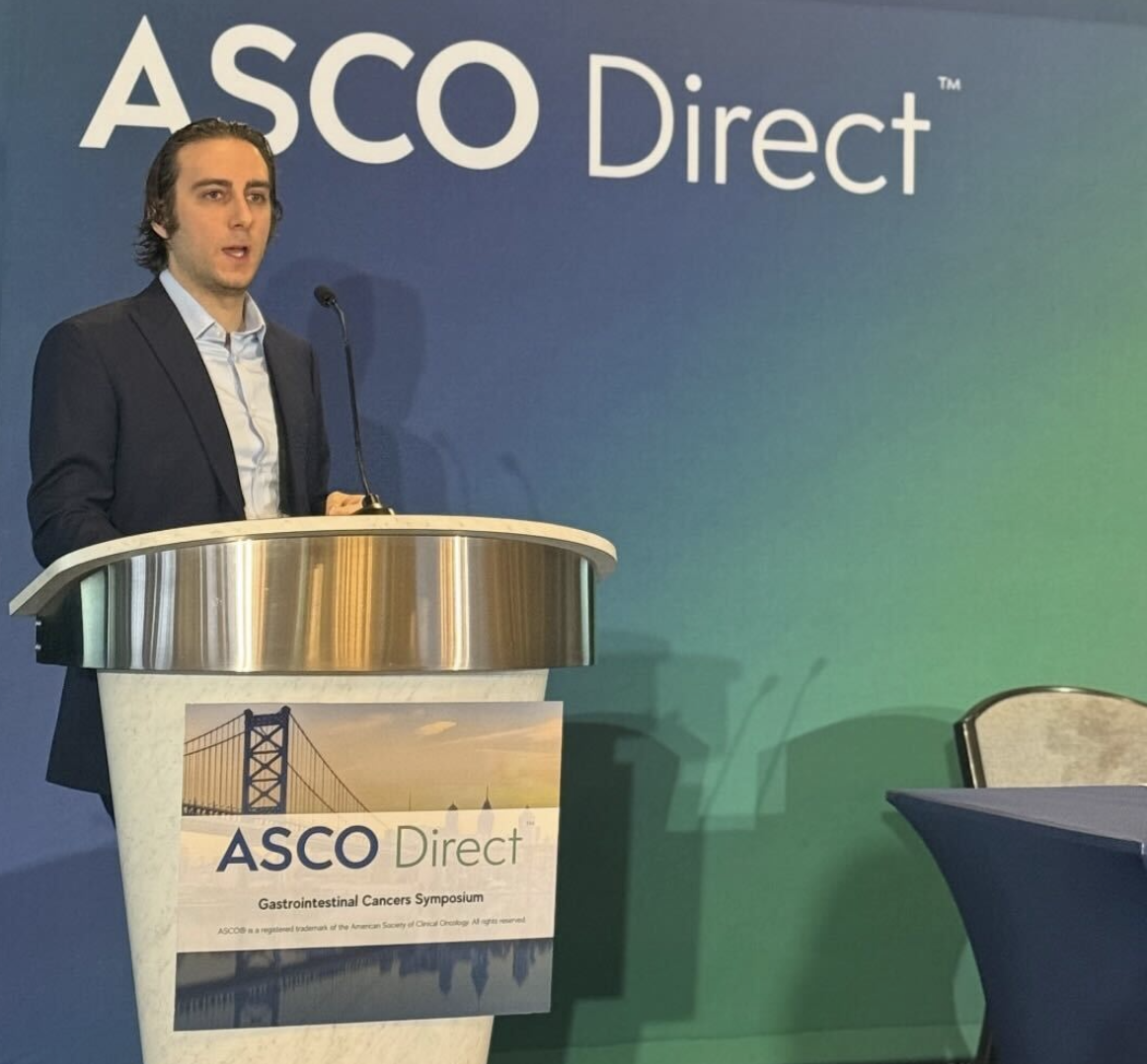
Nicholas Hornstein, MD, PhD; Northwell Health
Conference:
Best of ASCO GI 2026
Circulating tumor DNA (ctDNA) continues to attract major interest across gastrointestinal (GI) oncology, particularly in colorectal cancer (CRC), where it may help refine prognosis, guide adjuvant therapy decisions, support surveillance, and inform treatment selection in metastatic disease. In his presentation at the 2026 Best of ASCO GI Cancer Symposium, Dr Nicholas Hornstein from Northwell Health provided a practical overview of how ctDNA assays work, what the most important recent datasets show, and where clinicians should be cautious not to overextend the technology before prospective interventional data are fully mature. His central message was both balanced and clinically relevant: ctDNA is clearly informative (prognostic), but its role can vary substantially depending on the assay used and the clinical question being asked.
Introduction
Dr Hornstein began by grounding the audience assay fundamentals, noting that ctDNA platforms differ meaningfully in methodology, including whether they are tumor-informed or tumor-agnostic, and whether they rely primarily on PCR-based or next-generation sequencing (NGS)-based approaches. These technical differences affect key aspects such as sensitivity, specificity, logistics, and turnaround time. As he was quick to emphasize, “not all [ctDNA] assays are created equal.”
The distinction between assays is especially important, because ctDNA is increasingly being incorporated into clinical practice even though, as Dr Hornstein noted, the technology still lacks broad endorsement from the major guidelines in GI malignancies. While some assays have been clinically validated and may carry FDA indications and/or be approved for Medicare reimbursement, clinicians still need to understand what individual assays can and cannot tell them. As such Dr Hornstein called for the technology to be used both thoughtfully and in context with other clinical parameters.
One of the foundational ctDNA datasets Dr Hornstein reviewed was GALAXY, a large observational cohort within CIRCULATE-Japan, which included 1,563 patients with stage I-IV colorectal cancer who underwent ctDNA profiling after resection. The study showed a striking prognostic separation between ctDNA-positive and ctDNA-negative patients following surgery, with hazard ratios greater than 10, confirming that postoperative ctDNA status is a powerful marker of recurrence risk. Dr Hornstein framed this as very satisfactory proof that the technology “works” from a biological and prognostic standpoint: that is, patients with detectable tumor DNA after resection are at much higher risk of relapse than those without detectable ctDNA.
Importantly, GALAXY also showed that ctDNA kinetics matter; that is, it’s not simply whether a patient is positive or negative at a single timepoint. More specifically, those patients who remained ctDNA-negative had the best outcomes and those who cleared ctDNA appeared to do similarly well to those who stayed negative. In contrast, persistent ctDNA positivity was associated with a high likelihood of recurrence. Accordingly, Dr Hornstein underscored that serial monitoring may therefore be more informative than a one-time postoperative “snapshot in time”. He also noted that assay performance characteristics can be influenced by disease burden and metastatic site, which is relevant when clinicians try to interpret discordant or borderline ctDNA results.
Practical Applications
Dr Hornstein then moved from prognostic evidence to more predictive questions: that is, how can ctDNA help clinicians make better decisions in the clinic? He organized the current applications into three broad use cases: escalation of therapy, de-escalation of therapy, and intervention/monitoring in patients with persistent ctDNA positivity, or “minimal residual disease” (MRD).
For escalation, Dr Hornstein reviewed data from DYNAMIC-III, which tested an irinotecan-based intensification strategy in ctDNA-positive stage III colorectal cancer. His overall assessment of the study results was clear: adding irinotecan did not meaningfully advance outcomes for patients in this setting. He noted that, while ctDNA may identify high-risk patients, risk stratification alone does not guarantee that current escalation approaches will help. In fact, Dr Hornstein argues that what the field needs now are better agents, not simply more chemotherapy layered onto standard adjuvant backbones. Simply put, he stressed: “Adding on irinotecan… don’t do it.”
By comparison, Dr Hornstein highlighted de-escalation as the more immediately promising application of ctDNA in colorectal practice. He highlighted findings from DYNAMIC-II in stage II colorectal cancer, wherein a ctDNA-guided strategy allowed a substantial reduction in chemotherapy use, while maintaining similar relapse-free survival. In his view, this is currently among the most clinically compelling ctDNA use cases today - sparing some patients unnecessary exposure to oxaliplatin or other adjuvant therapy without clearly compromising outcomes.
Dr Hornstein then reviewed findings from DYNAMIC-III, an adaptive therapy study in stage III disease. Results showed, in ctDNA-negative patients, that a de-escalation strategy substantially reduced oxaliplatin exposure - from roughly 90% to 35% - although the overall study was formally negative because it did not meet its predefined noninferiority threshold for disease-free survival. Nevertheless, Dr Hornstein argued that the topline result does not tell the whole story. Subgroup analyses sin the trial suggested that adaptive therapy was inferior in clinically high-risk disease but might still be reasonable in lower-risk stage III disease as part of a shared decision-making approach. His overall assessment of the results was nuanced: ctDNA should not be used as a blunt instrument to reduce therapy in all stage III patients, but it may provide helpful additional information in carefully selected, lower-risk cases.
A major part of his interpretation of the results also hinged on the assay itself. DYNAMIC-III used the Safe-Seq platform, which he described as materially less sensitive than more commonly used commercial assays in the United States. He noted that earlier versions of the assay tracked relatively few tumor-informed variants and required a higher variant allele frequency threshold than many contemporary assays. This matters, he said, because a negative result from a less sensitive assay does not mean the same thing as a negative result from a more sensitive one. That assay-dependence is one reason he urged caution when translating study the overall results directly into practice.
Dr Hornstein also reviewed findings from ongoing MRD interventional trials, including ALTAIR, STELLAR-316, M34-534, and others designed to treat patients who are ctDNA-positive but radiographically without evidence of disease. These studies are asking whether clinicians can intervene early - before imaging reveals recurrence – to meaningfully improve outcomes for patients. The concept is attractive, but he was careful not to overstate what is currently known. While these studies may eventually support earlier action in MRD-positive patients, he made clear that the necessary prospective evidence is still maturing.
One of the most practical sections of the talk focused on special clinical scenarios, especially microsatellite instability high (MSI-H), mismatch repair deficient (dMMR) tumors. Dr Hornstein noted that standard imaging can be misleading in this population because immunotherapy-treated tumors may become highly fibrotic, and residual masses can persist even when viable tumor is no longer present. While PET scanning can help in some cases, he notes that sensitivity is imperfect. As such, in this setting, ctDNA may help distinguish patients with persistent fibrosis from those with active disease. He pointed to evidence suggesting that an early ctDNA timepoint - specifically around 42 days - may be highly predictive of eventual complete response. Lingering ctDNA positivity, on the other hand, may identify patients who need escalation or local intervention. For clinicians managing MSI-H disease after immunotherapy, this is one of the more compelling real-world applications of ctDNA today.
Dr Hornstein then reviewed the use of liquid biopsy in the setting of refractory metastatic colorectal cancer, where the value proposition is somewhat different. Rather than MRD detection, the goal here, he noted, is to capture evolving resistance mechanisms across multiple tumor sites. He emphasized that tissue biopsy alone may miss subclonal heterogeneity, whereas plasma-based testing integrates signals from across disease sites and may therefore better identify clonal resistance patterns. This is particularly relevant for rechallenge with anti-EGFR therapies. He cited the CITRIC and PARERE studies, which support using liquid biopsy to determine whether resistance-associated alterations have decayed sufficiently to make a rechallenge reasonable. In his framing, this strategy can allow clinicians to re-use anti-EGFR therapy in selected patients before moving to later-line agents, which may be especially helpful in an increasingly biomarker-directed treatment landscape.
Conclusions
Dr Hornstein concluded his presentation with a pragmatic assessment of the current landscape. He notes that ctDNA unquestionably adds useful tools to GI oncology, particularly in colorectal cancer. It can refine recurrence risk, contribute to de-escalation discussions, potentially support monitoring in selected settings such as MSI-H disease, and aid treatment selection via liquid biopsy in refractory metastatic CRC. At the same time, the Dr Hornstein believes the field still needs stronger prospective for interventional data before ctDNA should routinely trigger therapy changes in radiographically negative patients. “ctDNA adds tools to our arsenal,” he said, while emphasizing the field still needs better drugs, better trial data, and careful attention to assay performance before clinicians can fully integrate ctDNA across routine practice.
Speaker Disclosure Information: Dr Hornstein reported no relevant disclosures for this presentation.