
2026 Best of Breast
AFTER the MEETING – with Total Health
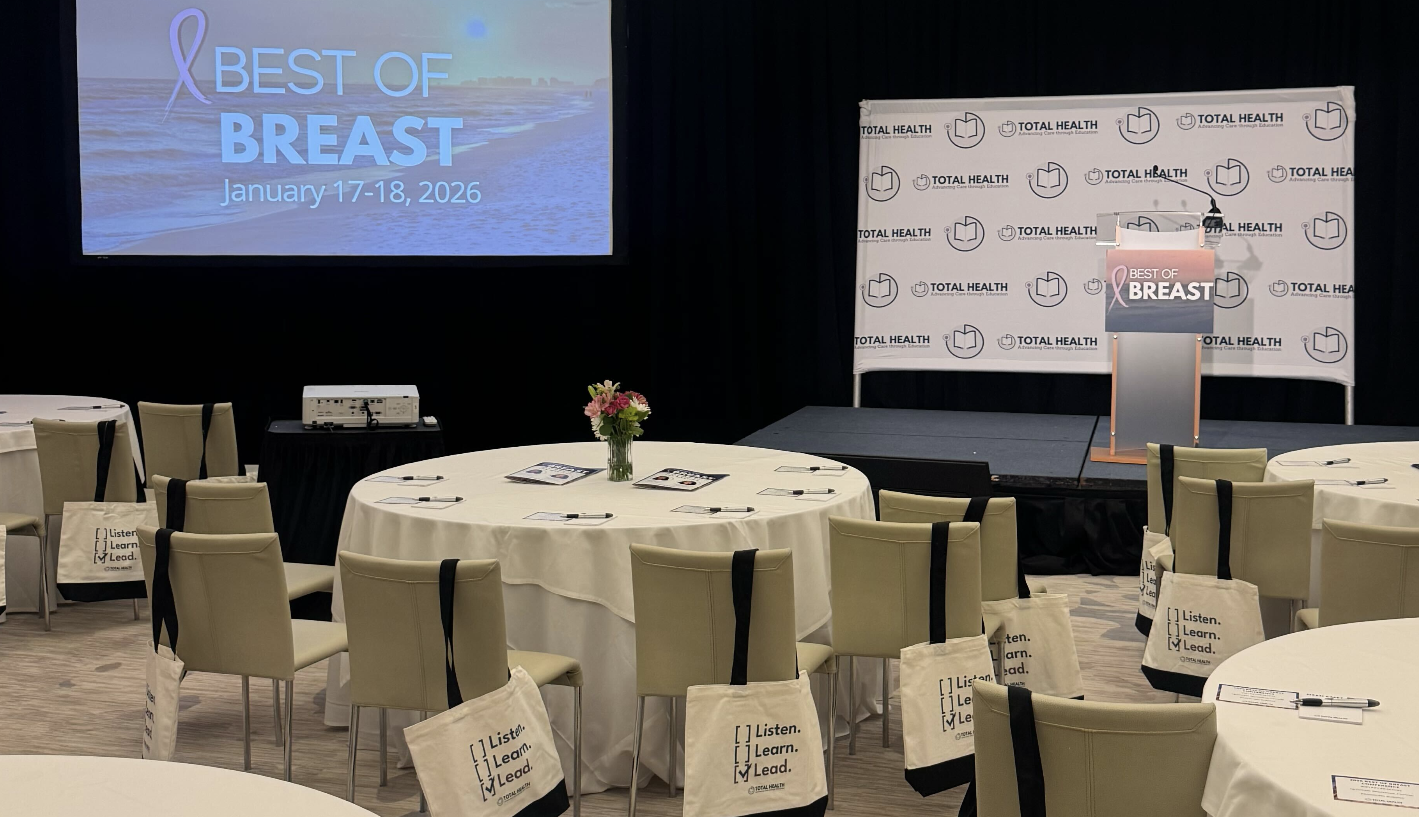
This past January, Total Health was pleased to once again host our sought-after Best of Breast conference in Fort Lauderdale, FL. Attendees at this year’s program were an equal mix of oncologists, surgical oncologists, radiation oncologists, nurses, advanced practicioners, and other healthcare professionals coming together for a two-day, focused review of the very latest research and clinical strategies across the breast cancer continuum, as presented by our exclusive lineup of local and national expert faculty.
“Keep up the awesome work! I GREATLY appreciate the fact that the conference is free, since my organization doesn’t pay for nurses or navigators to go to conferences, but I know when I attend Best of Breast, I receive phenomenal information and my attendance isn’t financially toxic at all…”
Our 2026 Best of Breast Program Overview
We had excellent onsite feedback regarding the quality and educational content of the sessions offered at this year’s Best of Breast conference, with many attendees of the program interested in revisiting the presentations, and we’re pleased to be able to offer the full content of this program on our YouTube channel here.
Some of the most popular presentations focused on triple negative breast cancer updates, cancer survivorship, genetics and liquid biopsy implementation, emerging use of AI and biosimilar technologies and sequencing of treatments in breast cancer.
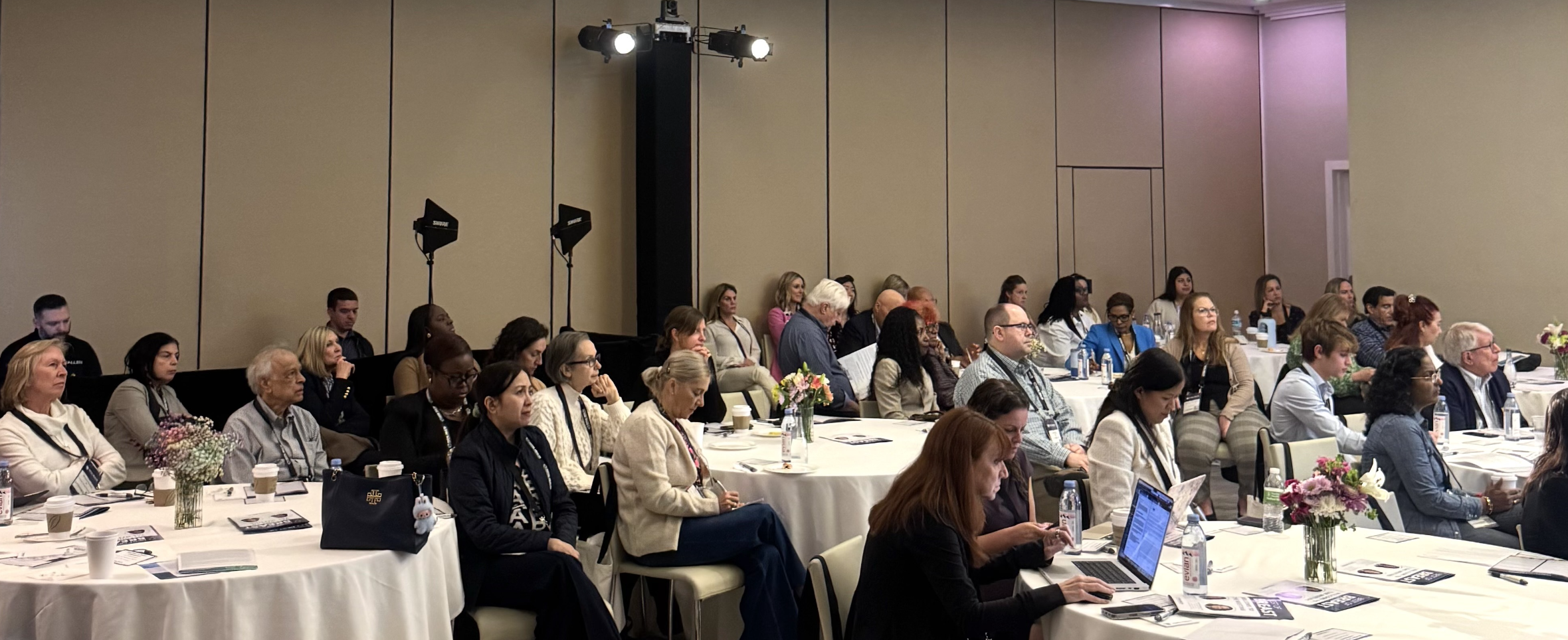
2026 Best of Breast - Day 1 Highlights
Dr Christopher Comstock of Weill Cornell Medicine reviewed emerging breast imaging modalities that enhance staging and surveillance, particularly in patients with dense breasts or lobular cancers. He highlighted abbreviated breast MRI (AB-MR) and contrast-enhanced mammography (CEM) as cost-effective, accessible tools that improve detection of multifocal disease and assess treatment response. PET-CT was discussed as essential for staging advanced disease, while MRI and CEM remain valuable in monitoring post-lumpectomy patients. Dr Comstock emphasized tailoring imaging strategies based on patient risk, noting, “You don’t need to do MRI for everyone—but younger women, dense breasts, lobular cancers? That’s where it makes a difference.”
Dr Mehran Habibi highlighted the evolution of early breast cancer surgery, emphasizing genomics and imaging to guide sequencing, wire-free localization for precision, and intraoperative tools to reduce re-excisions. He reviewed de-escalation strategies supported by the SOUND, INSEMA, SUPREMO, and B-51 trials, allowing omission of SLNB or radiation in select patients. He cited advanced oncoplastic techniques and “hidden-scar” approaches that can improve surgical outcomes, as well as lymphedema surveillance to support quality of life for survivors. “We're not just removing tumors—we're preserving lives, forms, and function,” he emphasized.
Dr Eleonora Teplinsky from Valley Health gave a survivorship-focused talk addressing the chronic toxicities of cancer treatment - including menopause-related symptoms, vasomotor disturbances, musculoskeletal pain, and sarcopenia - that can significantly impair quality of life for breast cancer survivors. She emphasized individualized, evidence-based strategies such as low-dose vaginal estrogen, neurokinin antagonists for hot flashes, and proactive screening for sarcopenia. With up to 50% of patients discontinuing aromatase inhibitors due to side effects, Dr Teplinsky advocated for shared decision-making and a shift toward survivorship as an “active phase of care.” She concluded, “Validation, education, and access must be the foundation of survivorship care.”
Dr Neelima Vidula reviewed six transformative systemic therapy studies from ASCO and SABCS 2025 in her first presentation at the conference. In HR+/HER2– mBC, she highlighted PFS and OS gains observed with inavolisib (INAVO120), ctDNA-guided camizestrant switching (SERENA-6), and imlunestrant monotherapy and combination strategies (EMBER-3). In PD-L1+ TNBC, she noted that ASCENT-04 showed superior PFS and response duration with sacituzumab govitecan plus pembrolizumab versus chemo plus IO. For HER2+ disease, she highlighted DESTINY-Breast09 which demonstrated 40-month PFS with T-DXd plus pertuzumab and HER2CLIMB-05 which showed added benefit from tucatinib in the maintenance setting. Dr Vidula emphasized precision, patient selection, and ctDNA-guided care as the next frontier.
Dr Laura Freedman reviewed the evolving role of radiation therapy in metastatic breast cancer, focusing on stereotactic body radiotherapy (SBRT) for oligometastatic and oligoprogressive disease. She highlighted long-term SABR-COMET data demonstrating improved overall survival with metastasis-directed therapy in selected patients, while noting that NRG-BR002 did not show a progression-free or overall survival benefit with SBRT in breast cancer specifically. She noted advances in IMRT, IGRT, and motion management which have improved precision and safety. Dr Freedman also emphasized multidisciplinary patient selection, including use of SRS for limited brain metastases and careful reirradiation strategies to optimize local control while preserving quality of life.
Dr Sonia Amin Thomas outlined the critical role of oncology pharmacists in proactively managing treatment-related toxicities across the breast cancer continuum. She emphasized risk-adapted antiemetic regimens, structured diarrhea prophylaxis with agents such as neratinib, early identification of CDK4/6 inhibitor–associated neutropenia and QT prolongation, and vigilant metabolic monitoring with therapies such as alpelisib. For chemotherapy-induced neuropathy, she highlighted duloxetine as the agent with the strongest evidence, alongside dose modification and supportive interventions. She also noted pharmacist-led follow-up programs which were shown to improve adherence, adverse event detection, and quality-of-life outcomes, reinforcing the pharmacist’s essential role within multidisciplinary breast cancer care teams.
Dr Jennifer Klemp outlined how precision medicine is reshaping breast cancer care, emphasizing real-world data, molecular diagnostics, and a collaborative infrastructure. She called for broader use of germline testing - especially in patients under 65 - and greater adoption of NGS and multi-omics tools. While data availability has exploded, Dr Klemp warned that quality, standardization, and ethical use of results remain key challenges. She noted that real-world evidence and AI can improve clinical trial matching and care delivery, but only when built on robust data foundations. She urged stakeholders to close the implementation gap and prepare workflows that are aligned with upcoming therapeutic approvals.
Dr Jason Mouabbi explored the rapidly evolving role of ctDNA liquid biopsy in early breast cancer, emphasizing its prognostic value and emerging predictive utility. He noted that ultra-sensitive, tumor-informed assays are essential for accurate minimal residual disease (MRD) detection, guiding treatment de-escalation, escalation, and surveillance. Data from trials like I-SPY2, MONARCH-E, DARE, and LEADER show that ctDNA clearance correlates with improved outcomes, particularly when CDK4/6 inhibitors are added. While not yet standard, Dr Mouabbi advocates individualized use with transparent patient counseling. “ctDNA is the future,” he said. “Don’t ignore it—learn how to use it.”
Dr Doug Flora from St. Elizabeth Healthcare delivered a forward-looking examination of artificial intelligence in oncology, tracing its evolution from early rule-based systems to generative and domain-specific “vertical AI” models tailored to cancer care. He emphasized that context-rich, oncology-trained systems outperform generalist tools and require clinicians to remain “in the loop,” particularly given the probabilistic nature of large language models. Dr Flora highlighted AI’s impact across drug development, clinical trial matching (where only 3%–5% of patients enroll), digital twins, pharmacogenomics (e.g., DPYD-guided 5-FU dosing), and proactive toxicity prediction. He concluded that AI should augment - not replace - clinicians, preserving empathy while democratizing expertise and addressing workforce shortages in oncology.
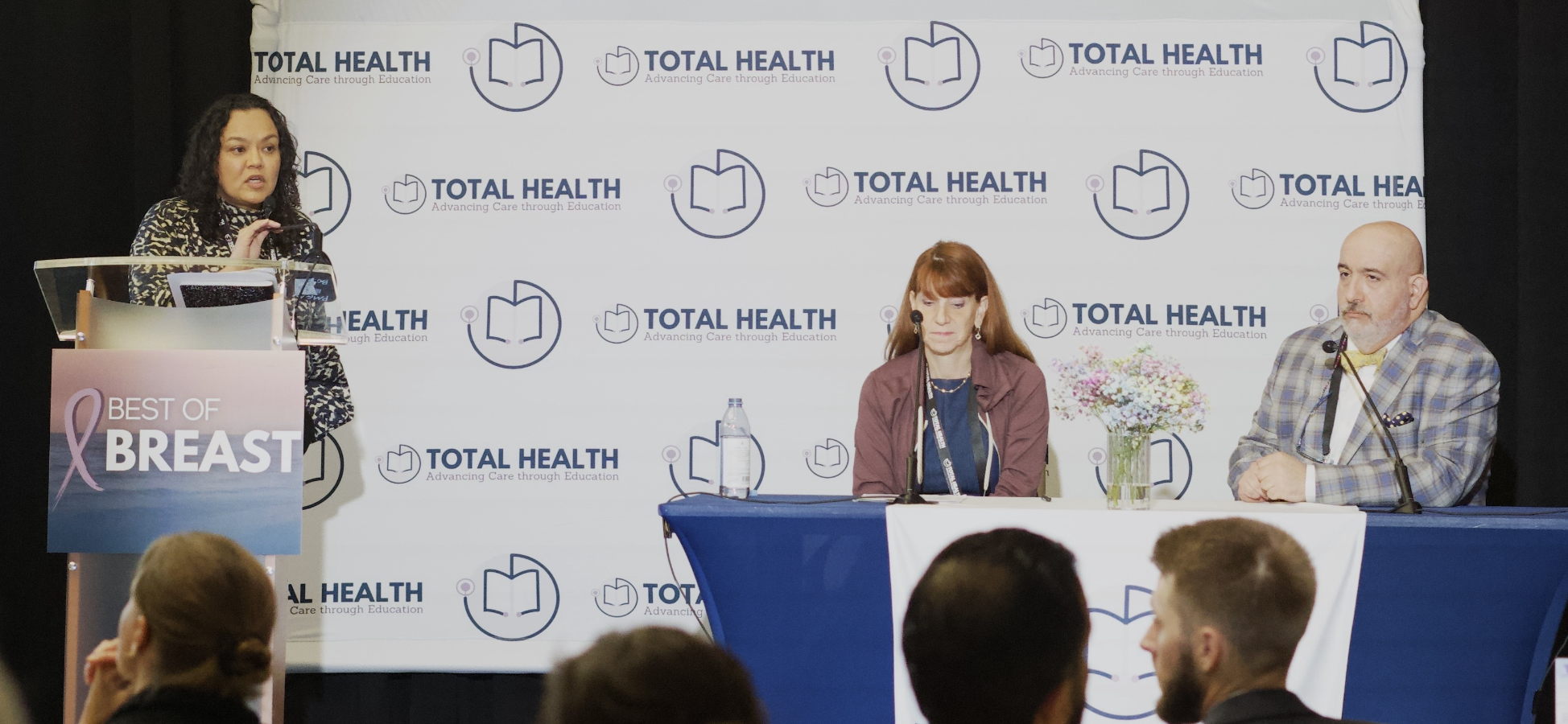
2026 Best of Breast - Day 2 Highlights
Dr Neelima Vidula explored recent advances in HER2+ early breast cancer therapy in her second presentation at the conference, highlighting ongoing debate between treatment escalation versus de-escalation in this setting. Studies like CompassHER2 and neoCARPH support THP-based regimens as effective de-escalation strategies, particularly in ER-negative patients. Meanwhile, the DESTINY-Breast11 and DESTINY-Breast05 trials showed that T-DXd improves pCR and iDFS rates, offering a potential escalation path, albeit at the cost of higher ILD risk. Dr Vidula also emphasized the need for imaging, use of genomic tools like HER2Dx, and patient-specific risk assessment as a means to personalize care. “We must balance efficacy with toxicity…and be prepared to adapt as more data emerges”, she noted.
Dr Ana Sandoval-Leon from Miami Cancer Institute, Baptist Health South Florida reviewed evolving strategies in early-stage triple-negative breast cancer (TNBC), highlighting both de-escalation and escalation approaches. In stage I disease, she discussed anthracycline-free regimens and recent trials (PATTERN, CITRINE) supporting adjuvant carboplatin. For stage II–III TNBC, KEYNOTE-522 remains standard, but real-world data show variable pCR rates and a rising incidence of irAEs. Post-neoadjuvant options include capecitabine and olaparib, while trials like SASCIA and PREDICT-RD explore ADCs and MRD-driven strategies. Anthracycline-sparing neoadjuvant regimens are also under study. She emphasized tailoring therapy based on biomarkers, ctDNA, and pathologic response to reduce overtreatment and optimize outcomes.
Dr Connie Guaqueta moderated a multidisciplinary discussion with Dr Laura Freedman and Dr Mehran Habibi on axillary management in HR+ and HER2+ disease. In a 45-year-old patient with cT2N1 HER2-positive breast cancer achieving nodal pathologic complete response after neoadjuvant therapy, panelists reviewed B-51 data supporting omission of regional nodal radiation in carefully selected patients, while emphasizing individualized decisions based on age, nodal burden, and surgical approach. A second case highlighted SOUND and INSEMA findings supporting sentinel lymph node biopsy omission in select HR+ patients, underscoring the importance of genomic risk stratification and coordinated multidisciplinary planning to avoid unintended escalation of radiation therapy.
Dr Abi Siva reviewed current and emerging first-line strategies for metastatic triple-negative breast cancer (mTNBC). In PD-L1–positive disease, ASCENT-04 suggests sacituzumab govitecan plus pembrolizumab may become a new standard. In PD-L1–negative patients, both sacituzumab govitecan (ASCENT-03) and datopotamab deruxtecan (TROPION-Breast02) improved progression-free survival versus chemotherapy, with datopotamab deruxtecan also demonstrating an overall survival benefit. She noted PARP inhibitors remain preferred in germline BRCA-mutated mTNBC, and ongoing challenges which include ADC sequencing and management of early post-neoadjuvant recurrence. She also cited novel bispecific ADCs and androgen receptor–targeted therapies which are under investigation, and reinforced the importance of individualized treatment selection for patients.
Dr Eleonora Teplinsky reviewed evolving strategies for HER2-positive breast cancer in her second presentation at the conference, highlighting new data from multiple ‘Destiny-Breast’ trials supporting trastuzumab deruxtecan (T-DXd) across neoadjuvant, adjuvant, and metastatic settings. She discussed carboplatin-sparing regimens, including T-DM1 versus T-DXd for patients with residual disease, and maintenance therapy approaches such as tucatinib (HER2CLIMB-05) and palbociclib (PATINA), based on recent trial results. She noted that T-DXd plus pertuzumab now shows superiority over THP in first-line metastatic disease, although long-term tolerability remains a concern. She also noted surveillance brain imaging as being increasingly individualized, and treatment decisions should reflect patient risk, biology, and preferences. “We’re no longer sequencing based on rules—we’re sequencing based on the individual,” she concluded.
Dr Seth Wander provided a sweeping update on targeted therapies in HR+/HER2- breast cancer, spotlighting the role of CDK4/6 inhibitors, oral SERDs, and PI3K/AKT inhibitors. He emphasized emerging data supporting elacestrant, imlunestrant, camizestrant, and giredestrant, particularly in ESR1-mutant settings. He further noted novel triplet therapies, such as inavolisib + fulvestrant + palbociclib, which show robust activity with manageable toxicity. Dr Wander also highlighted ctDNA as a future driver of treatment selection, as exemplified by the SERENA-6 trial. With the therapeutic arsenal expanding rapidly, Dr Wander emphasized individualized, biomarker-guided sequencing as central to optimizing outcomes in this population.
Dr Wassim McHayleh from AdventHealth reviewed the expanding role of pembrolizumab in early and metastatic TNBC and emphasized the broad spectrum of immune-related adverse events (irAEs) associated with checkpoint inhibition. Using data from KEYNOTE-355 and KEYNOTE-522, he highlighted the incidence, timing, and severity of immune-mediated events, including thyroid dysfunction, pneumonitis, colitis, hepatitis, and hypophysitis. Dr McHayleh underscored that irAEs may occur even after treatment discontinuation and require early recognition and multidisciplinary management. He reviewed guideline-based algorithms for organ-specific toxicity management, stressing prompt grading, corticosteroid initiation when indicated, and specialist referral to safely optimize outcomes while preserving the survival benefits of immunotherapy.
Lastly, Dr Jorge Garcia provided a comprehensive overview of the evolving biosimilar landscape in oncology, emphasizing their importance in addressing escalating cancer drug costs. With biologics accounting for nearly half of oncology drug spending, he reviewed the scientific rigor underlying biosimilar approval, including advanced analytic characterization, PK/PD-based pathways, and FDA interchangeability standards. Dr Garcia also discussed real-world barriers to adoption, including patent litigation, reimbursement complexity, and payer dynamics, while outlining operational strategies such as formulary alignment and biosimilar utilization dashboards. He positioned biosimilars as essential tools in advancing value-based oncology care and expanding global access.
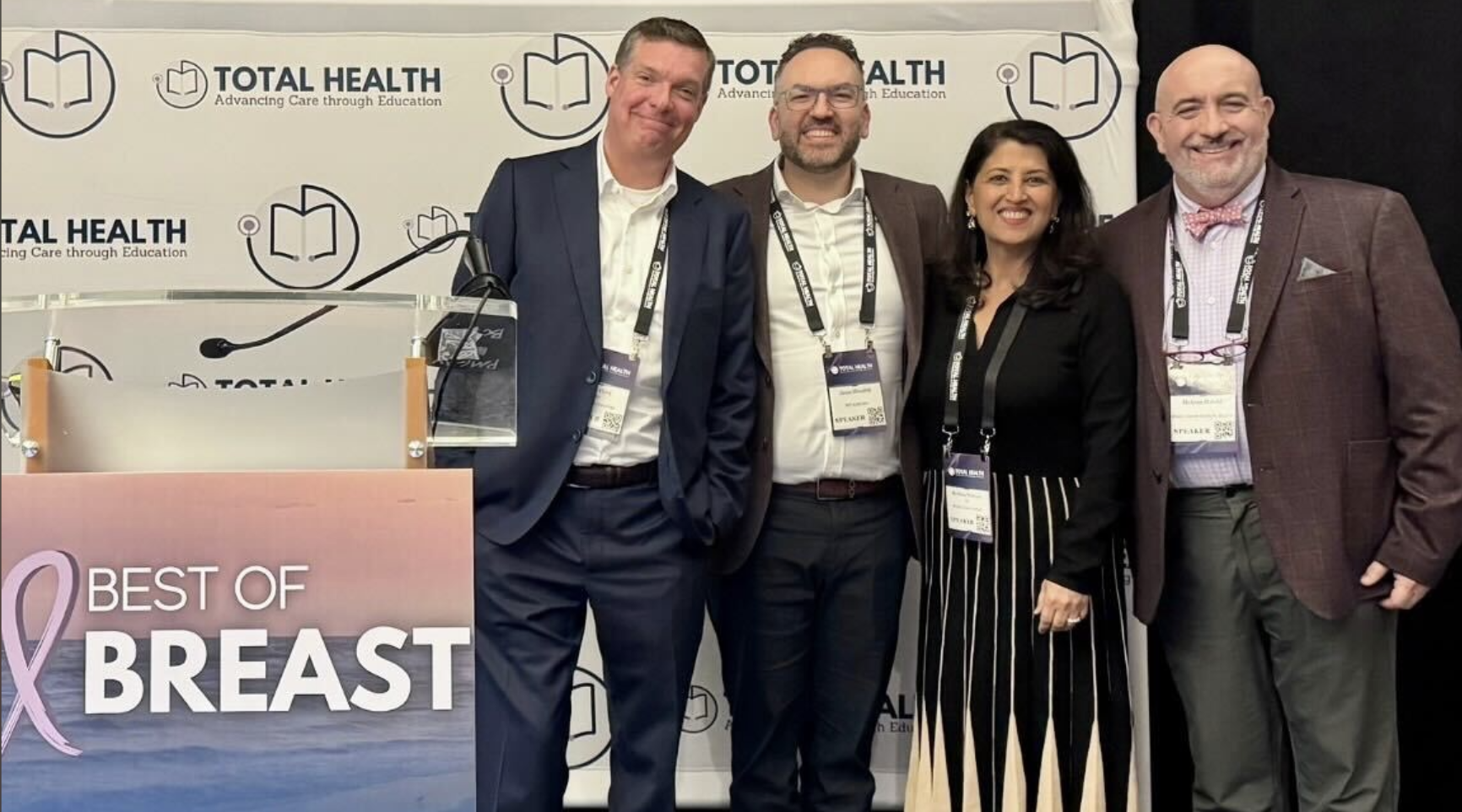
“Continue the excellent work of educating professionals across USA and the world. I enjoy Total Health conferences.”
Thank You!
On behalf of our program chairs, Dr Reshma Mahtani and Dr Connie Guaqueta, our sincere thanks to all our in-person attendees, and to our valued exhibitors, for making this year’s conference such a success, and for allowing us to keep this program and others, as always, free to attend for our cancer care teams!