
ASCO Direct™ Denver: Dr Harari-Turquie Discusses Head and Neck Cancers
Presenter:
Moises Harari-Turquie, MD, University of New Mexico Comprehensive Cancer Center
Conference:
2025 ASCO Direct™ Denver
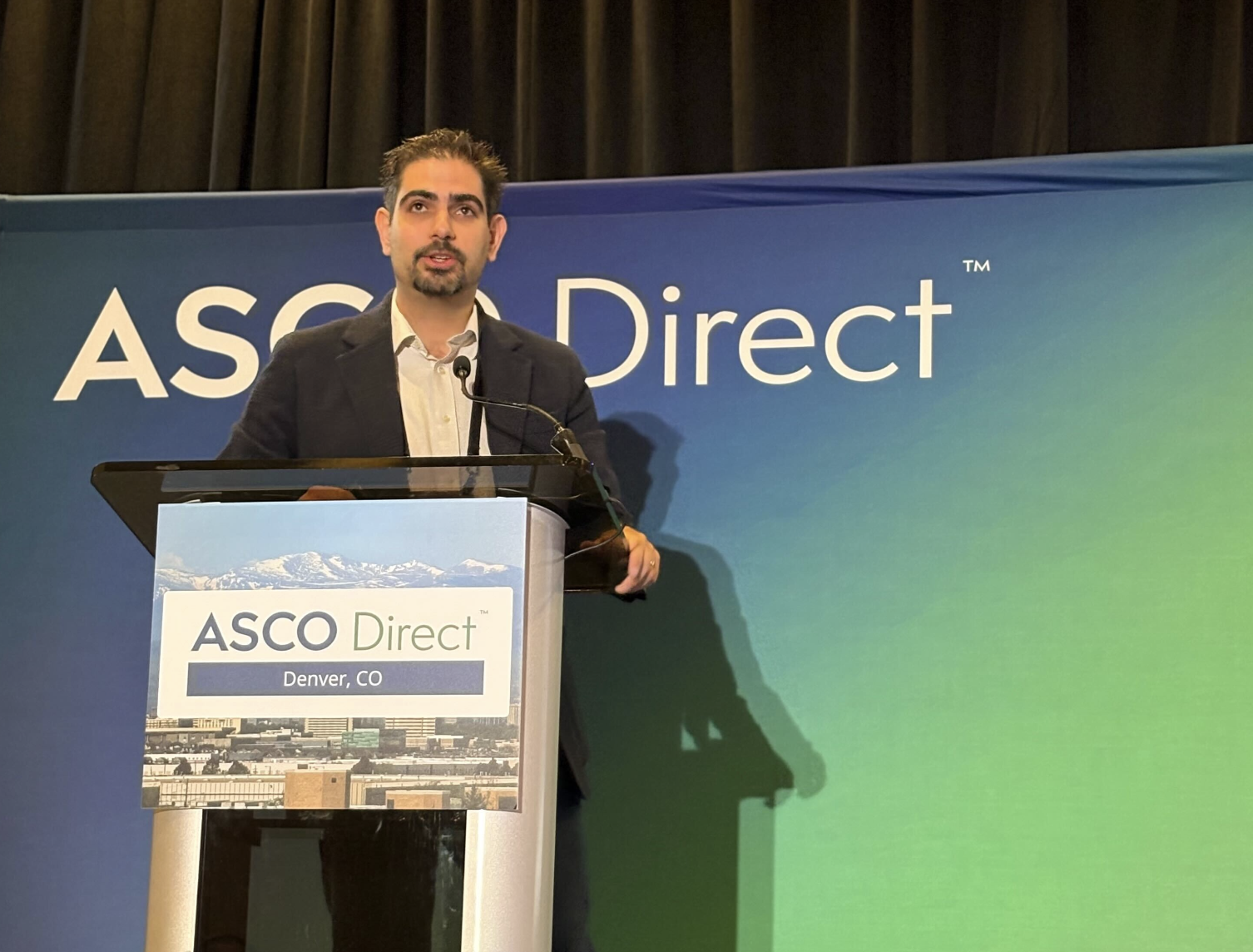
At the 2025 ASCO Direct™ Denver Conference presented by Total Health, Dr Moises Harari-Turquie from University of New Mexico Comprehensive Cancer Center presented an overview of updated findings on the topic of Head and Neck cancers, focusing on four key abstracts presented at the 2025 American Society for Clinical Oncology (ASCO) Annual Meeting.
1. Adjuvant Cemiplimab in High-Risk Cutaneous Squamous Cell Carcinoma (C-POST Trial)
Dr Harari-Turquie noted the C-POST phase 3 trial, which marked a significant advance in the adjuvant treatment of high-risk cutaneous squamous cell carcinoma (cSCC), an area previously underserved by systemic therapies. In this randomized study, patients who had undergone surgery and postoperative radiation for high-risk disease (defined by features such as extracapsular extension, ≥3 nodes, in-transit metastases, perineural invasion, or T4 tumors) were randomized to receive cemiplimab or placebo.
The findings of the study were compelling: at the 3-year mark, disease-free survival (DFS) was 83% with cemiplimab versus 60% with placebo (hazard ratio [HR] = 0.32). Notably, freedom from locoregional recurrence and distant recurrence was near 100% in the cemiplimab arm, with a favorable safety profile and no unexpected immune-related adverse events. Additionally, the study showed no significant difference between the Q3W and Q6W cemiplimab dosing schedules, which may allow for a more flexible treatment option.
“This is the only systemic therapy with statistically significant reduction in recurrence for these patients,” said Dr Harari-Turquie. “It’s not just DFS—it’s also locoregional and distant control. For a tumor we usually manage with surgery and radiation alone, this is a major step forward.” He concluded that cemiplimab represents a new standard of care in the adjuvant setting for patients with high-risk cSCC, where recurrence risk is high and prior options were limited to surveillance.
2. Adjuvant Nivolumab with Chemoradiation in Resected HNSCC (NIVOPOST Trial, GORTEC 2018-01)
Dr Harari-Turquie also highlighted the plenary presentation of the NIVOPOST trial as one of the most practice-defining studies in head and neck cancer in decades. The trial evaluated adjuvant nivolumab combined with concurrent cisplatin-based chemoradiation (CRT), followed by maintenance nivolumab, in patients with resected head and neck squamous cell carcinoma (HNSCC) having high-risk features (extracapsular extension [ECE], positive/close margins, or ≥4 involved nodes without ECE).
Over 680 patients were randomized to standard chemoradiation or to the investigational arm, which included one pre-CRT dose of nivolumab, concurrent nivolumab with chemoradiation, and a maintenance phase of nivolumab for 6 cycles. He noted, at a median follow-up of 30.3 months, 3-year DFS improved from 52% to 63% (HR = 0.76), with clear gains in both local and distant disease control. While overall survival data remain immature, the benefit was consistent across most programmed death ligand 1 (PD-L1) subgroups—except those with CPS <1%, where a benefit was not evident.
Dr Harari-Turquie emphasized the importance of biomarker stratification: “The benefit wasn’t clear for PD-L1 negative patients. That’s why early biomarker testing—at diagnosis—is now critical, not just for metastatic disease but even in curative-intent settings.” He further noted that toxicity remained manageable in the study, with immune-related events in line with known nivolumab profiles. The study effectively builds on historic RTOG and EORTC data, elevating immunotherapy into the adjuvant paradigm for selected high-risk patients, and Dr Harari-Turquie was also clear about the implications of the findings: “This is the first time in two decades that we’re seeing a real shift in the standard of care” he noted.
3. Neoadjuvant and Adjuvant Pembrolizumab in Resectable HNSCC (KEYNOTE-689)
Dr Harari-Turquie cited KEYNOTE-689 as one of the first large-scale, phase 3 trials to demonstrate clinical benefit with neoadjuvant immunotherapy in HNSCC. In the study, patients with resectable, locally advanced disease (including Human papilloma virus [HPV] + oropharyngeal and HPV-negative oral cavity/larynx/hypopharynx) received two cycles of neoadjuvant pembrolizumab before surgery, followed by standard adjuvant chemoradiation with additional pembrolizumab maintenance.
This trial enrolled nearly 700 patients and met its primary endpoint, showing an improved event-free survival (EFS) rate of 57% versus 46% (HR = 0.73, p<0.01). Importantly, distant metastasis-free survival (DMFS) was also significantly prolonged, with 14.5% of control patients developing distant disease, as compared to 7.2% of patients in the pembrolizumab group. Pathologic responses were also notable, with major pathologic response (MPR) and pathologic complete response (pCR) observed even among the intermediate PD-L1 groups. “EFS is important,” Dr Harari-Turquie noted, “but we also saw a marked reduction in distant failures—a signal we haven’t seen before in this setting. And this was consistent across CPS ≥1 and ≥10.”
As patients with PD-L1 expression <1% showed limited benefit, Dr Harari-Turquie reiterated that patient selection is key. “We need to be testing PD-L1 expression upfront. It helps us make better decisions—not just for therapy choice, but also to avoid unnecessary toxicity in those unlikely to benefit.” Safety signals in the study were also in alignment with expectations. Immune-related adverse events occurred more frequently in the pembrolizumab group but were manageable. Overall Dr Harari-Turquie cited the results as supporting neoadjuvant plus adjuvant pembrolizumab as a new standard of care for eligible patients.
4. Neoadjuvant Triplet Therapy in BRAF-Mutated Anaplastic Thyroid Cancer
Closing his session with a focus on a rare but lethal disease, Dr Harari-Turquie presented data from a phase 2 study conducted at MD Anderson, evaluating neoadjuvant triplet therapy in patients with BRAF V600E-mutated anaplastic thyroid cancer (ATC)—a historically fatal diagnosis with a median OS of just 3–4 months.
This study combined dabrafenib + trametinib + pembrolizumab (DTP) as a neoadjuvant regimen in 40 patients with advanced Stage IVB/C ATC. Patients received DTP for 2–7 cycles preoperatively. Post-surgery, some patients received additional pembrolizumab with or without radiation. The results were striking objective response rate was 72%, R0/R1 resection rate was 74%, and median overall survival (OS) reached 18 months—nearly doubling the survival observed with dabrafenib/trametinib alone (historical control = 9.6 months).
A 48% average tumor volume reduction was also reported in the study, and one-year OS was 71%, with a two-year OS of 44%. “For anaplastic thyroid cancer, these are incredible numbers,” said Dr Harari-Turquie. “We're moving from a palliative paradigm to potential surgical conversion.” Pathologic response also correlated with survival in this trial; patients achieving pCR had a one-year OS of 89%, as compared with 50% in non-responders. While the trial was small and lacked a control group, Dr Harari-Turquie noted the significance: “Is this practice changing? Maybe not yet—but it’s unquestionably practice influencing…” and he noted that the findings underscore the value of combining targeted therapy with immunotherapy in oncogene-driven ATC, especially when aiming to increase surgical resectability.
Conclusion and Key Takeaways
Dr Harari-Turquie concluded his presentation with an updated treatment algorithm integrating these trials into clinical decision-making. “We haven’t had this many actionable studies in head and neck cancer in over 20 years. This isn’t just incremental—it’s a redefinition of how we treat high-risk disease.” For resectable HNSCC, he advocated PD-L1 testing at baseline to guide use of neoadjuvant or adjuvant immunotherapy. In unresectable or very high-risk cases, he emphasized the growing role of immunotherapy in both curative and palliative strategies. “The time to test PD-L1 is no longer at recurrence—it’s at diagnosis. Biomarkers now matter in the curative setting, not just in metastatic disease.”
Speaker Disclosure Information: Dr Harari-Turquie reported no relevant disclosures for this presentation.